Senegal Guinea-Bissau
 Senegal
  Guinea-Bissau
Last reviewed July 2026
Crossing the border
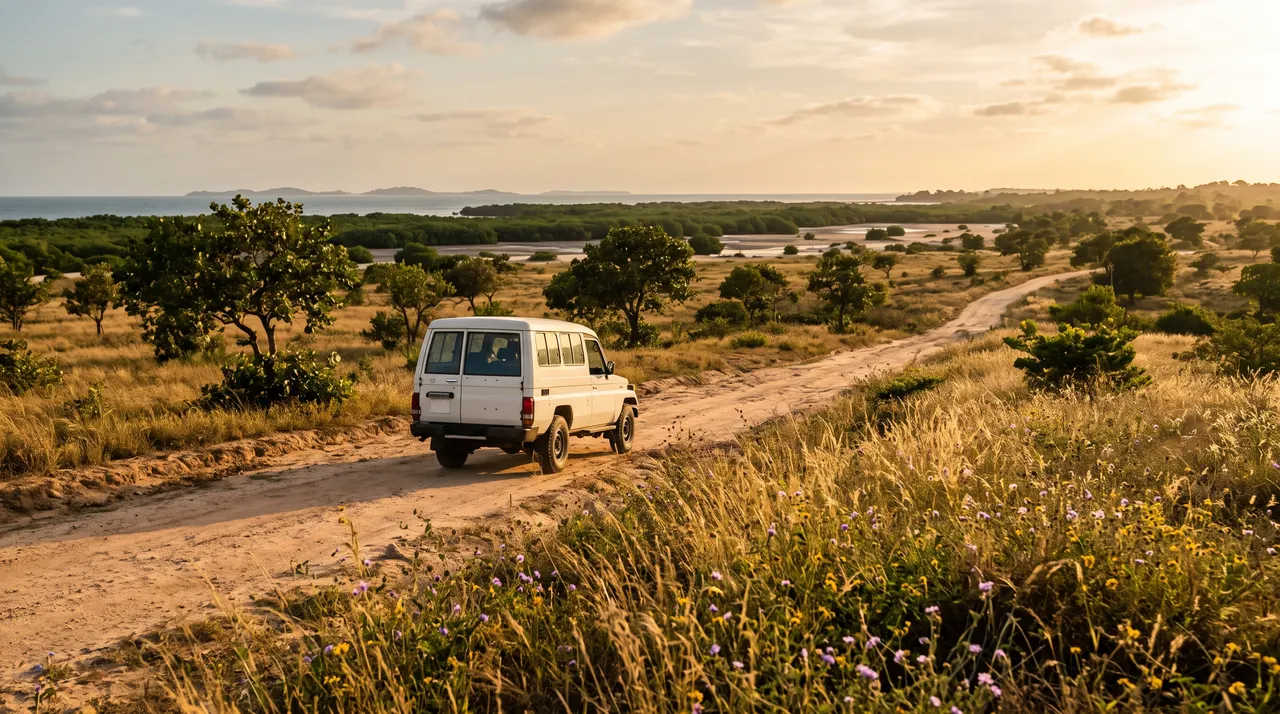
Senegal and Guinea-Bissau share a land border you can cross by car. Keep your passport, national driving licence and International Driving Permit together, and check opening hours and any toll or vignette requirements before you travel.
Driving rules in Guinea-Bissau
- Drive on the right.
- Few paved roads outside the capital.
- 0.05% alcohol limit.
- Carry passport, IDP and home licence.
Once you're driving in Guinea-Bissau
Destination-specific detail sourced from national road authorities, motoring clubs and rental policies — the things that catch cross-border drivers out.
Driving on a foreign licence
Visitors may drive on a valid foreign national licence for up to three months; an International Driving Permit is recommended for translation purposes but not formally issued through the Geneva/Vienna convention network for Guinea-Bissau, so carry the IDP alongside the original licence.
Tolls & road charges
There is no functioning national motorway toll or vignette system; roads are funded publicly and you generally pay nothing to drive, though informal road barriers and checkpoints are common in the interior.
Parking in the cities
Parking in Bissau is largely informal and unmetered, with self-appointed attendants ('guardadores') expecting a small CFA-franc tip to watch the car; there are no painted paid-zone schemes or parking apps.
Fines & camera enforcement
Enforcement is mostly by physical police/gendarme checkpoints rather than cameras; fines are usually negotiated and paid in cash on the spot, and the documented drink-drive limit is 0.15% BAC (15 mg/100 ml).
If you have an accident
There is no reliable nationwide emergency line; in a serious crash do not move the vehicles if there are injuries, summon the Polícia de Ordem Pública locally and obtain a written police report (auto), which insurers and rental firms require.
Driving in the capital
In Bissau the chronically unreliable public electricity means many junctions and traffic lights are dark after sunset, so night driving through unlit intersections is genuinely hazardous and best avoided.
Sources: internationaldrivingpermit.org · idpservices.org · gov.uk