Do you need an International Driving Permit to drive in Iran?


Sourced from the 1949 Geneva & 1968 Vienna Conventions and rental-network policies
What the rules require
When do you need an IDP in Iran?
Iran drives on the right and accepts the 1949 Geneva IDP; tourists should carry it with their national licence and passport.
Does renting a car in Iran require an IDP?
Tehran desks ask for an IDP; self-drive is uncommon for tourists. Having your permit ready avoids losing your reservation at the counter.
Driving rules in Iran you should know
- Drive on the right amid heavy city traffic.
- Zero alcohol — alcohol is prohibited.
- Carry passport, IDP and home licence.
- Speed cameras on highways.
How long is an IDP valid in Iran?
Iran uses the 1949 Geneva Convention format, under which an IDP is valid for up to 1 year from its issue date. If you travel regularly, the validity clock starts on the issue date, not on first use — so order close to your departure to maximise usable time.
Documents checklist for driving in Iran
- Your original national driving licence — the IDP is a translation and is never valid on its own.
- Your International Driving Permit, in the 1949 Geneva Convention format Iran uses.
- Your passport or accepted national ID for police checks and rental pick-up.
- For rentals: the credit card used for the booking and your rental agreement (it covers the registration and insurance papers).
- Local currency or a card for road costs — Iran uses the IRR.
Driving in Iran: the practical detail
Sourced from national road authorities, motoring clubs and rental policies — the things that actually catch foreign drivers out.
Driving on a foreign licence
Foreign tourists may drive on an International Driving Permit together with their home-country licence for up to 6 months; the home licence alone is not sufficient. Rental firms and police require the IDP, and a translation of the home licence is needed for insurance to apply.
Tolls & road charges
Major intercity freeways (e.g. Tehran-Qom, Tehran-Karaj) are tolled, increasingly via automated free-flow camera systems billed to the vehicle owner; urban congestion-charge zones in Tehran also require a paid permit. Tolls are inexpensive in foreign-currency terms but a rental will pass them on.
Parking in the cities
Big-city parking is scarce and chaotic; Tehran uses paid zones and app/SMS-based payment in central districts, and cars parked in restricted areas are ticketed or towed. Use guarded car parks where possible, especially in central Tehran.
Winter & seasonal rules
Winter tyres or snow chains are needed from roughly November to March on the Alborz and Zagros mountain routes (including the Chalus Road and Tehran-north passes), where heavy snow closes roads; lowland and desert areas have no winter rules.
Fuel & filling up
Fuel is heavily subsidised and extremely cheap; petrol is sold via a rationing fuel-card system (subsidised tiers then a higher free-market price) plus diesel (gazoil). Stations are usually attended and open 24/7 on highways, but foreign cards are not accepted, so carry cash and expect the rental's fuel card to be used.
If you have an accident
Contact the police immediately for any accident, even a minor fender-bender, and do not move the vehicles until officers document the scene; the road-police emergency number is 110. A police report is mandatory for insurance, and without a licence translation insurance coverage can be void.
Driving in the capital
Tehran traffic is intense and aggressive with loose lane discipline, and the central Traffic Zone and odd/even plate-restriction zone require paid permits during daytime hours on weekdays, with cameras enforcing entry.
Fines & enforcement
Speeding, phone use and no seatbelt are camera- and patrol-enforced with fines, and the odd/even and traffic-zone violations are charged automatically; fines are typically settled through the rental company or online rather than cash to an officer. Penalties for serious offences can escalate quickly.
A drive worth taking
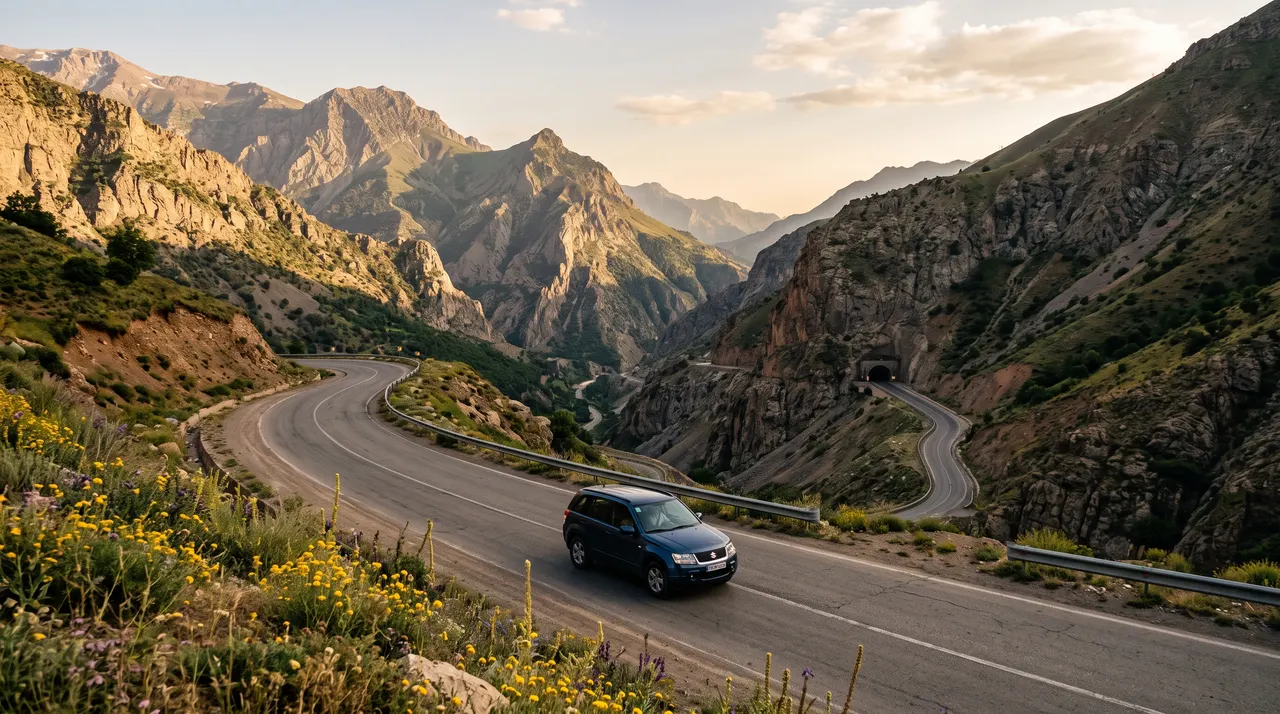
The Chalus Road (Road 59) from Karaj over the Alborz mountains to the Caspian coast is Iran's most celebrated scenic drive, with tunnels, deep valleys and dramatic viewpoints.
Sources: saadatrent.com · remitly.com · globalpetrolprices.com · travelandtourworld.com