 US licence
  Austria
Can you drive in Austria with a US license?
Short answer: to drive in Austria with a US license you need an International Driving Permit in the 1949 Geneva or 1968 Vienna format, carried together with your US license.
Yes — to drive in Austria on a US licence you should carry an International Driving Permit together with your US licence. Austria expects foreign drivers to hold an IDP.
U.S. drivers should carry an International Driving Permit alongside their state licence when driving or renting a car abroad. Your International Driving Permit is a certified multilingual translation of your existing licence, prepared in the 1949 Geneva and 1968 Vienna Convention format that Austria recognises and carried alongside your national licence.


What driving in Austria is like
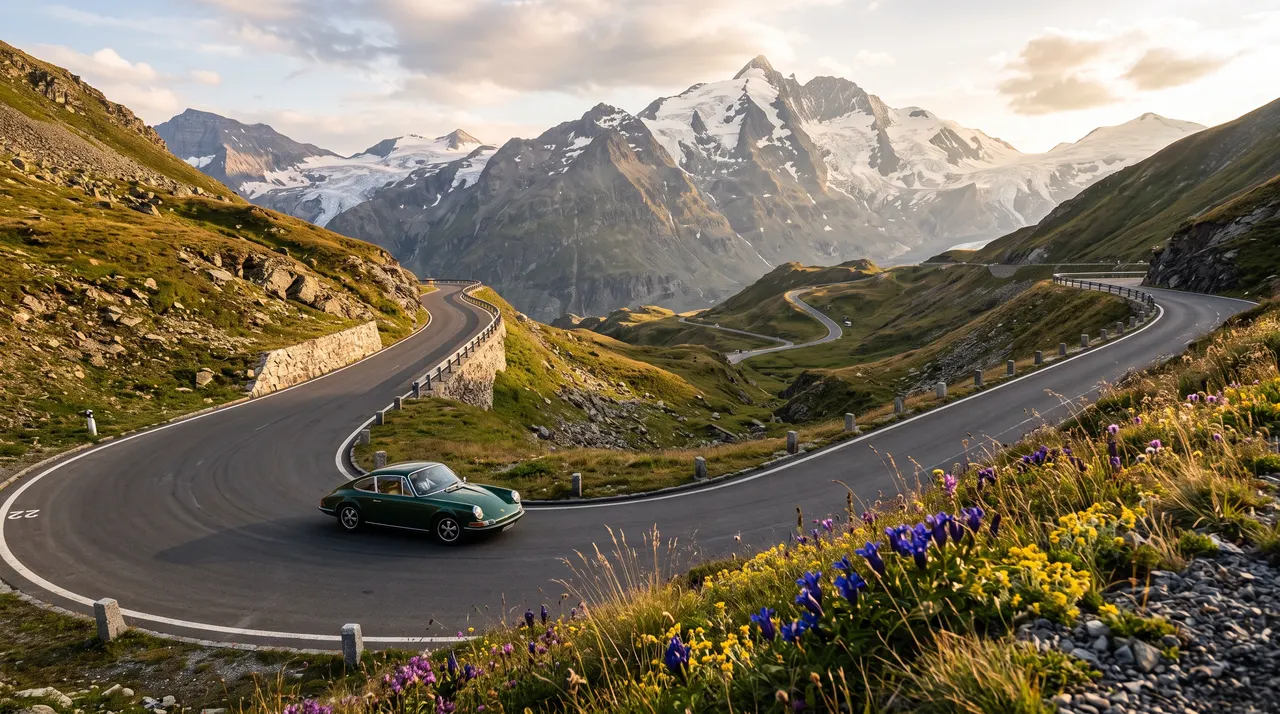
The Grossglockner High Alpine Road, a tolled 48 km mountain pass with 36 hairpins, is Austria's most famous drive. For most visitors the real draw is the freedom to reach places trains and tours don't, on your own schedule, with the open road generally capped around 130 km/h motorways. Getting behind the wheel is the easy part: your International Driving Permit is a certified translation of your US licence, carried alongside it, so rental staff and officials in Austria can read your credentials at a glance.
What applies to US licence holders in Austria
| US licence in Austria | |
|---|---|
| Do you need an IDP? | Yes — carry one alongside your licence |
| IDP format required | 1949 Geneva or 1968 Vienna |
| Your US licence script | Roman (Latin) alphabet |
| United States is party to | 1949 Geneva |
| Drives on the | Right-hand side |
| Minimum driving age | 18 |
| Emergency number | 112 |
| Top speed limit | 130 km/h motorways |
| Currency | EUR |
Driving rules in Austria you should know
- Motorway vignette (Pickerl) mandatory.
- Headlights recommended day and night.
- Reflective vest and triangle required.
- 0.05% alcohol limit; 0.01% for novice drivers.
Local driving facts in Austria
Emergency number: 112 (112 also connects from most mobiles). Typical maximum for cars on the fastest road class: 130 km/h motorways. Posted limits always take precedence.
Tolls & road charges in Austria
All motorways and expressways require a vignette (digital or sticker): a 1-day digital vignette was introduced in 2025, plus 10-day, 2-month and annual options. Several Alpine routes (Brenner, Tauern, Arlberg tunnel, Grossglockner) charge separate tolls; driving without a vignette risks a minimum substitute toll/fine around EUR 120.
Parking in Austria
Cities use Kurzparkzone short-stay zones marked by blue lines and signs, paid by paper ticket/Parkschein or apps like HANDY Parken/EasyPark; Vienna's entire inner districts (1 to 9 and beyond) are a paid Kurzparkzone on weekdays. Illegal parking fines start around EUR 20 and wrongly parked cars are towed.
Penalties & enforcement in Austria
Police are strict and can demand immediate cash payment of fines up to about EUR 90 (a deposit for larger amounts); speeding, handheld phone use and no seatbelt are routinely enforced including by camera. Rental companies pass on camera fines with an administrative fee.
If you have an accident in Austria
Call 133 for police or the pan-European 112 (ambulance 144); police must be called if anyone is injured or if drivers cannot agree, otherwise a police report is not mandatory for minor damage where details are exchanged. Place the warning triangle, wear the hi-vis vest, photograph the scene and complete the European Accident Statement; do not move vehicles if there are injuries.
City driving in Austria
Vienna's flachendeckende Kurzparkzone covers the whole urban area on weekdays (max ~2 hours in many districts) and the historic 1st district is largely restricted; the Ring boulevard's multi-lane one-way system and heavy tram traffic catch out first-time visitors.
Winter driving in Austria
Winter tyres (or chains on snow/ice) are compulsory in wintry conditions from Nov 1 to Apr 15; M+S tyres with at least 4 mm tread satisfy the rule and chains can be required where signed in mountains. Driving on summer tyres in snow risks fines and liability.
Fuel in Austria
Stations sell Super 95/98 petrol and Diesel; most are self-service and take international cards, with unattended automated pumps common at night. Petrol runs roughly EUR 1.45 to 1.65 per litre.
Sources: austria.info, visitaustria.info, lifeistravel.info, eurocampings.co.uk