 Japan licence
  Botswana
Can you drive in Botswana with a Japan license?
Short answer: to drive in Botswana with a Japan license you need an International Driving Permit in the 1949 Geneva format, carried together with your Japan license.
Yes — to drive in Botswana on a Japan licence you should carry an International Driving Permit together with your Japan licence. Botswana accepts foreign licences, but an IDP is needed because Japan licences are not in the local alphabet.
Japanese drivers should carry an International Driving Permit (1949 Convention) with their licence when driving abroad. Your International Driving Permit is a certified multilingual translation of your existing licence, prepared in the 1949 Geneva format and carried alongside your national licence.


What driving in Botswana is like
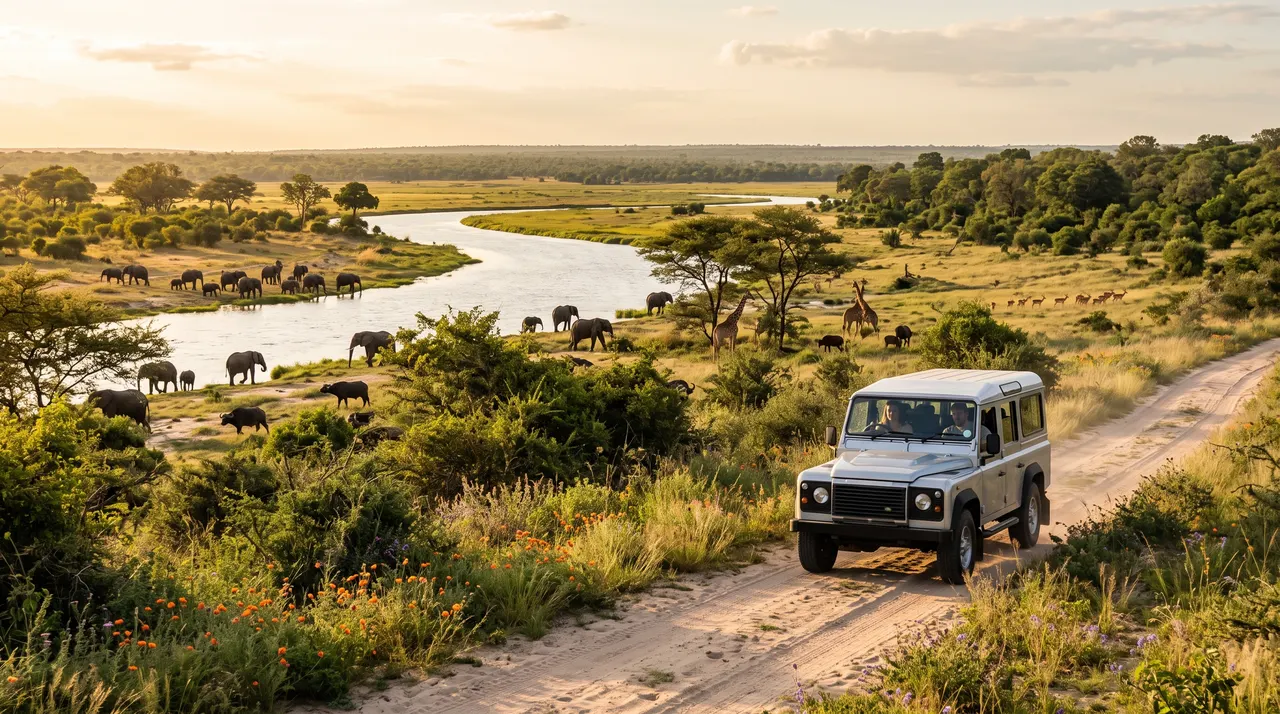
The drive through Chobe National Park toward Kasane, with riverfront elephant and big-game sightings, is Botswana's most sought-after self-drive route. For most visitors the real draw is the freedom to reach places trains and tours don't, on your own schedule, with the open road generally capped around 120 km/h highways. Getting behind the wheel is the easy part: your International Driving Permit is a certified translation of your Japan licence, carried alongside it, so rental staff and officials in Botswana can read your credentials at a glance.
What applies to Japan licence holders in Botswana
| Japan licence in Botswana | |
|---|---|
| Do you need an IDP? | Yes — carry one alongside your licence |
| IDP format required | 1949 Geneva |
| Your Japan licence script | Not in the Roman alphabet — an IDP translation is expected |
| Japan is party to | 1949 Geneva |
| Drives on the | Left-hand side |
| Minimum driving age | 18 |
| Emergency number | 999 (police), 997 (ambulance) |
| Top speed limit | 120 km/h highways |
| Currency | BWP |
Driving rules in Botswana you should know
- Drive on the left.
- Wildlife on roads, especially at night.
- 0.08% alcohol limit.
- Long distances between fuel stops.
Local driving facts in Botswana
Emergency number: 999 (police), 997 (ambulance) (112 also connects from most mobiles). Typical maximum for cars on the fastest road class: 120 km/h highways. Posted limits always take precedence.
Tolls & road charges in Botswana
Botswana currently has no national toll-road network or electronic toll tags; main highways such as the A1 (Gaborone–Francistown) are free to use. The main border-crossing cost travellers meet is the road-safety/permit levy paid on entering with a foreign-registered vehicle.
Parking in Botswana
Gaborone uses paid, attended parking bays in the central business district and around malls, typically paid in cash pula to a marshal or meter, with marked disc/time limits. Illegally parked or abandoned vehicles can be clamped or towed by the city council.
Penalties & enforcement in Botswana
Speeding and other offences draw on-the-spot fines payable in pula, and allowing cattle to stray onto the road reserve carries fines of roughly P2,000–P5,000. Handheld phone use while driving is prohibited; rental firms recover camera and unpaid-fine charges from the card on file.
If you have an accident in Botswana
By law you must stop, not move the vehicles, and report any accident to the police; the emergency number is 999 (or 997 for ambulance). A police report is required for insurance and rental claims, and you should exchange details and photograph the scene before moving anything.
City driving in Botswana
Beyond Gaborone the country-defining driving quirk is straying cattle, donkeys and wildlife on open highways - hitting livestock can make you liable, and animal-related crashes are a leading cause of fatalities, so never drive these roads at night. Expect to stop at veterinary cordon fences where raw meat and sometimes dairy are confiscated.
Winter driving in Botswana
No winter-tyre rules - tropical/subtropical climate; the hazard is heat, dust and seasonal rain rather than snow.
Fuel in Botswana
Petrol and diesel are widely sold at attended (full-service) stations; self-service is uncommon. Stations are far apart on remote routes such as the Trans-Kalahari, so keep the tank above half, carry pula cash, and don't assume cards work at rural pumps.
Sources: gov.bw, landrovingafrica.com, earthtrekkers.com, tyremap.com