 Nigeria licence
  Costa Rica
Can you drive in Costa Rica with a Nigeria license?
Short answer: you can drive in Costa Rica with a Nigeria license; an International Driving Permit is recommended and is carried alongside your Nigeria license.
An International Driving Permit is recommended (not strictly required) for Nigeria licence holders driving in Costa Rica. Your Nigeria licence is in the Roman alphabet, but an IDP removes any doubt at rental desks and roadside checks. Carry both.
Nigerian drivers should carry an International Driving Permit alongside their national licence when driving abroad. Your International Driving Permit is a certified multilingual translation of your existing licence, prepared in the 1949 Geneva format and carried alongside your national licence.


What driving in Costa Rica is like
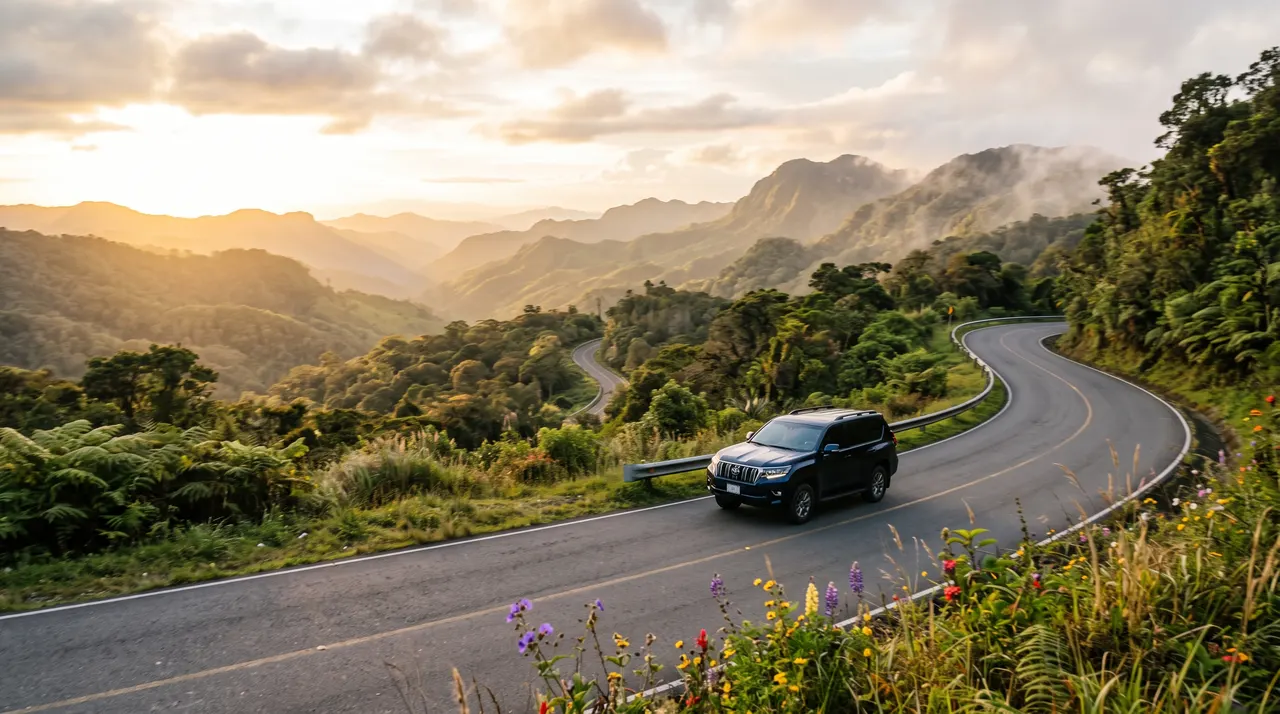
The mountain road up to Monteverde and the scenic Pan-American stretch over Cerro de la Muerte (Ruta 2) are classic drives tourists seek out. For most visitors the real draw is the freedom to reach places trains and tours don't, on your own schedule, with the open road generally capped around 100 km/h highways where signed. Getting behind the wheel is the easy part: your International Driving Permit is a certified translation of your Nigeria licence, carried alongside it, so rental staff and officials in Costa Rica can read your credentials at a glance.
What applies to Nigeria licence holders in Costa Rica
| Nigeria licence in Costa Rica | |
|---|---|
| Do you need an IDP? | Recommended, not legally mandatory |
| IDP format required | 1949 Geneva |
| Your Nigeria licence script | Roman (Latin) alphabet |
| Nigeria is party to | 1949 Geneva and 1968 Vienna |
| Drives on the | Right-hand side |
| Minimum driving age | 18 |
| Emergency number | 911 |
| Top speed limit | 100 km/h highways where signed |
| Currency | CRC |
Driving rules in Costa Rica you should know
- Drive on the right.
- Mandatory state liability insurance on rentals.
- 0.05% alcohol limit.
- 4x4 advised for rural and rainy-season roads.
Local driving facts in Costa Rica
Emergency number: 911 (112 also connects from most mobiles). Typical maximum for cars on the fastest road class: 100 km/h highways where signed. Posted limits always take precedence.
Tolls & road charges in Costa Rica
A handful of routes are tolled, most notably Ruta 27 (San Jose to the Pacific via Caldera) with several small booths; tourists pay cash in colones (typically a few hundred to ~1,000 colones per booth) at the cabin.
Parking in Costa Rica
Curbs painted yellow forbid stopping near hydrants, bus stops and taxi stands; many town centres run paid street zones ('boletas de parquimetro') where you buy and display a paper ticket, and 'cuidacarros' informally watch parked cars for a small tip.
Penalties & enforcement in Costa Rica
Speeding tickets are notoriously steep (roughly 100,000-300,000+ colones, around US$200-450 for serious excess), and fines for phone use or no seatbelt also run into the tens of thousands of colones; transit police issue a ticket rather than collect cash roadside, and rental firms pass camera/photo-radar fines to the renter's card.
If you have an accident in Costa Rica
Call 911 and notify the rental company immediately; by law you must NOT move the vehicles until the transit police (Transito) and the INS insurance inspector arrive and document the scene, even if you are blocking traffic.
City driving in Costa Rica
In San Jose, avoid the chaotic 'La Hispanidad'/Sabana rotondas and note the city's restriction quirk: heavy congestion and one-way grids downtown make GPS essential, and parking enforcement around Paseo Colon is strict.
Winter driving in Costa Rica
No winter-tyre rules - tropical climate.
Fuel in Costa Rica
All stations are full-service (attendant fills the tank, no self-serve) and prices are fixed nationwide by RECOPE/ARESEP; mid-2026 prices run about 753-756 colones/litre for super/regular and ~670 for diesel, with cards widely accepted at branded stations.
Sources: adobecar.com, twoweeksincostarica.com, costaricavibes.com, globalpetrolprices.com