 NZ licence
  Croatia
Can you drive in Croatia with an NZ license?
Short answer: to drive in Croatia with an NZ license you need an International Driving Permit in the 1949 Geneva or 1968 Vienna format, carried together with your NZ license.
Yes — to drive in Croatia on an NZ licence you should carry an International Driving Permit together with your NZ licence. Croatia expects foreign drivers to hold an IDP.
New Zealand drivers should carry an International Driving Permit alongside their licence when driving abroad. Your International Driving Permit is a certified multilingual translation of your existing licence, prepared in the 1949 Geneva & 1968 Vienna format and carried alongside your national licence.


What driving in Croatia is like
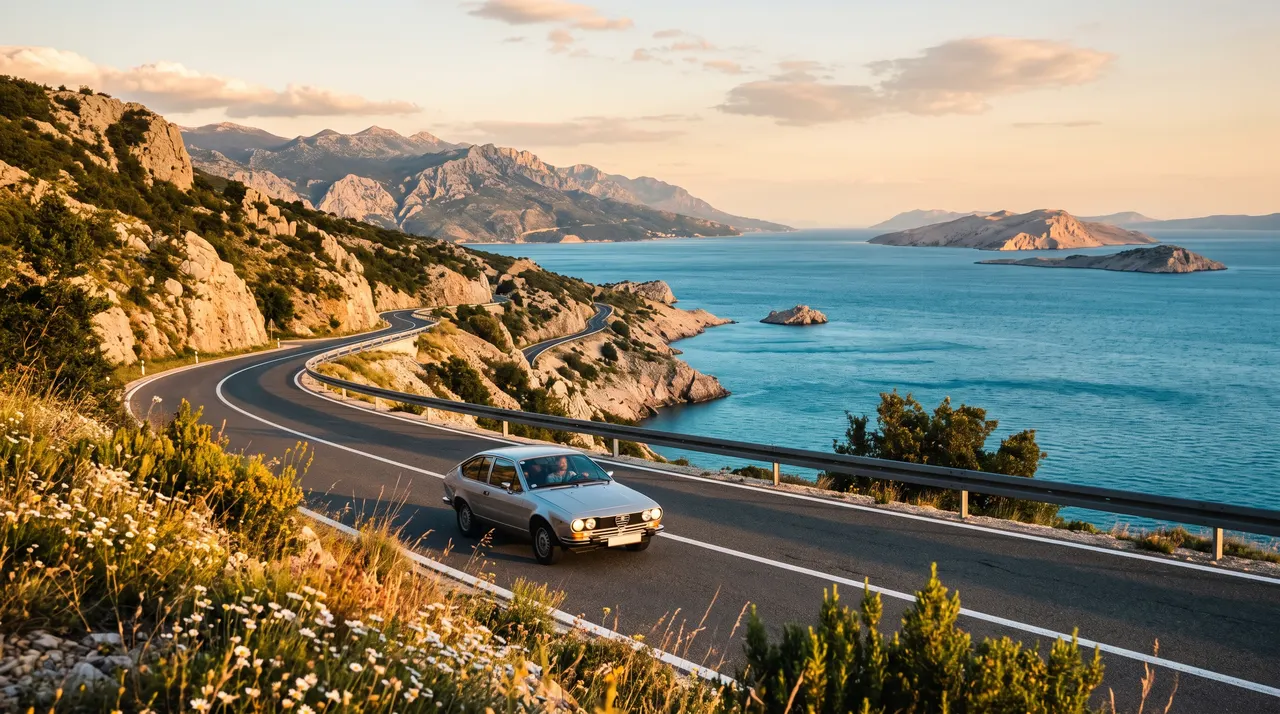
The Adriatic Highway (Jadranska magistrala, D8) hugging the coastline from Rijeka south toward Dubrovnik is the classic Croatian drive. For most visitors the real draw is the freedom to reach places trains and tours don't, on your own schedule, with the open road generally capped around 130 km/h motorways. Getting behind the wheel is the easy part: your International Driving Permit is a certified translation of your NZ licence, carried alongside it, so rental staff and officials in Croatia can read your credentials at a glance.
What applies to NZ licence holders in Croatia
| NZ licence in Croatia | |
|---|---|
| Do you need an IDP? | Yes — carry one alongside your licence |
| IDP format required | 1949 Geneva or 1968 Vienna |
| Your NZ licence script | Roman (Latin) alphabet |
| New Zealand is party to | 1949 Geneva |
| Drives on the | Right-hand side |
| Minimum driving age | 18 |
| Emergency number | 112 |
| Top speed limit | 130 km/h motorways |
| Currency | EUR |
Driving rules in Croatia you should know
- Headlights on in winter and in poor visibility.
- Reflective vest and triangle required.
- 0.05% alcohol limit; zero for drivers under 24.
- Toll motorways along the Adriatic.
Local driving facts in Croatia
Emergency number: 112 (112 also connects from most mobiles). Typical maximum for cars on the fastest road class: 130 km/h motorways. Posted limits always take precedence.
Tolls & road charges in Croatia
Croatia still uses a ticket-based toll system on most motorways (A1/A3/A5/A6 etc.), not a vignette: take a ticket on entry and pay on exit by cash (euros) or card; an ENC electronic tag gives a discount. Costs vary by distance, e.g. roughly EUR 30+ for Zagreb to Split.
Parking in Croatia
Cities use colour-coded paid zones controlled mainly by SMS/app: in Zagreb Zone 1 is about EUR 1.60/hr (max 2 hrs), Zone 2 about EUR 0.70/hr (max 3 hrs), with cheaper outer zones. Coastal towns get extremely congested in summer; illegal parking risks towing.
Penalties & enforcement in Croatia
Foreign drivers face on-the-spot fines from about EUR 70 for moderate speeding up to roughly EUR 2,000 for extreme speeding; the alcohol limit is 0.5 g/l (0.0 for drivers under 25). Speed cameras typically tolerate only about 10 km/h over, and rental firms pass camera fines to the renter with an admin fee.
If you have an accident in Croatia
Call 112 (or police 192) and report any accident involving injury or significant damage; for minor damage-only crashes, move vehicles clear and complete a European Accident Statement form. Leaving the scene of an injury accident is a serious offence.
City driving in Croatia
Zagreb's compact Upper Town (Gornji Grad) and the area around Ban Jelacic square have narrow one-way streets, trams sharing the carriageway, and tight paid parking zones - most visitors park in a garage and walk.
Winter driving in Croatia
Winter equipment is mandatory on designated winter road sections from 15 November to 15 April regardless of actual snow: winter (M+S or 3PMSF) tyres on all wheels, or summer tyres with at least 4 mm tread plus chains carried. Driving without it risks an on-the-spot fine around EUR 130.
Fuel in Croatia
Stations sell Eurosuper 95/100 petrol and Eurodizel diesel, mostly attended (self-serve growing); cards are widely accepted. Prices run roughly EUR 1.40-1.55 per litre, with rural and island stations sparser, so refuel before long stretches.
Sources: rac.co.uk, croatiaweek.com, zagrebparking.hr, tyremap.com