 UK licence
  Eswatini
Can you drive in Eswatini with a UK license?
Short answer: to drive in Eswatini with a UK license you need an International Driving Permit in the 1968 Vienna format, carried together with your UK license.
Yes — to drive in Eswatini on a UK licence you should carry an International Driving Permit together with your UK licence. Eswatini expects foreign drivers to hold an IDP.
UK drivers should carry an International Driving Permit with their licence; some countries recognise the 1949 version and others the 1968 version. Your International Driving Permit is a certified multilingual translation of your existing licence, prepared in the 1968 Vienna format and carried alongside your national licence.


What driving in Eswatini is like
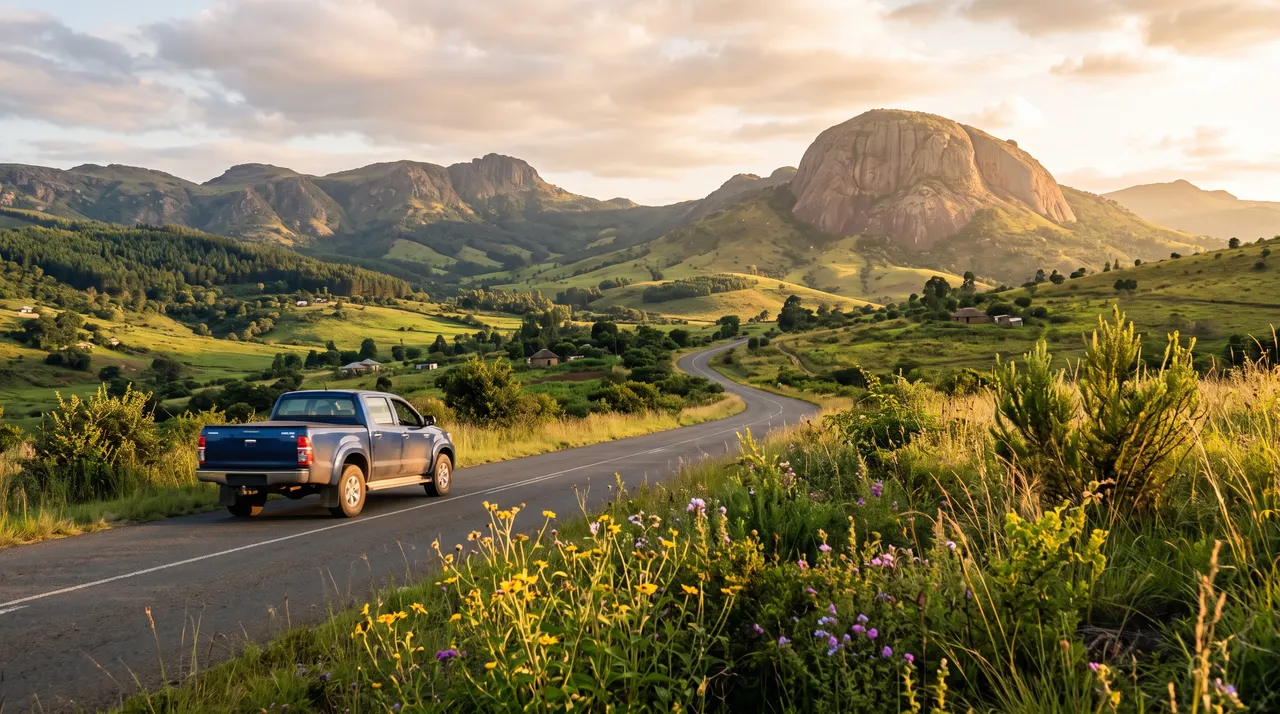
The drive through the Ezulwini and Malkerns valleys and on toward Sibebe Rock and the Malolotja highlands is a celebrated scenic route. For most visitors the real draw is the freedom to reach places trains and tours don't, on your own schedule, with the open road generally capped around 120 km/h on the MR3 highway. Getting behind the wheel is the easy part: your International Driving Permit is a certified translation of your UK licence, carried alongside it, so rental staff and officials in Eswatini can read your credentials at a glance.
What applies to UK licence holders in Eswatini
| UK licence in Eswatini | |
|---|---|
| Do you need an IDP? | Yes — carry one alongside your licence |
| IDP format required | 1968 Vienna |
| Your UK licence script | Roman (Latin) alphabet |
| United Kingdom is party to | 1949 Geneva and 1968 Vienna |
| Drives on the | Left-hand side |
| Minimum driving age | 18 |
| Emergency number | 999 |
| Top speed limit | 120 km/h on the MR3 highway |
| Currency | SZL |
Driving rules in Eswatini you should know
- Drive on the left.
- Watch for livestock on rural roads.
- 0.05% alcohol limit.
- Seatbelts mandatory.
Local driving facts in Eswatini
Emergency number: 999 (112 also connects from most mobiles). Typical maximum for cars on the fastest road class: 120 km/h on the MR3 highway. Posted limits always take precedence.
Tolls & road charges in Eswatini
Eswatini has no toll roads, vignette or e-toll system, so tourists pay no road tolls.
Parking in Eswatini
Mbabane and Manzini use metered/attended pay-and-display street parking enforced by marshals during business hours; pay the attendant or meter and use guarded lots to avoid clamping.
Penalties & enforcement in Eswatini
The drink-drive limit is 0.05% and strictly enforced; speeding (limits 60 urban / 80 rural / 120 highway km/h), seatbelt and hand-held phone offences draw fines, sometimes on-the-spot, which rental firms pass to your card.
If you have an accident in Eswatini
Stop and do not move vehicles if there are injuries; call police on 999 (or 977 for ambulance), and any accident with injury or significant damage must be reported to the Royal Eswatini Police for a report.
City driving in Eswatini
Drive on the LEFT; the MR3 corridor through Mbabane and the steep, winding Malagwane Hill descent into the Ezulwini Valley is notoriously accident-prone and heavily policed for speed.
Winter driving in Eswatini
No winter-tyre rules - subtropical climate, though highland roads can get foggy and frosty in winter mornings.
Fuel in Eswatini
Petrol and diesel are sold attended (no self-service), roughly E20-22 per litre; cards are usually accepted in towns but stations thin out in rural areas, so fill up before long stretches.
Sources: tyremap.com, driverabroad.com, idp-usa.com, agribusinessmedia.com