 Philippines licence
  Iraq
IraqCan you drive in Iraq with a Philippines license?
Short answer: to drive in Iraq with a Philippines license you need an International Driving Permit in the 1949 Geneva format, carried together with your Philippines license.
Yes — to drive in Iraq on a Philippines licence you should carry an International Driving Permit together with your Philippines licence. Iraq expects foreign drivers to hold an IDP.
Philippine drivers need an International Driving Permit to drive or rent a car in most countries abroad. Your International Driving Permit is a certified multilingual translation of your existing licence, prepared in the 1949 Geneva format and carried alongside your national licence.


What driving in Iraq is like
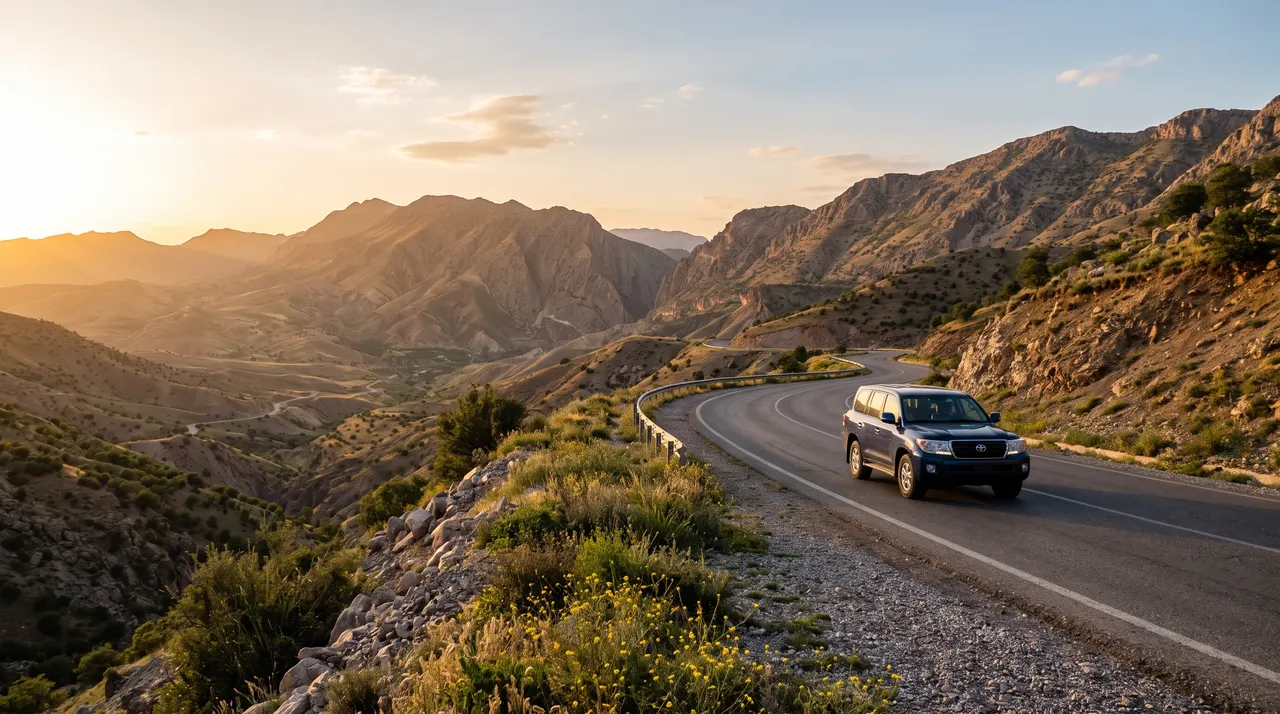
The mountain road from Erbil up to the resort town of Shaqlawa and on toward Rawanduz Gorge in the Kurdistan region is the country's best-known scenic drive. For most visitors the real draw is the freedom to reach places trains and tours don't, on your own schedule, with the open road generally capped around 120 km/h expressways. Getting behind the wheel is the easy part: your International Driving Permit is a certified translation of your Philippines licence, carried alongside it, so rental staff and officials in Iraq can read your credentials at a glance.
What applies to Philippines licence holders in Iraq
| Philippines licence in Iraq | |
|---|---|
| Do you need an IDP? | Yes — carry one alongside your licence |
| IDP format required | 1949 Geneva |
| Your Philippines licence script | Roman (Latin) alphabet |
| Philippines is party to | 1968 Vienna |
| Drives on the | Right-hand side |
| Minimum driving age | 18 |
| Emergency number | 104 (police), 122 (ambulance) |
| Top speed limit | 120 km/h expressways |
| Currency | IQD |
Driving rules in Iraq you should know
- Drive on the right.
- Numerous security checkpoints.
- Carry passport, IDP and home licence.
- Drive defensively on intercity roads.
Local driving facts in Iraq
Emergency number: 104 (police), 122 (ambulance) (112 also connects from most mobiles). Typical maximum for cars on the fastest road class: 120 km/h expressways. Posted limits always take precedence.
Tolls & road charges in Iraq
Iraq has no nationwide electronic toll network; intercity roads are largely toll-free, though informal checkpoint stops and parking-style fees occur. Budget for fuel and security rather than tolls.
Parking in Iraq
Parking in Baghdad, Erbil and Basra is informal and often managed by attendants who collect a small cash fee; secure hotel or guarded lots are strongly advised over street parking for foreign-plated or rental cars.
Penalties & enforcement in Iraq
Traffic fines are typically issued and paid in cash to police on the spot; common citations cover speeding, seatbelt and phone use, and rental firms pass any unpaid fines or impound costs back to the renter. Night driving is discouraged for safety, not just legal, reasons.
If you have an accident in Iraq
After any crash, stop immediately, do not move the vehicles, and call police on 104 (general emergency 122); a police report is required for any insurance claim and for the rental company. Stay at the scene until officers arrive.
City driving in Iraq
Baghdad traffic is dense and undisciplined with frequent military/police checkpoints where you must stop, lower the window and present ID and documents; avoid the heavily restricted Green Zone (International Zone) without authorisation.
Winter driving in Iraq
No winter-tyre rules - no significant snow except limited high-altitude Kurdistan areas; carry chains only if driving mountain roads near Erbil or Sulaymaniyah in deep winter.
Fuel in Iraq
Petrol (benzene, regular and 'improved'/super grades) and diesel are sold cheaply at attended stations; pumps are attendant-served and cash in Iraqi dinar is expected, as card acceptance is unreliable. Fill up in towns before long desert stretches.
Sources: remitly.com, internationaldrivingpermit.org, internationaltravelpermits.com