 India licence
  Ivory Coast
Can you drive in Ivory Coast with an India license?
Short answer: to drive in Ivory Coast with an India license you need an International Driving Permit in the 1949 Geneva format, carried together with your India license.
Yes — to drive in Ivory Coast on an India licence you should carry an International Driving Permit together with your India licence. Ivory Coast expects foreign drivers to hold an IDP.
Indian drivers need an International Driving Permit to drive or rent a car in most countries abroad. Your International Driving Permit is a certified multilingual translation of your existing licence, prepared in the 1949 Geneva format and carried alongside your national licence.


What driving in Ivory Coast is like
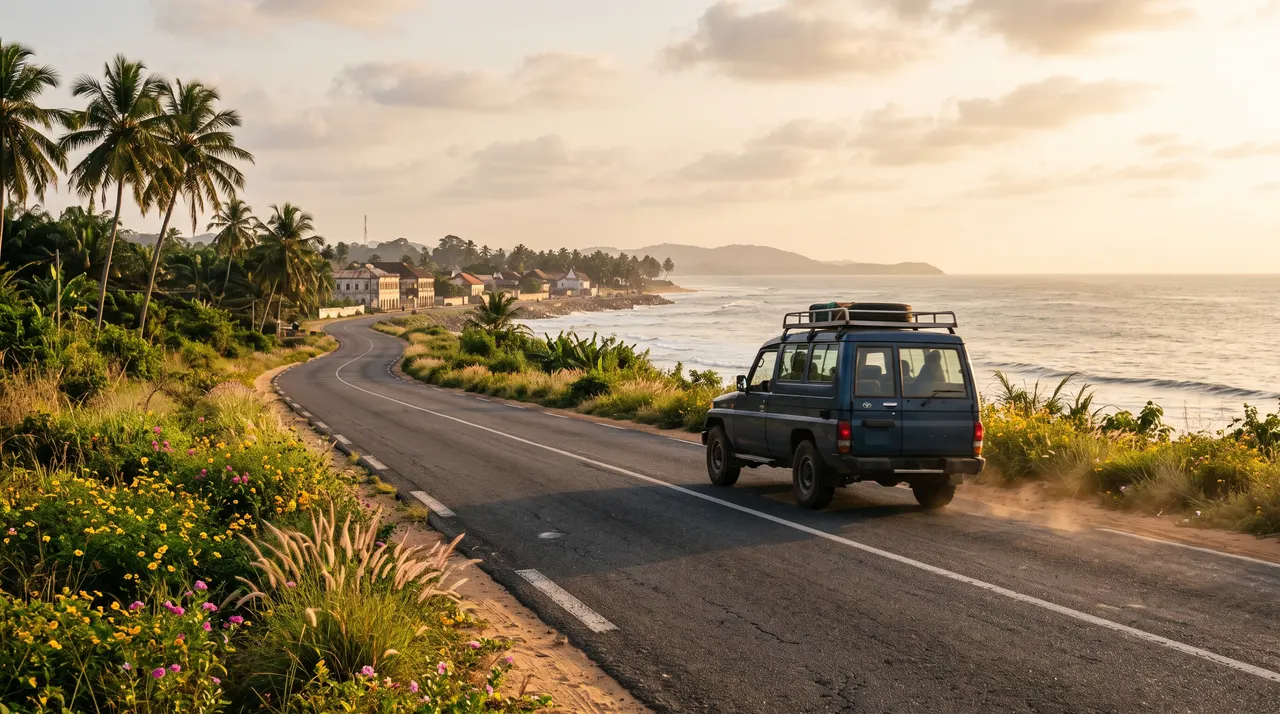
The coastal highway from Abidjan east to Grand-Bassam, the UNESCO-listed former colonial capital, is the classic short scenic drive. For most visitors the real draw is the freedom to reach places trains and tours don't, on your own schedule, with the open road generally capped around 120 km/h on the Abidjan–Yamoussoukro autoroute. Getting behind the wheel is the easy part: your International Driving Permit is a certified translation of your India licence, carried alongside it, so rental staff and officials in Ivory Coast can read your credentials at a glance.
What applies to India licence holders in Ivory Coast
| India licence in Ivory Coast | |
|---|---|
| Do you need an IDP? | Yes — carry one alongside your licence |
| IDP format required | 1949 Geneva |
| Your India licence script | Roman (Latin) alphabet |
| India is party to | 1949 Geneva |
| Drives on the | Right-hand side |
| Minimum driving age | 18 |
| Emergency number | 111 or 170 (police), 185 (ambulance) |
| Top speed limit | 120 km/h on the Abidjan–Yamoussoukro autoroute |
| Currency | XOF |
Driving rules in Ivory Coast you should know
- Drive on the right.
- Toll motorway between Abidjan and Yamoussoukro.
- 0.08% alcohol limit.
- Carry passport, IDP and home licence.
Local driving facts in Ivory Coast
Emergency number: 111 or 170 (police), 185 (ambulance) (112 also connects from most mobiles). Typical maximum for cars on the fastest road class: 120 km/h on the Abidjan–Yamoussoukro autoroute. Posted limits always take precedence.
Tolls & road charges in Ivory Coast
Abidjan's Henri Konan Bédié (HKB / Third) Bridge is a tolled expressway with a 21-lane plaza accepting cash and electronic tags, and tolls also apply on the Abidjan-Grand-Bassam and Yamoussoukro motorway sections; pay in CFA francs at the booths.
Parking in Ivory Coast
In Abidjan informal attendants control most street parking for a small CFA-franc fee, and parking on sidewalks or in front of hydrants risks fines or towing; formal metered zones and apps are largely absent.
Penalties & enforcement in Ivory Coast
Roadside police checks are frequent; speeding, no-seatbelt and handheld-phone use draw on-the-spot CFA-franc fines often settled in cash, and rental firms pass on any speed-camera or toll penalties to the card on file.
If you have an accident in Ivory Coast
Call the police on 170 (or 111) and the fire/rescue service on 180; do not move vehicles after an injury crash and obtain a police report (constat), which rental companies require for any insurance claim.
City driving in Ivory Coast
Abidjan traffic is severe at peak hours and the HKB Bridge is the key bottleneck-relief route between Cocody/Riviera and Marcory; expect aggressive shared-taxi ('woro-woro') and gbaka minibus behaviour at major junctions.
Winter driving in Ivory Coast
No winter-tyre rules - tropical climate.
Fuel in Ivory Coast
Stations sell 'super' (petrol) and 'gasoil' (diesel) in CFA francs at government-regulated prices, are attendant-served, and are plentiful in cities; cards are accepted at major-brand outlets in Abidjan but carry cash elsewhere.
Sources: internationaldriversassociation.com, en.wikipedia.org, internationaldrivingauthority.com