 Philippines licence
  Kenya
KenyaCan you drive in Kenya with a Philippines license?
Short answer: to drive in Kenya with a Philippines license you need an International Driving Permit in the 1968 Vienna format, carried together with your Philippines license.
Yes — to drive in Kenya on a Philippines licence you should carry an International Driving Permit together with your Philippines licence. Kenya expects foreign drivers to hold an IDP.
Philippine drivers need an International Driving Permit to drive or rent a car in most countries abroad. Your International Driving Permit is a certified multilingual translation of your existing licence, prepared in the 1968 Vienna format and carried alongside your national licence.


What driving in Kenya is like
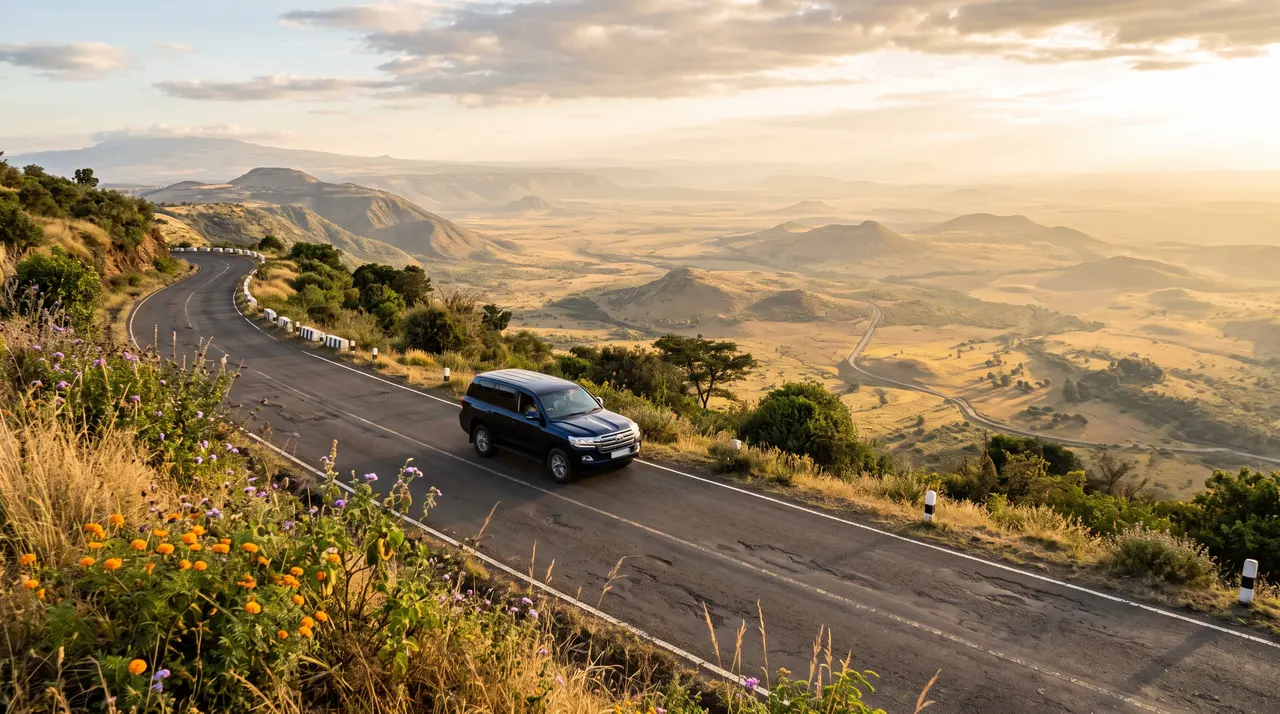
The drive through the Great Rift Valley viewpoint on the Nairobi-Naivasha road (old escarpment route) is the standout scenic trip visitors seek. For most visitors the real draw is the freedom to reach places trains and tours don't, on your own schedule, with the open road generally capped around 110 km/h highways. Getting behind the wheel is the easy part: your International Driving Permit is a certified translation of your Philippines licence, carried alongside it, so rental staff and officials in Kenya can read your credentials at a glance.
What applies to Philippines licence holders in Kenya
| Philippines licence in Kenya | |
|---|---|
| Do you need an IDP? | Yes — carry one alongside your licence |
| IDP format required | 1968 Vienna |
| Your Philippines licence script | Roman (Latin) alphabet |
| Philippines is party to | 1968 Vienna |
| Drives on the | Left-hand side |
| Minimum driving age | 18 |
| Emergency number | 999 or 112 |
| Top speed limit | 110 km/h highways |
| Currency | KES |
Driving rules in Kenya you should know
- Drive on the left.
- Carry licence, IDP and passport.
- Wildlife and pedestrians near roads.
- Police checkpoints are routine.
Local driving facts in Kenya
Emergency number: 999 or 112 (112 also connects from most mobiles). Typical maximum for cars on the fastest road class: 110 km/h highways. Posted limits always take precedence.
Tolls & road charges in Kenya
Kenya's main toll is the Nairobi Expressway (Mlolongo-JKIA-Westlands), priced by entry/exit pair from about KES 170 up to KES 500 for a car; pay cash at manual lanes or use an ETC tag, while most other highways are toll-free.
Parking in Kenya
Nairobi CBD parking requires a county daily parking fee (payable via the county M-Pesa paybill or attendants); unpaid or wrongly parked cars are clamped or towed, and guarded private lots are safer.
Penalties & enforcement in Kenya
Speeding, seatbelt and phone offences draw fines under the Traffic Act; if stopped, always insist on an official receipt and the cited section rather than paying roadside, and ask to go to a police station if pressured.
If you have an accident in Kenya
Call 999 or 112 for police and ambulance; report the accident and obtain an OB (Occurrence Book) number at the nearest police station, which insurers require, and never offer cash to officers as bribery is illegal.
City driving in Kenya
Nairobi traffic is intense with roundabouts replacing many lights and unpredictable matatu minibuses; corridors like Mombasa Road, Thika Road and Waiyaki Way jam badly at peak hours.
Winter driving in Kenya
No winter-tyre rules - tropical climate; the real seasonal hazard is heavy rain causing flooding and slick, potholed roads.
Fuel in Kenya
Stations sell Super Petrol and Diesel (plus some kerosene), are attendant-served, and are widely available; as of mid-2026 Nairobi petrol is around KES 214/litre and diesel above KES 219/litre, payable by card, cash or M-Pesa.
Sources: icabs.co.ke, tollguru.com, globalpetrolprices.com, internationaldrivingpermit.org