 Australia licence
  Lebanon
Can you drive in Lebanon with an Australia license?
Short answer: to drive in Lebanon with an Australia license you need an International Driving Permit in the 1949 Geneva format, carried together with your Australia license.
Yes — to drive in Lebanon on an Australia licence you should carry an International Driving Permit together with your Australia licence. Lebanon expects foreign drivers to hold an IDP.
Australian drivers should carry an International Driving Permit (1949 Convention) alongside their state licence when driving abroad. Your International Driving Permit is a certified multilingual translation of your existing licence, prepared in the 1949 Geneva format and carried alongside your national licence.


What driving in Lebanon is like
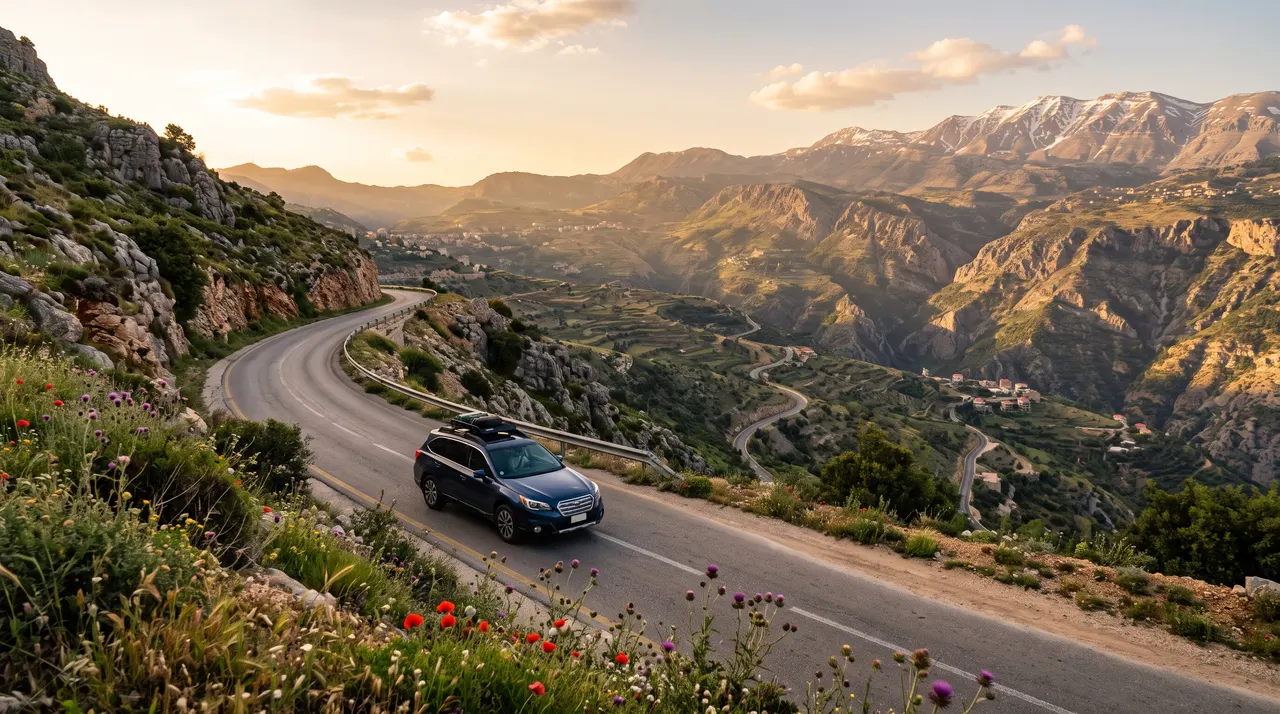
The mountain drive from Beirut up to Faraya-Mzaar climbs to about 1,650 m with sweeping panoramic views and is a route visitors specifically seek out. For most visitors the real draw is the freedom to reach places trains and tours don't, on your own schedule, with the open road generally capped around 100 km/h highways. Getting behind the wheel is the easy part: your International Driving Permit is a certified translation of your Australia licence, carried alongside it, so rental staff and officials in Lebanon can read your credentials at a glance.
What applies to Australia licence holders in Lebanon
| Australia licence in Lebanon | |
|---|---|
| Do you need an IDP? | Yes — carry one alongside your licence |
| IDP format required | 1949 Geneva |
| Your Australia licence script | Roman (Latin) alphabet |
| Australia is party to | 1949 Geneva |
| Drives on the | Right-hand side |
| Minimum driving age | 18 |
| Emergency number | 112 or 999 |
| Top speed limit | 100 km/h highways |
| Currency | LBP |
Driving rules in Lebanon you should know
- Drive on the right.
- Seatbelts mandatory.
- 0.05% alcohol limit.
- Drive defensively in dense city traffic.
Local driving facts in Lebanon
Emergency number: 112 or 999 (112 also connects from most mobiles). Typical maximum for cars on the fastest road class: 100 km/h highways. Posted limits always take precedence.
Tolls & road charges in Lebanon
Lebanon has no functioning highway toll or vignette system, so tourists pay nothing for road use beyond fuel.
Parking in Lebanon
Beirut has paid metered and zoned street parking plus many attended private lots; illegal parking, even where locals do it, risks fines and towing, and valet parking is widespread at restaurants and hotels.
Penalties & enforcement in Lebanon
Under the current traffic law, driving ~20 km/h over the limit costs around 200,000 LL and no seatbelt around 350,000 LL, with phone use and red-light running similarly fined; tickets may be handled on the spot, and rental firms pass camera/parking fines to the card on file.
If you have an accident in Lebanon
Dial 112 for police and 140 for the Lebanese Red Cross ambulance; stop at the scene, do not leave, and wait for the Internal Security Forces to file a report, which insurers and the rental company will require for any claim.
City driving in Lebanon
In Beirut expect heavy, aggressive traffic with weak signage, frequent ignoring of lanes and red lights, and chaotic informal roundabouts such as Dora and the Cola junction, where right-of-way is negotiated rather than signed.
Winter driving in Lebanon
No nationwide winter-tyre law, but snow chains or winter tyres are strongly advised roughly December-March on the high mountain roads to ski resorts such as Faraya-Mzaar and the Cedars, where snow regularly closes passes.
Fuel in Lebanon
Stations sell 95 and 98 octane petrol plus diesel (mazout) and are attendant-served; they are plentiful on main routes but sparse in remote mountains, and after years of shortages it is wise to keep the tank full and carry cash as prices fluctuate.
Sources: internationaldriversassociation.com, stateofmind13.com, tyremap.com, lebanoninfocenter.eu.org