 Philippines licence
  Mauritania
Can you drive in Mauritania with a Philippines license?
Short answer: to drive in Mauritania with a Philippines license you need an International Driving Permit in the 1949 Geneva format, carried together with your Philippines license.
Yes — to drive in Mauritania on a Philippines licence you should carry an International Driving Permit together with your Philippines licence. Mauritania expects foreign drivers to hold an IDP.
Philippine drivers need an International Driving Permit to drive or rent a car in most countries abroad. Your International Driving Permit is a certified multilingual translation of your existing licence, prepared in the 1949 Geneva format and carried alongside your national licence.


What driving in Mauritania is like
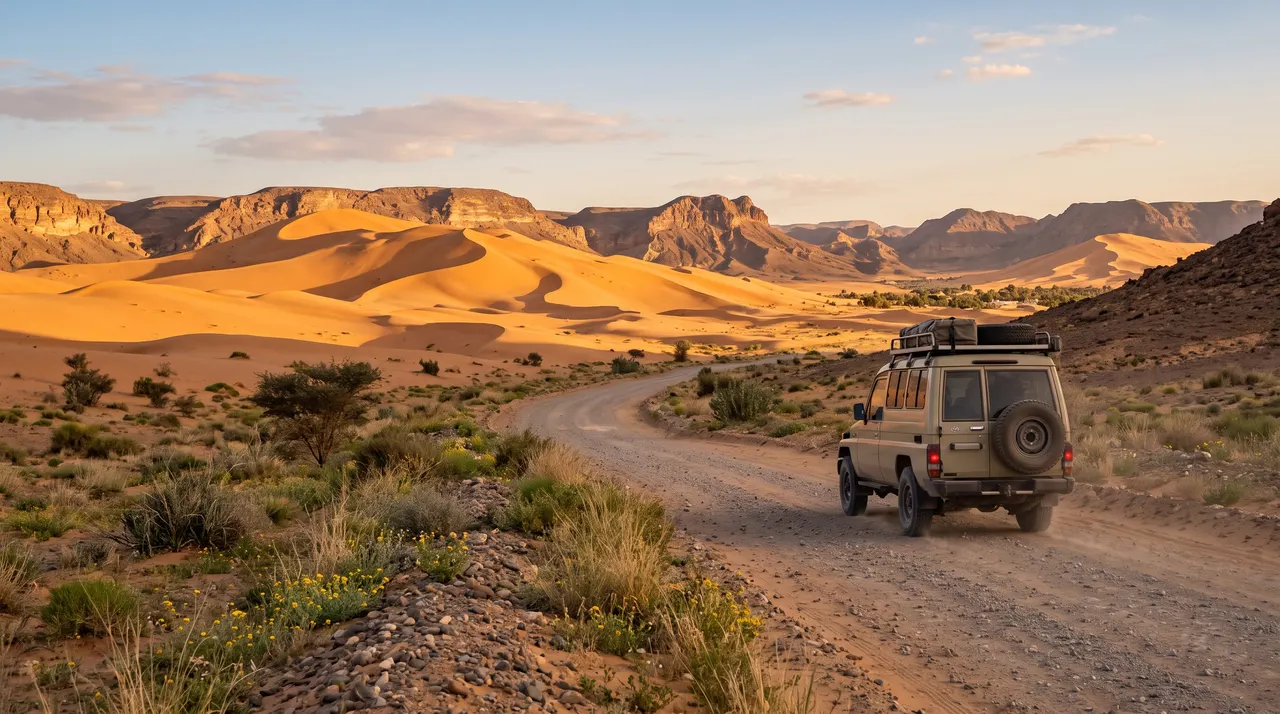
The Nouakchott-Atar desert route into the Adrar plateau is the classic Saharan drive, offering vast dunes and the oasis towns of the interior. For most visitors the real draw is the freedom to reach places trains and tours don't, on your own schedule, with the open road generally capped around 90 km/h highways. Getting behind the wheel is the easy part: your International Driving Permit is a certified translation of your Philippines licence, carried alongside it, so rental staff and officials in Mauritania can read your credentials at a glance.
What applies to Philippines licence holders in Mauritania
| Philippines licence in Mauritania | |
|---|---|
| Do you need an IDP? | Yes — carry one alongside your licence |
| IDP format required | 1949 Geneva |
| Your Philippines licence script | Roman (Latin) alphabet |
| Philippines is party to | 1968 Vienna |
| Drives on the | Right-hand side |
| Minimum driving age | 18 |
| Emergency number | 117 (police), 101 (ambulance) |
| Top speed limit | 90 km/h highways |
| Currency | MRU |
Driving rules in Mauritania you should know
- Drive on the right.
- Sand drifts across desert roads.
- Alcohol is prohibited.
- Carry passport, IDP and home licence.
Local driving facts in Mauritania
Emergency number: 117 (police), 101 (ambulance) (112 also connects from most mobiles). Typical maximum for cars on the fastest road class: 90 km/h highways. Posted limits always take precedence.
Tolls & road charges in Mauritania
There are no toll roads in Mauritania, so no vignette or e-tag is needed. The main paved corridors (e.g. Nouakchott-Nouadhibou, Nouakchott-Rosso) are free to use.
Parking in Mauritania
Parking is largely unregulated and informal, with no paid colour-coded zones; in central Nouakchott self-appointed gardiens will watch your car for a small tip. Avoid leaving vehicles unattended off main streets.
Penalties & enforcement in Mauritania
Police roadblocks may levy on-the-spot cash fines for licence, insurance or document irregularities, so insist on a receipt. The mandatory windscreen insurance sticker (about 950 MRU / US$26 for 10 days) is checked and its absence draws an immediate penalty.
If you have an accident in Mauritania
A police report must be filed for any crash; if there is injury or death the drivers involved are typically detained until a judge determines responsibility. Dial 117 for police (response is slow outside Nouakchott) and do not move vehicles before officers attend where possible.
City driving in Mauritania
In Nouakchott expect routine police checkpoints where you must produce ID, licence/IDP and the windscreen insurance sticker; the unpaved, sandy side-streets off the main avenues bog ordinary cars easily.
Winter driving in Mauritania
No winter-tyre rules - tropical/desert climate. The real hazard is wind-blown sand and dune drift across desert roads rather than snow.
Fuel in Mauritania
Stations sell petrol (essence) and diesel (gasoil); most in Nouakchott, Nouadhibou and Atar take major cards but rural pumps are cash-only and far apart, so keep the tank above half. Fill up at every opportunity before long desert stretches.
Sources: tyremap.com, internationaldriversassociation.com, automauritanie.com, travel.gc.ca