 Nigeria licence
  Mauritius
Can you drive in Mauritius with a Nigeria license?
Short answer: you can drive in Mauritius with a Nigeria license; an International Driving Permit is recommended and is carried alongside your Nigeria license.
An International Driving Permit is recommended (not strictly required) for Nigeria licence holders driving in Mauritius. Your Nigeria licence is in the Roman alphabet, but an IDP removes any doubt at rental desks and roadside checks. Carry both.
Nigerian drivers should carry an International Driving Permit alongside their national licence when driving abroad. Your International Driving Permit is a certified multilingual translation of your existing licence, prepared in the 1968 Vienna format and carried alongside your national licence.


What driving in Mauritius is like
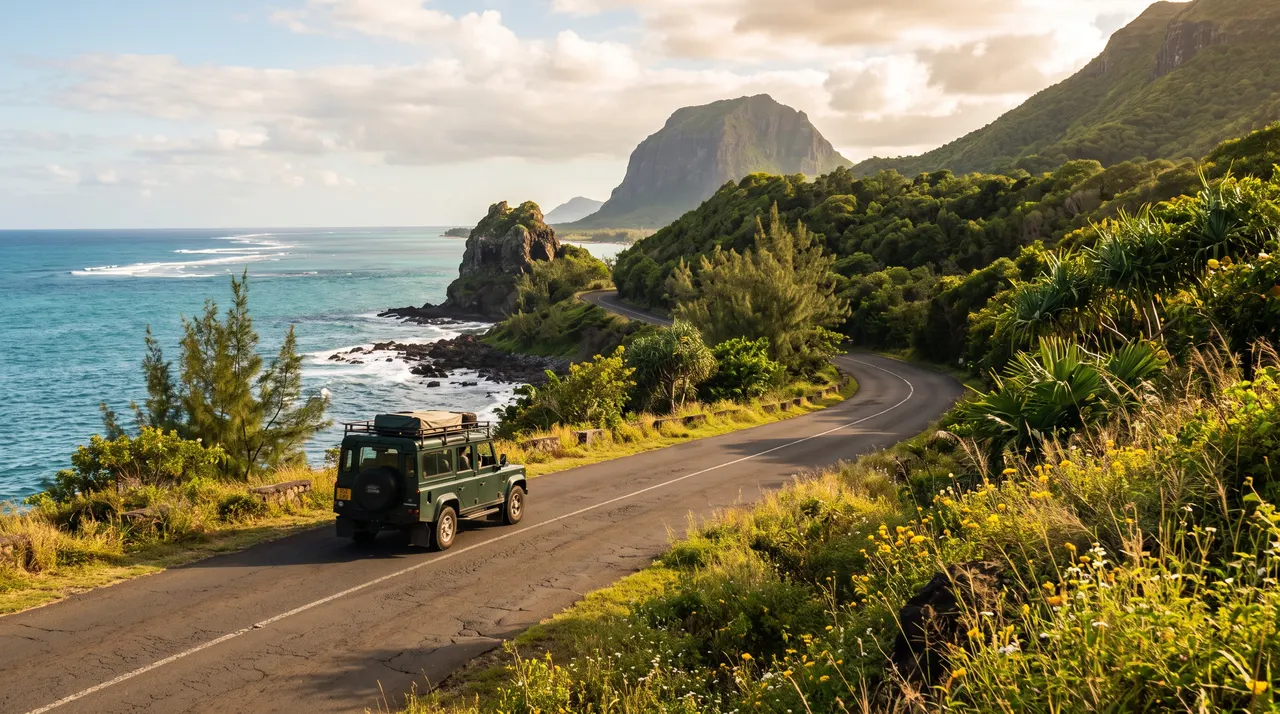
The coastal road around the south-west via Baie du Cap and the Black River Gorges to Chamarel and its viewpoints is the island's signature scenic drive. For most visitors the real draw is the freedom to reach places trains and tours don't, on your own schedule, with the open road generally capped around 110 km/h on the M1/M2 motorways. Getting behind the wheel is the easy part: your International Driving Permit is a certified translation of your Nigeria licence, carried alongside it, so rental staff and officials in Mauritius can read your credentials at a glance.
What applies to Nigeria licence holders in Mauritius
| Nigeria licence in Mauritius | |
|---|---|
| Do you need an IDP? | Recommended, not legally mandatory |
| IDP format required | 1968 Vienna |
| Your Nigeria licence script | Roman (Latin) alphabet |
| Nigeria is party to | 1949 Geneva and 1968 Vienna |
| Drives on the | Left-hand side |
| Minimum driving age | 18 |
| Emergency number | 999 or 112 (police), 114 (ambulance) |
| Top speed limit | 110 km/h on the M1/M2 motorways |
| Currency | MUR |
Driving rules in Mauritius you should know
- Drive on the left.
- Narrow roads and frequent roundabouts.
- 0.05% alcohol limit.
- Seatbelts mandatory.
Local driving facts in Mauritius
Emergency number: 999 or 112 (police), 114 (ambulance) (112 also connects from most mobiles). Typical maximum for cars on the fastest road class: 110 km/h on the M1/M2 motorways. Posted limits always take precedence.
Tolls & road charges in Mauritius
There are currently no road tolls in Mauritius; all routes, including the M1/M2/M3 motorways, are free, though some newly built privately funded roads parallel to existing free routes may be tolled in future.
Parking in Mauritius
Free parking is widespread except in Port Louis, Curepipe, Quatre Bornes and Rose Hill, where paid bays use prepaid parking coupons/cards costing roughly Rs 20-30 per 30 minutes. Display the scratched coupon on the dashboard or risk a fine.
Penalties & enforcement in Mauritius
Speeding, mobile-phone use and seatbelt offences draw fixed fines and police can issue on-the-spot contraventions; rental firms pass camera-detected speed-camera fines to the hirer's card with an admin fee. Drink-driving limits are low and enforced.
If you have an accident in Mauritius
Call 999 (police/ambulance) or 112; reporting is required where there is injury or significant damage. Photograph the scene, exchange details, and only move vehicles if they pose a danger to other traffic while awaiting police.
City driving in Mauritius
Port Louis is congested and largely one-way; the M1 through the capital and the roundabout-heavy approach to the waterfront jam badly at rush hour, and paid-coupon zones are strictly enforced downtown.
Winter driving in Mauritius
No winter-tyre rules - tropical climate. The seasonal hazard is heavy summer rain (cyclone season roughly November-April) making roads slippery.
Fuel in Mauritius
Petrol (Mogas/unleaded) and diesel (gasoil) are sold at all stations, some open 24/7; pumps are attended and cards are widely accepted. Indicative prices are around Rs 70+/L for petrol and slightly less for diesel.
Sources: tyremap.com, rhinocarhire.com, landtransport.govmu.org, maki-car-rental.com