 Nigeria licence
  Monaco
Can you drive in Monaco with a Nigeria license?
Short answer: you can drive in Monaco with a Nigeria license; an International Driving Permit is recommended and is carried alongside your Nigeria license.
An International Driving Permit is recommended (not strictly required) for Nigeria licence holders driving in Monaco. Your Nigeria licence is in the Roman alphabet, but an IDP removes any doubt at rental desks and roadside checks. Carry both.
Nigerian drivers should carry an International Driving Permit alongside their national licence when driving abroad. Your International Driving Permit is a certified multilingual translation of your existing licence, prepared in the 1949 Geneva & 1968 Vienna format and carried alongside your national licence.


What driving in Monaco is like
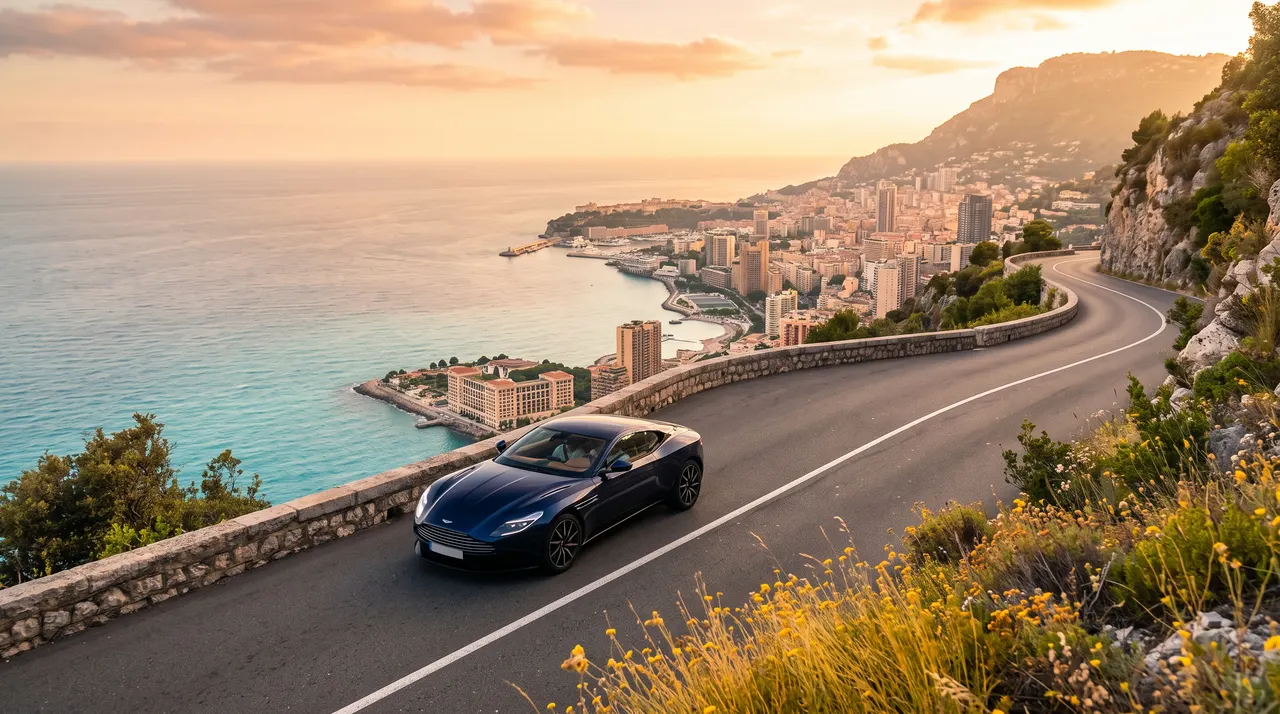
The cliff-hugging Moyenne Corniche (D6007) between Nice and Monaco delivers iconic Riviera coastline views. For most visitors the real draw is the freedom to reach places trains and tours don't, on your own schedule, with the open road generally capped around 50 km/h in the principality (French motorways 130). Getting behind the wheel is the easy part: your International Driving Permit is a certified translation of your Nigeria licence, carried alongside it, so rental staff and officials in Monaco can read your credentials at a glance.
What applies to Nigeria licence holders in Monaco
| Nigeria licence in Monaco | |
|---|---|
| Do you need an IDP? | Recommended, not legally mandatory |
| IDP format required | 1949 Geneva or 1968 Vienna |
| Your Nigeria licence script | Roman (Latin) alphabet |
| Nigeria is party to | 1949 Geneva and 1968 Vienna |
| Drives on the | Right-hand side |
| Minimum driving age | 18 |
| Emergency number | 112 |
| Top speed limit | 50 km/h in the principality (French motorways 130) |
| Currency | EUR |
Driving rules in Monaco you should know
- Drive on the right on tight, hilly streets.
- Strict parking enforcement.
- 0.05% alcohol limit.
- Seatbelts mandatory.
Local driving facts in Monaco
Emergency number: 112 (112 also connects from most mobiles). Typical maximum for cars on the fastest road class: 50 km/h in the principality (French motorways 130). Posted limits always take precedence.
Tolls & road charges in Monaco
Monaco itself has no toll roads, but the only practical road approach is France's tolled A8 autoroute, paid by cash, card or Telepass/Liber-t badge at French toll plazas.
Parking in Monaco
On-street space is minimal and strictly controlled; most visitors use public underground car parks, free for the first hour then rising on a sliding scale (about EUR 2.70 to EUR 14.50 for longer stays). Overstaying or bad parking risks a fine around EUR 35 and towing.
Penalties & enforcement in Monaco
Speeding, phone use and seatbelt violations are enforced to French/Monegasque standards with substantial fixed fines, and police can levy on-the-spot penalties. Rental companies recharge any camera fines to the renter with an admin fee.
If you have an accident in Monaco
Call 112 (or 17 for police, 18 for fire/rescue). Leave vehicles in place if anyone is injured and complete the European accident statement (constat amiable); a police report is needed for claims and required by rental firms.
City driving in Monaco
The tight, steep, multi-level streets of Monte Carlo trace parts of the F1 Grand Prix circuit, with tunnels, hairpins and one-way ramps; signage is French-standard and pedestrians are dense around the Casino and port.
Winter driving in Monaco
No mandatory winter-tyre rule in the principality; on neighbouring French Alpine routes (Loi Montagne zones) winter equipment may be required 1 November-31 March.
Fuel in Monaco
There are very few filling stations inside Monaco, so most drivers refuel in nearby France (Nice, Menton, Beausoleil); pumps are self-service and card-accepting, with prices near French levels around EUR 1.80-2.00 per litre.
Sources: rac.co.uk, thecarexpert.co.uk, internationaldriversassociation.com, tyremap.com