 Philippines licence
  Netherlands
Can you drive in Netherlands with a Philippines license?
Short answer: to drive in Netherlands with a Philippines license you need an International Driving Permit in the 1949 Geneva or 1968 Vienna format, carried together with your Philippines license.
Yes — to drive in Netherlands on a Philippines licence you should carry an International Driving Permit together with your Philippines licence. Netherlands expects foreign drivers to hold an IDP.
Philippine drivers need an International Driving Permit to drive or rent a car in most countries abroad. Your International Driving Permit is a certified multilingual translation of your existing licence, prepared in the 1949 Geneva & 1968 Vienna format and carried alongside your national licence.


What driving in Netherlands is like
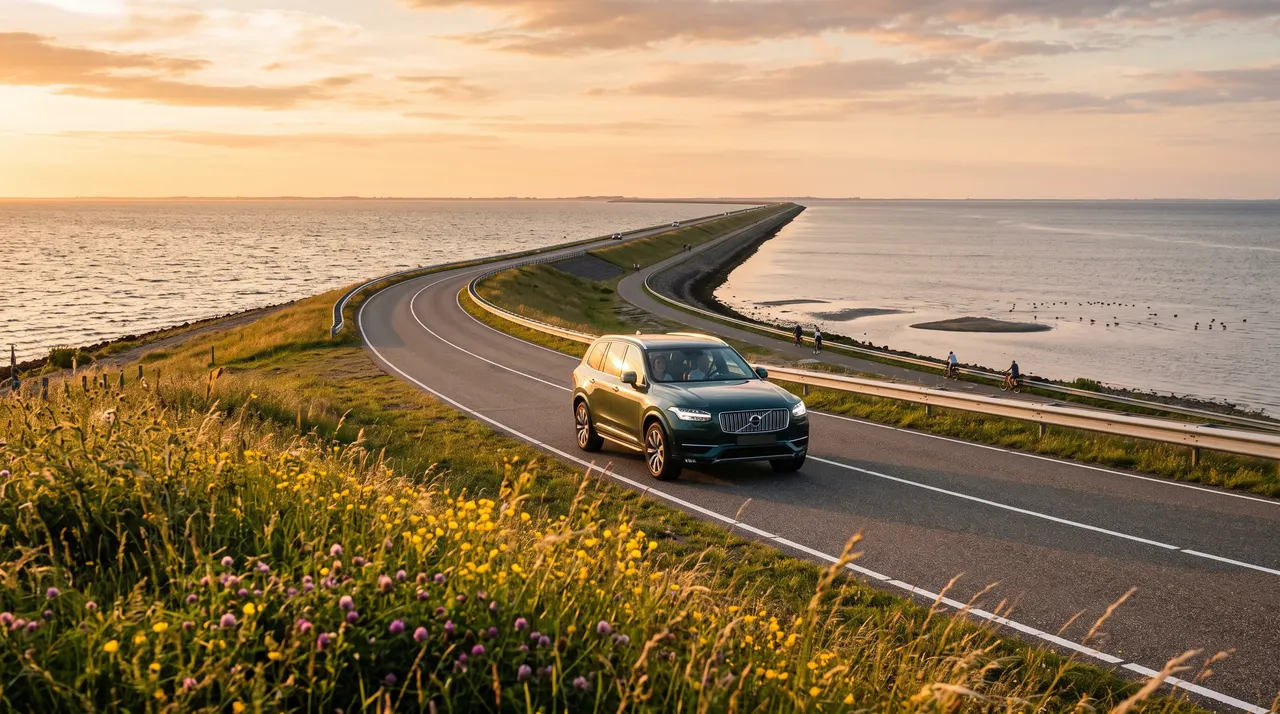
The Afsluitdijk, the 32 km causeway separating the IJsselmeer from the Wadden Sea, is the country's signature drive. For most visitors the real draw is the freedom to reach places trains and tours don't, on your own schedule, with the open road generally capped around 100 km/h daytime, 130 km/h at night. Getting behind the wheel is the easy part: your International Driving Permit is a certified translation of your Philippines licence, carried alongside it, so rental staff and officials in Netherlands can read your credentials at a glance.
What applies to Philippines licence holders in Netherlands
| Philippines licence in Netherlands | |
|---|---|
| Do you need an IDP? | Yes — carry one alongside your licence |
| IDP format required | 1949 Geneva or 1968 Vienna |
| Your Philippines licence script | Roman (Latin) alphabet |
| Philippines is party to | 1968 Vienna |
| Drives on the | Right-hand side |
| Minimum driving age | 18 |
| Emergency number | 112 |
| Top speed limit | 100 km/h daytime, 130 km/h at night |
| Currency | EUR |
Driving rules in Netherlands you should know
- Watch for cyclists — they have extensive right of way.
- Trams have priority.
- 0.05% alcohol limit; 0.02% for novice drivers.
- Low-emission zones in major cities.
Local driving facts in Netherlands
Emergency number: 112 (112 also connects from most mobiles). Typical maximum for cars on the fastest road class: 100 km/h daytime, 130 km/h at night. Posted limits always take precedence.
Tolls & road charges in Netherlands
There are no general motorway tolls or vignette; only two crossings charge fees, the Westerschelde Tunnel and the Kil Tunnel near Dordrecht, paid by card or app. Otherwise the motorway network is free to use.
Parking in Netherlands
City street parking is paid via meter or apps such as ParkMobile/Yellowbrick and is among Europe's most expensive (central Amsterdam can exceed EUR 7 per hour). Blue zones need a disc for a free limited stay, and residential permit zones are enforced by scanning cars; overstays bring roughly EUR 70 fines.
Penalties & enforcement in Netherlands
Fines rose sharply from January 2026; handheld phone use is around EUR 430, no seatbelt and speeding carry heavy penalties, and enforcement uses extensive fixed and mobile/average-speed cameras. Fines are not collected on the spot from cars with foreign plates but are billed; rental firms forward camera fines with a handling charge.
If you have an accident in Netherlands
Call 112 for injuries or blocked roads; for minor damage exchange details and jointly complete the schadeformulier (European Accident Statement) rather than calling police. Move vehicles out of live traffic where safe, but leave them in place and photograph the scene if fault is disputed.
City driving in Netherlands
Amsterdam's low-emission/zero-emission zone inside the A10 ring bars older diesels (fine about EUR 230), and the city centre is dominated by cyclists, trams and narrow canal-side streets where bikes always have priority. Many other cities (The Hague, Rotterdam, Utrecht) run their own milieuzones.
Winter driving in Netherlands
No winter-tyre or snow-chain requirement; the climate is mild and snow is infrequent. Standard all-season or summer tyres meeting the 1.6 mm tread minimum are legal year-round.
Fuel in Netherlands
Stations sell Euro 95 (E10) and Euro 98 petrol plus Diesel; almost all are self-service and take international cards, with unattended motorway pumps common. Prices are among Europe's highest, around EUR 2.00 per litre for petrol.
Sources: rac.co.uk, amsterdam.nl, ftnnews.com, business.gov.nl