 UK licence
  Philippines
Can you drive in Philippines with a UK license?
Short answer: you can drive in Philippines with a UK license; an International Driving Permit is recommended and is carried alongside your UK license.
An International Driving Permit is recommended (not strictly required) for UK licence holders driving in Philippines. Your UK licence is in the Roman alphabet, but an IDP removes any doubt at rental desks and roadside checks. Carry both.
UK drivers should carry an International Driving Permit with their licence; some countries recognise the 1949 version and others the 1968 version. Your International Driving Permit is a certified multilingual translation of your existing licence, prepared in the 1949 Geneva format and carried alongside your national licence.


What driving in Philippines is like
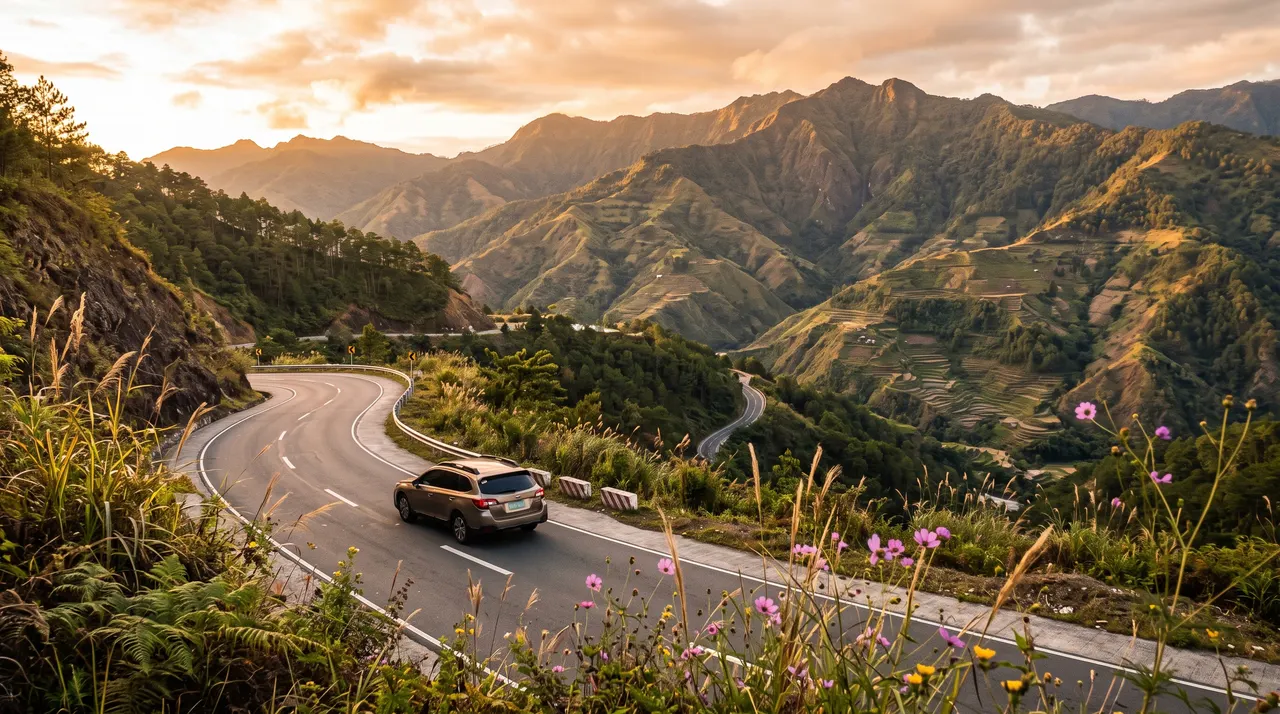
The Halsema Highway through the Cordillera mountains to Sagada and Banaue is one of the country's most spectacular and challenging drives. For most visitors the real draw is the freedom to reach places trains and tours don't, on your own schedule, with the open road generally capped around 100 km/h expressways. Getting behind the wheel is the easy part: your International Driving Permit is a certified translation of your UK licence, carried alongside it, so rental staff and officials in Philippines can read your credentials at a glance.
What applies to UK licence holders in Philippines
| UK licence in Philippines | |
|---|---|
| Do you need an IDP? | Recommended, not legally mandatory |
| IDP format required | 1949 Geneva |
| Your UK licence script | Roman (Latin) alphabet |
| United Kingdom is party to | 1949 Geneva and 1968 Vienna |
| Drives on the | Right-hand side |
| Minimum driving age | 18 |
| Emergency number | 911 |
| Top speed limit | 100 km/h expressways |
| Currency | PHP |
Driving rules in Philippines you should know
- Drive on the right.
- Number-coding scheme limits plates on set days in Metro Manila.
- 0.05% alcohol limit.
- Helmets mandatory for motorbikes.
Local driving facts in Philippines
Emergency number: 911 (112 also connects from most mobiles). Typical maximum for cars on the fastest road class: 100 km/h expressways. Posted limits always take precedence.
Tolls & road charges in Philippines
Expressways such as NLEX, SLEX, SCTEX and CAVITEX are electronic RFID-only at most barriers (Autosweep and Easytrip systems); confirm the rental car has a funded RFID tag, as cash lanes are largely phased out.
Parking in Philippines
Urban parking is tight and mostly in paid private lots and malls charging by the hour; street parking is metered or attendant-run in cities like Makati, and illegally parked cars are clamped or towed.
Penalties & enforcement in Philippines
LTO/MMDA fines for speeding, no seatbelt and phone use are issued via apprehension or no-contact apprehension cameras; tourists are sometimes flagged down for on-the-spot citations, and rental firms forward camera fines plus a handling fee.
If you have an accident in Philippines
Dial the national emergency line 911 for serious crashes and call the police to obtain a report; do not leave the scene, and exchange details, as rental firms require a police report before settling damage.
City driving in Philippines
Metro Manila enforces MMDA number-coding/UVVRP plate bans (last plate digit) during weekday rush hours, with EDSA shifting to an odd-even scheme; getting caught on a banned day means a fine, so check your plate before driving in.
Winter driving in Philippines
No winter-tyre rules - tropical climate; the real seasonal hazard is typhoon-season flooding, when many Metro Manila roads become impassable.
Fuel in Philippines
Stations are attended (no self-serve) and sell unleaded petrol by octane (91/95/97) and diesel; pump prices change weekly, typically around PHP 55-65 per litre, with cards accepted at branded city stations but cash safer rurally.
Sources: saferide.ph, ltoguideph.com, moneymax.ph, rappler.com