 France licence
  South Africa
Can you drive in South Africa with a France license?
Short answer: to drive in South Africa with a France license you need an International Driving Permit in the 1968 Vienna format, carried together with your France license.
Yes — to drive in South Africa on a France licence you should carry an International Driving Permit together with your France licence. South Africa expects foreign drivers to hold an IDP.
French drivers should carry an International Driving Permit with their licence when driving outside the EU and EEA. Your International Driving Permit is a certified multilingual translation of your existing licence, prepared in the 1968 Vienna format and carried alongside your national licence.


What driving in South Africa is like
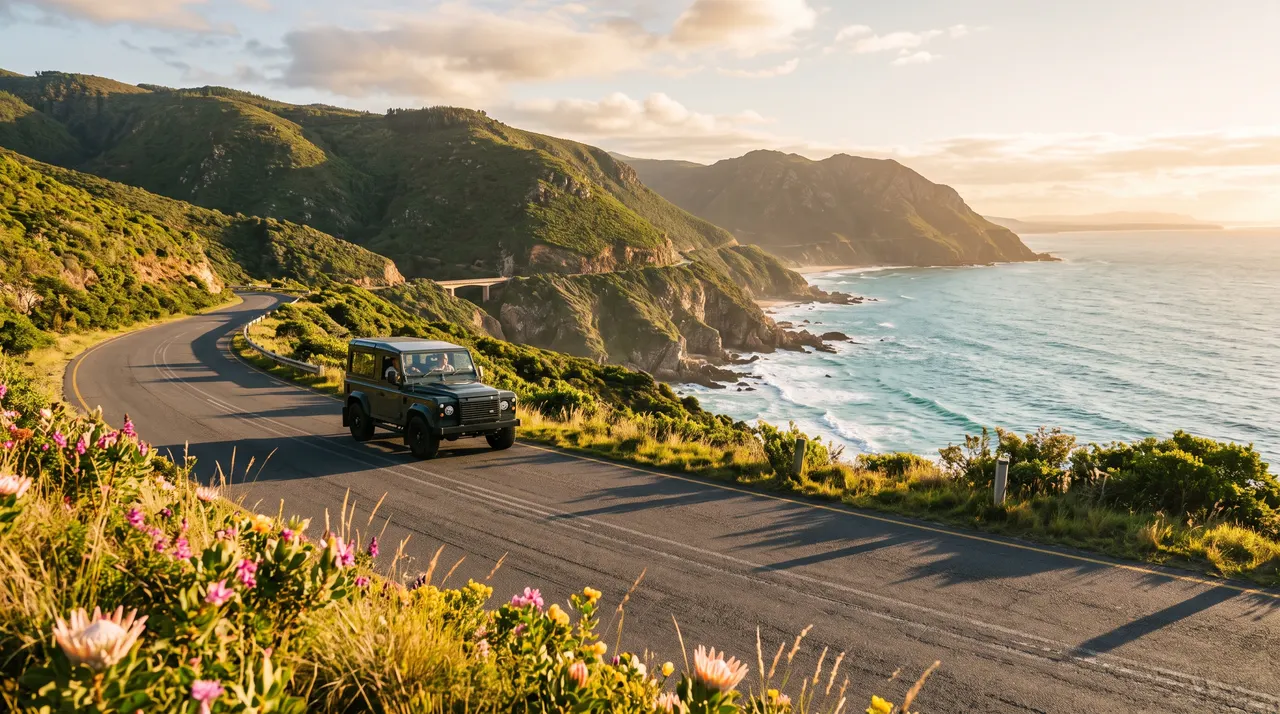
The Garden Route along the N2 from Mossel Bay to Storms River, hugging the southern Cape coast, is the country's classic road trip. For most visitors the real draw is the freedom to reach places trains and tours don't, on your own schedule, with the open road generally capped around 120 km/h national highways. Getting behind the wheel is the easy part: your International Driving Permit is a certified translation of your France licence, carried alongside it, so rental staff and officials in South Africa can read your credentials at a glance.
What applies to France licence holders in South Africa
| France licence in South Africa | |
|---|---|
| Do you need an IDP? | Yes — carry one alongside your licence |
| IDP format required | 1968 Vienna |
| Your France licence script | Roman (Latin) alphabet |
| France is party to | 1949 Geneva and 1968 Vienna |
| Drives on the | Left-hand side |
| Minimum driving age | 18 |
| Emergency number | 10111 (police), 10177 (ambulance), 112 from mobiles |
| Top speed limit | 120 km/h national highways |
| Currency | ZAR |
Driving rules in South Africa you should know
- Drive on the left.
- Toll roads (e-tolls) on major routes.
- Four-way stops are common.
- 0.05% alcohol limit, strictly enforced.
Local driving facts in South Africa
Emergency number: 10111 (police), 10177 (ambulance), 112 from mobiles (112 also connects from most mobiles). Typical maximum for cars on the fastest road class: 120 km/h national highways. Posted limits always take precedence.
Tolls & road charges in South Africa
Toll roads use manned plazas (cash or card) plus some electronic gantries; the Gauteng e-toll scheme was scrapped in 2024, but routes like the N1, N3 and the short Chapman's Peak (around R36 for 9 km near Cape Town) still charge.
Parking in South Africa
In cities, informal car-guards in reflective vests watch your car for a small tip (a few rand), while malls and paid lots use ticket machines; always park in secure, well-lit areas to deter break-ins.
Penalties & enforcement in South Africa
Speeding fines start around R250-R400 for minor excess and rise to R1,500+ for serious cases, with handheld phone use and seatbelt offences also fined; many fines are camera-issued and passed on by the rental firm, and roadside officers occasionally seek cash, which you should decline.
If you have an accident in South Africa
Phone 10111 (police) or 112 from a mobile for injuries; you must stop, exchange details and, even with no injuries, report the crash in person at the nearest SAPS police station within 24 hours to get a case number.
City driving in South Africa
Johannesburg's 80 km ring road (N1 Western, N3 Eastern, N12 Southern bypasses) is heavily congested at peak hours; keep doors locked and avoid stopping, and treat malfunctioning traffic lights ('robots') as four-way stops.
Winter driving in South Africa
No winter-tyre rules - tropical climate (mild winters; only rare snow on high passes, where you should simply avoid driving in storms).
Fuel in South Africa
All stations are attended - an attendant pumps petrol (93/95 unleaded) or diesel, checks tyres and cleans the windscreen for a small tip; many older pumps are cash-only, so carry rand as Gauteng prices run 60-75c/litre above the coast.
Sources: expatica.com, aa.co.za, topauto.co.za, globalpetrolprices.com