 Nigeria licence
  Tajikistan
Can you drive in Tajikistan with a Nigeria license?
Short answer: to drive in Tajikistan with a Nigeria license you need an International Driving Permit in the 1968 Vienna format, carried together with your Nigeria license.
Yes — to drive in Tajikistan on a Nigeria licence you should carry an International Driving Permit together with your Nigeria licence. Tajikistan expects foreign drivers to hold an IDP.
Nigerian drivers should carry an International Driving Permit alongside their national licence when driving abroad. Your International Driving Permit is a certified multilingual translation of your existing licence, prepared in the 1968 Vienna format and carried alongside your national licence.


What driving in Tajikistan is like
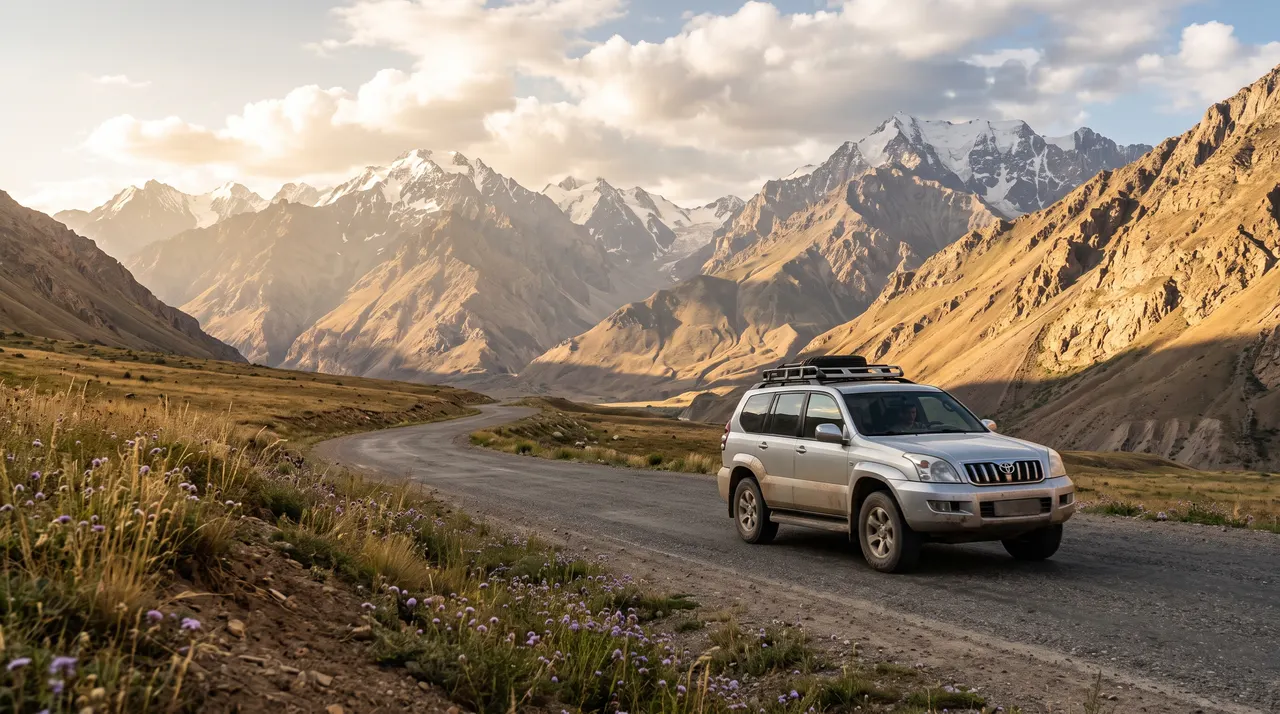
The Pamir Highway (M41) from Dushanbe to Khorog and on across the roof of the world to Murghab is one of the planet's great high-altitude road trips. For most visitors the real draw is the freedom to reach places trains and tours don't, on your own schedule, with the open road generally capped around 90 km/h highways. Getting behind the wheel is the easy part: your International Driving Permit is a certified translation of your Nigeria licence, carried alongside it, so rental staff and officials in Tajikistan can read your credentials at a glance.
What applies to Nigeria licence holders in Tajikistan
| Nigeria licence in Tajikistan | |
|---|---|
| Do you need an IDP? | Yes — carry one alongside your licence |
| IDP format required | 1968 Vienna |
| Your Nigeria licence script | Roman (Latin) alphabet |
| Nigeria is party to | 1949 Geneva and 1968 Vienna |
| Drives on the | Right-hand side |
| Minimum driving age | 18 |
| Emergency number | 112 or 102 |
| Top speed limit | 90 km/h highways |
| Currency | TJS |
Driving rules in Tajikistan you should know
- Drive on the right.
- Zero-tolerance alcohol policy.
- Remote high-altitude roads.
- Carry passport, IDP and permits for the GBAO region.
Local driving facts in Tajikistan
Emergency number: 112 or 102 (112 also connects from most mobiles). Typical maximum for cars on the fastest road class: 90 km/h highways. Posted limits always take precedence.
Tolls & road charges in Tajikistan
Tajikistan operates a small number of toll roads, notably the Chinese-built Dushanbe-Chanak (Istaravshan) highway and the Shahriston tunnel route, where cash tolls are collected at booths in somoni; there is no national vignette or electronic system. Foreigners simply pay the attendant in local cash.
Parking in Tajikistan
Parking in Dushanbe is largely informal: central streets and bazaars use uniformed or unofficial attendants who collect a few somoni on the spot, and there are no colour-coded paid zones or apps. Avoid blocking junctions or government-building frontages, where vehicles can be moved or wheel-clamped.
Penalties & enforcement in Tajikistan
Traffic police routinely stop foreign drivers and levy on-the-spot fines for speeding, no seatbelt or phone use; insist on an official receipt as informal cash demands occur. Rental/tour operators typically bill any unpaid fines back to your deposit.
If you have an accident in Tajikistan
Call 112 (unified emergency) or 102 for police; reporting an injury crash to the traffic police (GAI) is mandatory and you should not move the vehicles until officers arrive and document the scene. Obtain the police report for any insurance or rental claim.
City driving in Tajikistan
In Dushanbe the wide showpiece Rudaki Avenue is heavily policed, with frequent GAI checkpoints and strict rules against stopping near government buildings and the presidential palace; minor documentation lapses are commonly stopped here.
Winter driving in Tajikistan
No nationwide winter-tyre law, but mountain passes such as the Anzob tunnel approach and the high Pamir Highway are snow- and ice-bound in winter, so winter tyres and carrying chains are strongly advised; some passes close after heavy snow.
Fuel in Tajikistan
Petrol (regular AI-92/AI-95) and diesel are sold, with prices lowest in Dushanbe and rising sharply toward Khorog and Murghab; stations are sparse and fuel quality is poor in the Pamirs. Many are attended rather than self-serve, cash is king, and drivers should carry jerry cans for remote stretches.
Sources: caravanistan.com, indyguide.com, driverabroad.com, advantour.com