 UK licence
  Tunisia
Can you drive in Tunisia with a UK license?
Short answer: to drive in Tunisia with a UK license you need an International Driving Permit in the 1968 Vienna format, carried together with your UK license.
Yes — to drive in Tunisia on a UK licence you should carry an International Driving Permit together with your UK licence. Tunisia expects foreign drivers to hold an IDP.
UK drivers should carry an International Driving Permit with their licence; some countries recognise the 1949 version and others the 1968 version. Your International Driving Permit is a certified multilingual translation of your existing licence, prepared in the 1968 Vienna format and carried alongside your national licence.


What driving in Tunisia is like
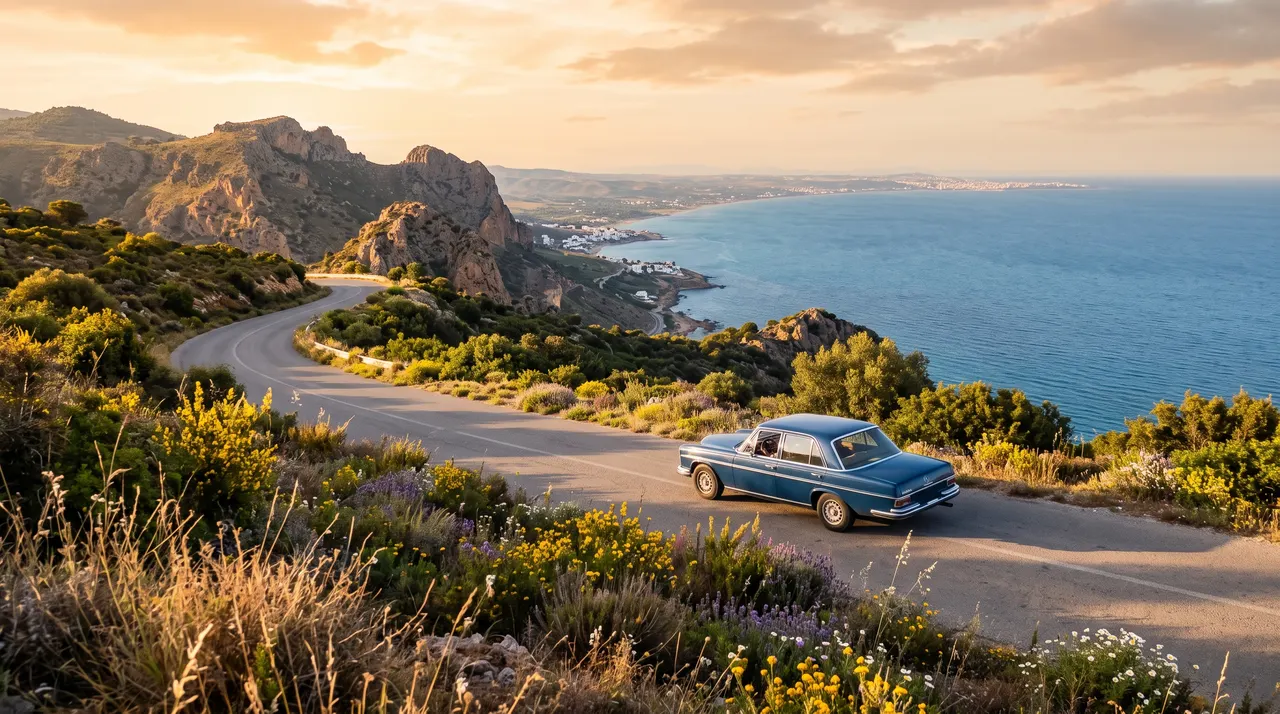
The mountain road over the Cap Bon peninsula and the coastal P1 down to Hammamet and Sousse is a popular, scenic self-drive. For most visitors the real draw is the freedom to reach places trains and tours don't, on your own schedule, with the open road generally capped around 110 km/h autoroutes. Getting behind the wheel is the easy part: your International Driving Permit is a certified translation of your UK licence, carried alongside it, so rental staff and officials in Tunisia can read your credentials at a glance.
What applies to UK licence holders in Tunisia
| UK licence in Tunisia | |
|---|---|
| Do you need an IDP? | Yes — carry one alongside your licence |
| IDP format required | 1968 Vienna |
| Your UK licence script | Roman (Latin) alphabet |
| United Kingdom is party to | 1949 Geneva and 1968 Vienna |
| Drives on the | Right-hand side |
| Minimum driving age | 18 |
| Emergency number | 197 (police), 190 (ambulance) |
| Top speed limit | 110 km/h autoroutes |
| Currency | TND |
Driving rules in Tunisia you should know
- Drive on the right.
- Toll motorway along the coast.
- Zero alcohol tolerance for driving.
- Carry passport, IDP and home licence.
Local driving facts in Tunisia
Emergency number: 197 (police), 190 (ambulance) (112 also connects from most mobiles). Typical maximum for cars on the fastest road class: 110 km/h autoroutes. Posted limits always take precedence.
Tolls & road charges in Tunisia
The A1 (Tunis-Sfax), A3 (Tunis-Oued Zarga) and A4 (Tunis-Bizerte) motorways are barrier toll roads charged by distance; pay cash in Tunisian dinar at booths as cards are generally not accepted.
Parking in Tunisia
In Tunis and coastal towns paid street parking is run by uniformed attendants who collect a small dinar fee, and informal 'guardiens' will watch your car for a tip; use secure paid lots overnight as theft from unattended cars is a real risk.
Penalties & enforcement in Tunisia
Police issue on-the-spot fines for speeding, no seatbelt and phone use, payable in cash in dinar; rental companies pass on camera/parking fines plus an admin fee to the card on file. Drink-driving and serious offences carry court action.
If you have an accident in Tunisia
Dial 197 for police; a police report is required for any injury accident and for insurance, and you must not move the vehicles. In death or serious-injury crashes police can place the driver in protective custody until cleared, so call your rental firm and consulate immediately.
City driving in Tunisia
Tunis traffic is dense and assertive, roundabouts ('ronds-points') give priority to cars already circulating, and lane discipline is loose; the central Avenue Habib Bourguiba area has restricted access and heavy congestion.
Winter driving in Tunisia
No winter-tyre rules - tropical/Mediterranean climate, though caution is needed for fog and flash flooding on northern and mountain roads.
Fuel in Tunisia
Stations sell petrol ('essence' / sans plomb 95) and diesel ('gasoil'); most are attended (no self-serve) and many, plus toll booths, take cash only, so carry dinar. Pump prices are low, roughly 2.5 TND per litre (about USD 0.75).
Sources: autoeurope.com, expat.com, travel.state.gov, tyremap.com