 India licence
  United Arab Emirates
Can you drive in United Arab Emirates with an India license?
Short answer: to drive in United Arab Emirates with an India license you need an International Driving Permit in the 1968 Vienna format, carried together with your India license.
Yes — to drive in United Arab Emirates on an India licence you should carry an International Driving Permit together with your India licence. United Arab Emirates expects foreign drivers to hold an IDP.
Indian drivers need an International Driving Permit to drive or rent a car in most countries abroad. Your International Driving Permit is a certified multilingual translation of your existing licence, prepared in the 1968 Vienna Convention format that United Arab Emirates recognises and carried alongside your national licence.


What driving in United Arab Emirates is like
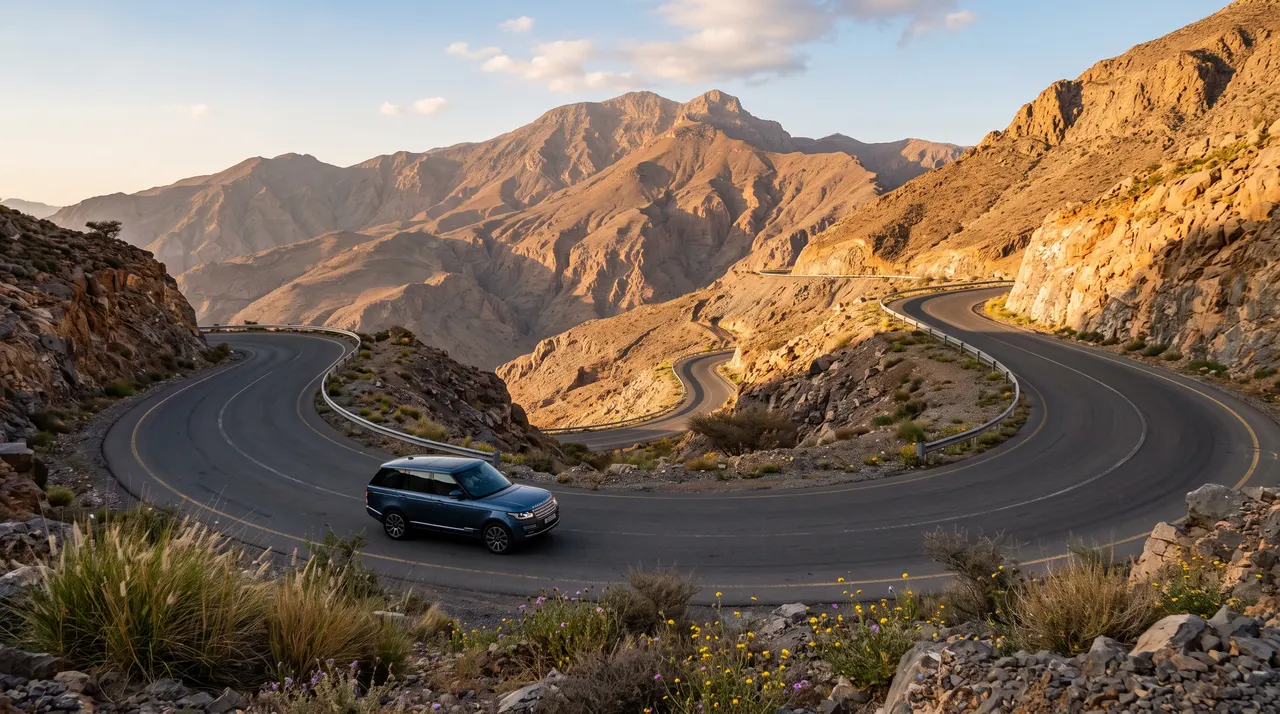
The Jebel Jais mountain road in Ras Al Khaimah, the UAE's highest peak, is the marquee driving route with sweeping switchbacks. For most visitors the real draw is the freedom to reach places trains and tours don't, on your own schedule, with the open road generally capped around up to 160 km/h on Abu Dhabi's E311/E11 sections; 100–120 typical. Getting behind the wheel is the easy part: your International Driving Permit is a certified translation of your India licence, carried alongside it, so rental staff and officials in United Arab Emirates can read your credentials at a glance.
What applies to India licence holders in United Arab Emirates
| India licence in United Arab Emirates | |
|---|---|
| Do you need an IDP? | Yes — carry one alongside your licence |
| IDP format required | 1968 Vienna |
| Your India licence script | Roman (Latin) alphabet |
| India is party to | 1949 Geneva |
| Drives on the | Right-hand side |
| Minimum driving age | 18 |
| Emergency number | 999 (police), 998 (ambulance) |
| Top speed limit | Up to 160 km/h on Abu Dhabi's E311/E11 sections; 100–120 typical |
| Currency | AED |
Driving rules in United Arab Emirates you should know
- Zero-tolerance alcohol law while driving.
- Extensive speed-camera (radar) enforcement.
- Salik electronic tolls in Dubai.
- Tailgating and lane discipline strictly fined.
Local driving facts in United Arab Emirates
Emergency number: 999 (police), 998 (ambulance) (112 also connects from most mobiles). Typical maximum for cars on the fastest road class: Up to 160 km/h on Abu Dhabi's E311/E11 sections; 100–120 typical. Posted limits always take precedence.
Tolls & road charges in United Arab Emirates
Dubai's Salik gantries charge AED 4-6 per pass automatically by plate with no booths; Abu Dhabi runs a similar 'Darb' toll. Rental companies hold a Salik deposit and bill passes (plus an admin fee) to your card after the rental.
Parking in United Arab Emirates
Street parking in Dubai is paid via the RTA Smart Parking app or SMS by zone code, and Abu Dhabi uses the Mawaqif system; rates and time limits are shown on roadside meters, and unpaid or wrong-zone parking draws fines and possible towing.
Penalties & enforcement in United Arab Emirates
Automated cameras issue speeding (from AED 300-3,000), phone-use (AED 800) and seatbelt (AED 400) fines; there are no on-the-spot cash payments. Charges surface on the police portal within weeks and rental firms deduct them from your deposit before refunding.
If you have an accident in United Arab Emirates
Call Police on 999; for a minor, no-injury accident file a report through the Dubai Police app (Minor Traffic Accident Report) - the at-fault driver pays AED 520. Do not leave the scene or move cars on injury/dispute accidents until police attend.
City driving in United Arab Emirates
Sheikh Zayed Road through Dubai is heavily speed- and lane-camera enforced; tailgating, sudden lane changes and any 'drifting' stunt are aggressively penalised, with tourists arrested for reckless driving on this corridor.
Winter driving in United Arab Emirates
No winter-tyre rules - desert climate.
Fuel in United Arab Emirates
Stations (ENOC, ADNOC, EPPCO) are fully attendant-served; petrol is sold as Special 95 and Super 98, diesel separately, at government-set prices around AED 2.8-3.0 per litre. Cards are accepted everywhere.
Sources: hertz.ae, quickdrive.ae, gulfnews.com