 Nigeria licence
  Uzbekistan
Can you drive in Uzbekistan with a Nigeria license?
Short answer: to drive in Uzbekistan with a Nigeria license you need an International Driving Permit in the 1968 Vienna format, carried together with your Nigeria license.
Yes — to drive in Uzbekistan on a Nigeria licence you should carry an International Driving Permit together with your Nigeria licence. Uzbekistan expects foreign drivers to hold an IDP.
Nigerian drivers should carry an International Driving Permit alongside their national licence when driving abroad. Your International Driving Permit is a certified multilingual translation of your existing licence, prepared in the 1968 Vienna format and carried alongside your national licence.


What driving in Uzbekistan is like
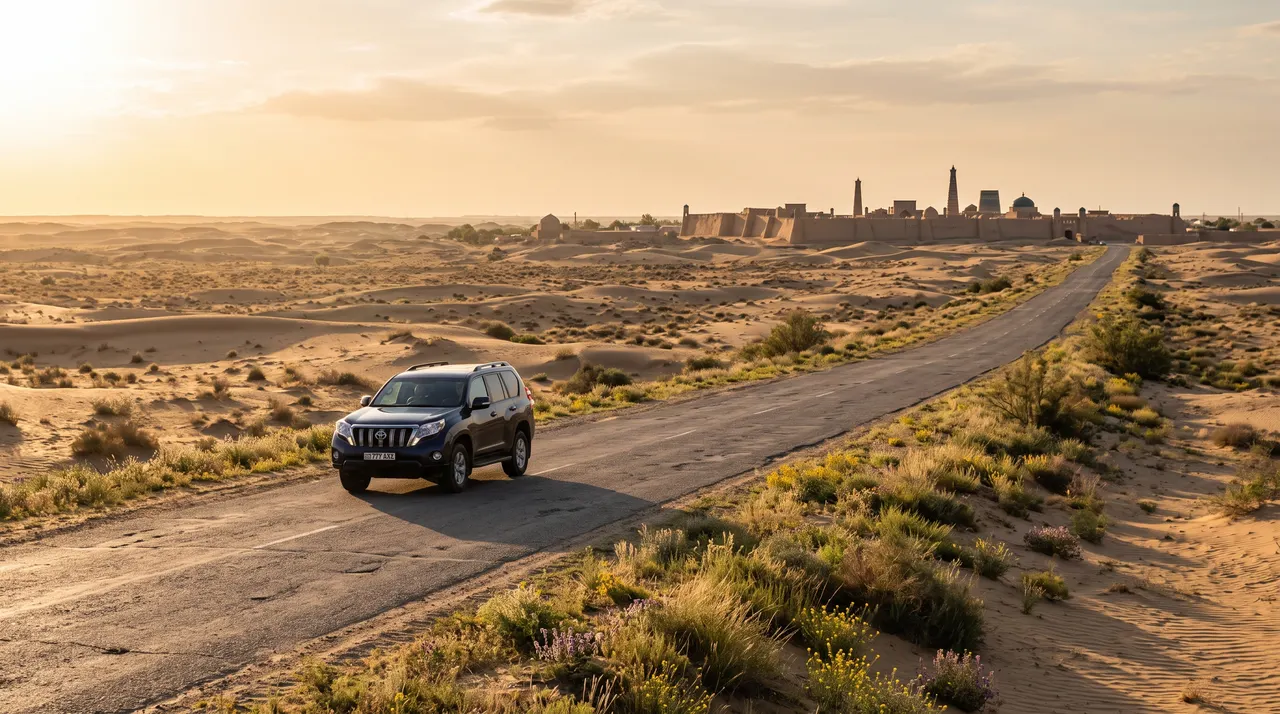
The desert highway from Bukhara to the ancient walled city of Khiva across the Kyzylkum is a classic Silk Road drive. For most visitors the real draw is the freedom to reach places trains and tours don't, on your own schedule, with the open road generally capped around 110 km/h motorways. Getting behind the wheel is the easy part: your International Driving Permit is a certified translation of your Nigeria licence, carried alongside it, so rental staff and officials in Uzbekistan can read your credentials at a glance.
What applies to Nigeria licence holders in Uzbekistan
| Nigeria licence in Uzbekistan | |
|---|---|
| Do you need an IDP? | Yes — carry one alongside your licence |
| IDP format required | 1968 Vienna |
| Your Nigeria licence script | Roman (Latin) alphabet |
| Nigeria is party to | 1949 Geneva and 1968 Vienna |
| Drives on the | Right-hand side |
| Minimum driving age | 18 |
| Emergency number | 112 or 102 |
| Top speed limit | 110 km/h motorways |
| Currency | UZS |
Driving rules in Uzbekistan you should know
- Drive on the right.
- Zero-tolerance alcohol policy.
- Headlights on outside cities.
- Carry passport, IDP and home licence.
Local driving facts in Uzbekistan
Emergency number: 112 or 102 (112 also connects from most mobiles). Typical maximum for cars on the fastest road class: 110 km/h motorways. Posted limits always take precedence.
Tolls & road charges in Uzbekistan
Most highways are toll-free, though a few city-bypass and new express routes charge small cash tolls of a few thousand som (well under a euro); Uzbekistan is only now developing dedicated toll motorways and tunnels. There is no national vignette.
Parking in Uzbekistan
Parking in Tashkent is limited and can be costly, with paid attendant lots at malls and commercial centres collecting cash; there are no widely used colour-coded zones. Read signs carefully, as illegally parked cars are towed in central districts.
Penalties & enforcement in Uzbekistan
Speeding fines scale with how far over the limit you are, and police levy on-the-spot penalties for phone use and no seatbelt; insist on a receipt. Camera fines and any unpaid penalties are typically charged back through the rental company's deposit.
If you have an accident in Uzbekistan
Dial 112 (unified emergency) or 102 for police; reporting a crash to the traffic police is mandatory and you must leave vehicles in place until officers document the scene. Get the official report for any insurance or rental claim.
City driving in Uzbekistan
In Tashkent, GAI traffic police and speed cameras are widespread along major avenues, and U-turns and left turns are restricted to marked points on the wide multi-lane boulevards - making illegal turns is a common foreigner mistake.
Winter driving in Uzbekistan
Winter tyres are not mandatory; standard tyres suffice for most conditions, but all-season or winter tyres are advisable below 7C and on snowy mountain roads in the east.
Fuel in Uzbekistan
Many Uzbek cars run on methane (CNG) and propane (LPG), so those are widely sold, while petrol (AI-92/95, ~$0.55/L) and diesel (~$0.50/L) can be scarce in rural areas; fill up in Tashkent or Samarkand. Stations are attended and largely cash-based.
Sources: tyremap.com, internationaldriversassociation.com, carol.rent, internationaltravelpermits.com