 Philippines licence
  Zambia
Can you drive in Zambia with a Philippines license?
Short answer: to drive in Zambia with a Philippines license you need an International Driving Permit in the 1968 Vienna format, carried together with your Philippines license.
Yes — to drive in Zambia on a Philippines licence you should carry an International Driving Permit together with your Philippines licence. Zambia expects foreign drivers to hold an IDP.
Philippine drivers need an International Driving Permit to drive or rent a car in most countries abroad. Your International Driving Permit is a certified multilingual translation of your existing licence, prepared in the 1968 Vienna format and carried alongside your national licence.


What driving in Zambia is like
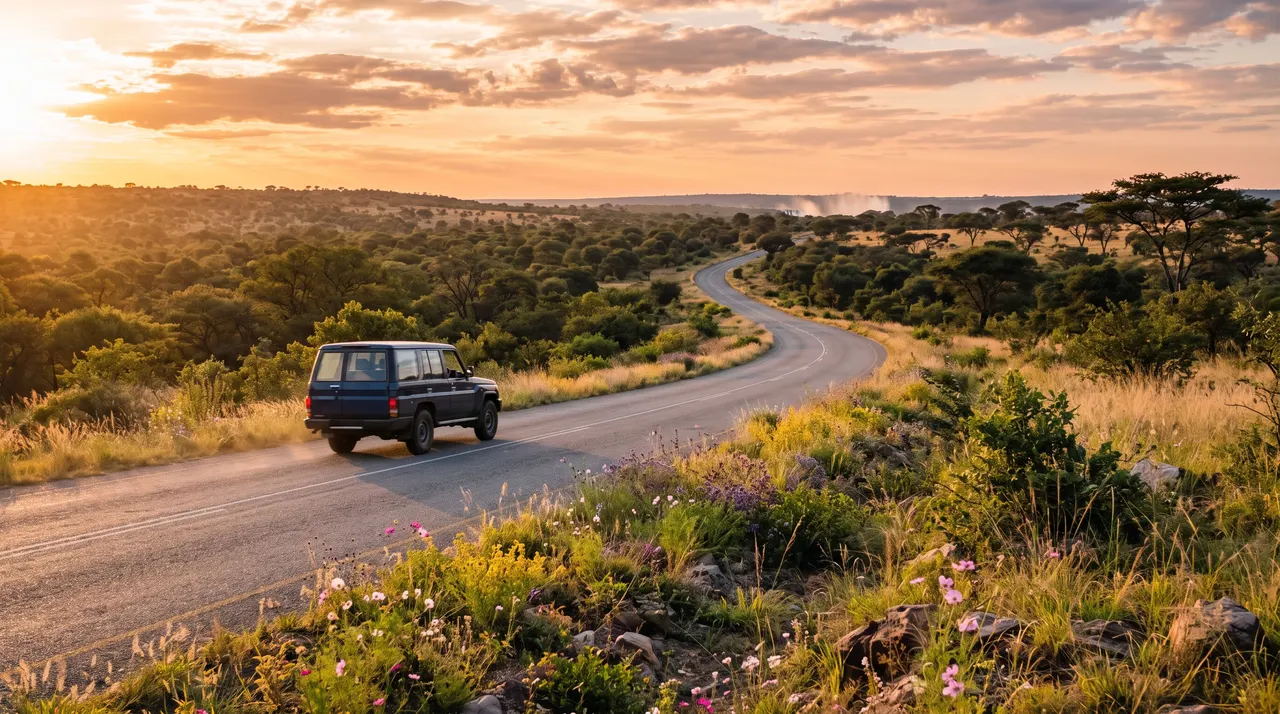
The Lusaka-to-Livingstone run down the T1 to Victoria Falls is the country's signature self-drive route. For most visitors the real draw is the freedom to reach places trains and tours don't, on your own schedule, with the open road generally capped around 100 km/h on the Great North Road. Getting behind the wheel is the easy part: your International Driving Permit is a certified translation of your Philippines licence, carried alongside it, so rental staff and officials in Zambia can read your credentials at a glance.
What applies to Philippines licence holders in Zambia
| Philippines licence in Zambia | |
|---|---|
| Do you need an IDP? | Yes — carry one alongside your licence |
| IDP format required | 1968 Vienna |
| Your Philippines licence script | Roman (Latin) alphabet |
| Philippines is party to | 1968 Vienna |
| Drives on the | Left-hand side |
| Minimum driving age | 18 |
| Emergency number | 999 (police), 991 (ambulance) |
| Top speed limit | 100 km/h on the Great North Road |
| Currency | ZMW |
Driving rules in Zambia you should know
- Drive on the left.
- Reflective triangles required for breakdowns.
- 0.08% alcohol limit.
- Long distances between fuel stops.
Local driving facts in Zambia
Emergency number: 999 (police), 991 (ambulance) (112 also connects from most mobiles). Typical maximum for cars on the fastest road class: 100 km/h on the Great North Road. Posted limits always take precedence.
Tolls & road charges in Zambia
Zambia runs a national toll-gate system on major highways operated by the National Road Fund Agency; light foreign-registered/rental vehicles pay a modest fee (around K20) in cash at each gate, so keep small kwacha notes handy.
Parking in Zambia
In central Lusaka paid bays are managed by city-council attendants who issue tickets; use guarded hotel and shopping-mall lots, and never leave valuables visible as opportunistic theft occurs.
Penalties & enforcement in Zambia
Roadblocks are routine; default limits are 50 km/h urban, 100 km/h on highways, seatbelts compulsory and the BAC limit is 0.08%. Fines may be requested on the spot - insist on an official receipt and verify the amount; rental firms pass on camera/uninsured penalties.
If you have an accident in Zambia
Call police on 991 (general emergency 999); for injuries or major damage a police report is mandatory and needed for insurance, do not move vehicles, and always ask for a receipt for any fine. Notify your rental firm before arranging recovery.
City driving in Zambia
Lusaka's main arteries (Great East Road, Cairo Road) are congested at peak hours with minibuses stopping abruptly to pick up passengers; junctions can be chaotic and traffic-light outages are common.
Winter driving in Zambia
No winter-tyre rules - subtropical climate; the key seasonal hazard is the November-April rainy season, when unpaved rural roads flood, pothole and become difficult.
Fuel in Zambia
Stations are attendant-served selling petrol and diesel at roughly K30-K34 per litre (about USD 1.20-1.30); carry spare fuel and water for remote travel as stations are sparse outside towns, and expect to share roads with livestock and pedestrians.
Sources: internationaltravelpermits.com, tyremap.com, globalpetrolprices.com, lusaka365.co