Equatorial Guinea Cameroon
 Equatorial Guinea
  Cameroon
Last reviewed July 2026
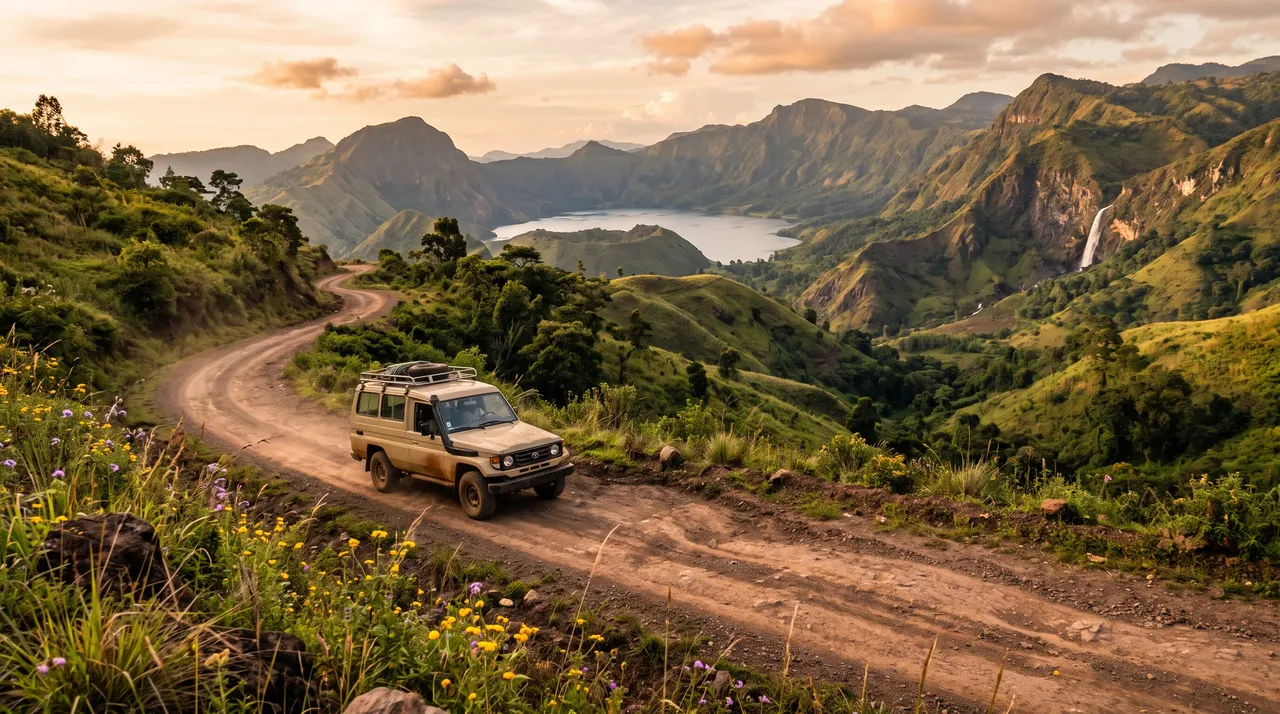
Crossing the border
Equatorial Guinea and Cameroon share a land border you can cross by car. Keep your passport, national driving licence and International Driving Permit together, and check opening hours and any toll or vignette requirements before you travel.
Driving rules in Cameroon
- Drive on the right.
- Frequent police checkpoints.
- 0.08% alcohol limit.
- Carry passport, IDP and home licence.
Once you're driving in Cameroon
Destination-specific detail sourced from national road authorities, motoring clubs and rental policies — the things that catch cross-border drivers out.
Driving on a foreign licence
Visitors may drive on a valid foreign licence for short stays, but it must be accompanied by an International Driving Permit (1968 Convention) since it is in a non-French language; rental firms and gendarmes at checkpoints routinely demand the IDP. For stays beyond about three months a Cameroonian licence is expected.
Tolls & road charges
Cameroon has no vignette but operates physical toll gates (postes de péage) on major axes including the Douala-Yaounde corridor and the newer expressway; cars pay a small flat fee in CFA francs (XAF), typically a few hundred francs, in cash at the booth.
Parking in the cities
Street parking in Douala and Yaounde is largely informal and chaotic; self-appointed 'gardiens' will watch your car for a tip of a few hundred XAF, and there are few marked or metered bays. Park in guarded hotel or mall lots where possible to reduce theft risk.
Fines & camera enforcement
Police and gendarmes issue on-the-spot fines for speeding, no seatbelt, or phone use, and unofficial 'fees' are often solicited at checkpoints; insist on an official receipt. Rental companies pass camera or unpaid fines to your card, so settle any ticket before returning the car.
If you have an accident
Stop, do not leave the scene, and call the police on 117 (general emergencies 112); a police report is required for insurance and rental claims. Move vehicles only if they block traffic and it is safe, and avoid disputes as crowds can gather quickly.
Driving in the capital
Douala's Carrefour Ndokoti and the bridges over the Wouri are notorious chokepoints with relentless congestion, motorbike taxis (bendskins) weaving everywhere, and frequent gendarmerie stops; allow far more time than distances suggest.
Sources: tyremap.com · globalpetrolprices.com · whitepages.com.cm · internationaldriversassociation.com