North Korea South Korea
 North Korea
  South Korea
Last reviewed July 2026
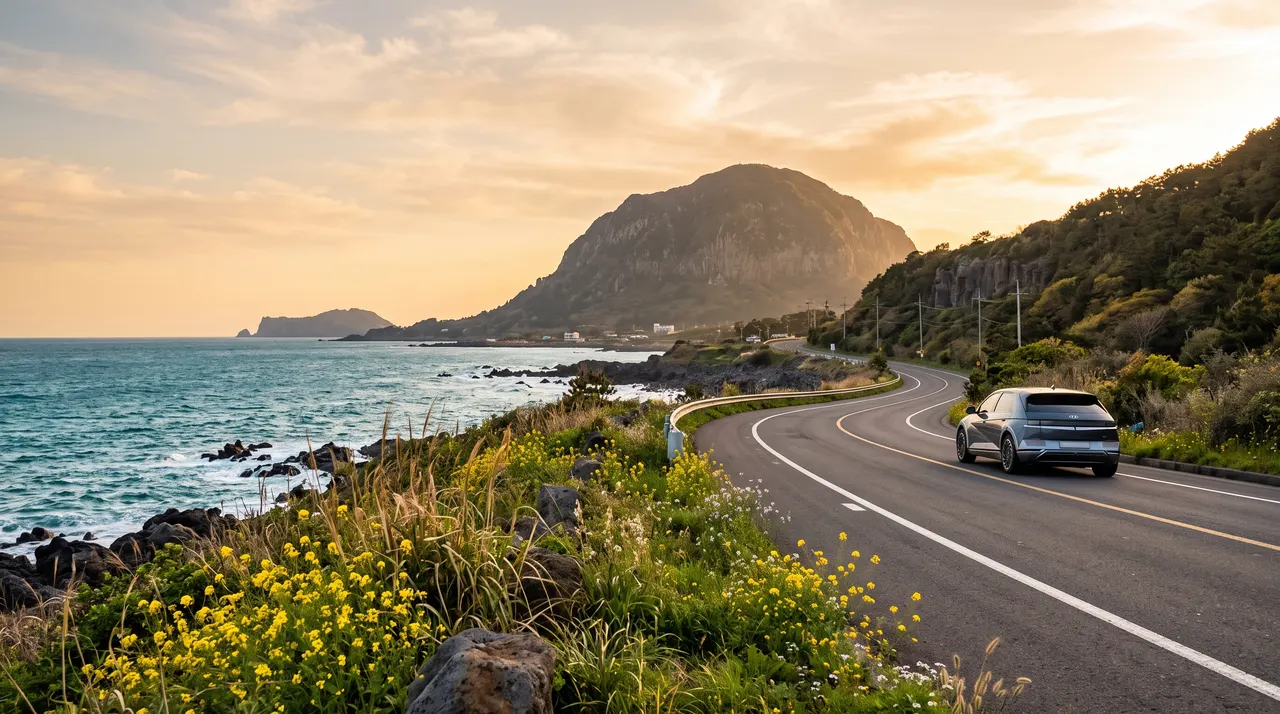
Crossing the border
North Korea and South Korea share a land border you can cross by car. Keep your passport, national driving licence and International Driving Permit together, and check opening hours and any toll or vignette requirements before you travel.
Driving rules in South Korea
- Extensive speed and red-light camera network.
- 0.03% alcohol limit; licence revoked above 0.08%.
- Bus lanes restricted during set hours.
- Carry passport, IDP and home licence.
What to see when you arrive in South Korea
- Gyeongbokgung Palace in Seoul
- the village of Bukchon Hanok
- Jeju Island
- the Gamcheon Culture Village in Busan
- Bulguksa Temple in Gyeongju
Once you're driving in South Korea
Destination-specific detail sourced from national road authorities, motoring clubs and rental policies — the things that catch cross-border drivers out.
Driving on a foreign licence
South Korea accepts a valid Geneva Convention IDP carried with the original home licence; you must hold both, and the IDP is valid for up to one year. Rental firms and police require the IDP, so a home licence alone is not sufficient to legally drive.
Tolls & road charges
Expressways use the Hi-Pass electronic system; if your rental has a Hi-Pass transponder use the blue Hi-Pass lanes, otherwise take the cash/card hybrid lanes and never enter a Hi-Pass-only lane. A Seoul-Busan trip costs roughly 20,000-25,000 KRW and tolls are payable by cash, card or T-money.
Parking in the cities
Street parking is scarce and metered; pay at the meter or machine and reverse-parking is the local norm in narrow bays. Cities use paid public lots and underground mall garages (often 1,000-3,000 KRW per 30 min), and illegally parked cars in central Seoul are ticketed or towed.
Fines & camera enforcement
Speeding fines commonly run 30,000-120,000+ KRW (school zones, 30 km/h, double fines from 2026), phone-without-handsfree and seatbelt are fined, and drink-driving at 0.03% BAC or above is severely punished. Camera fines are billed to the renter's card with an admin fee; some on-the-spot fines apply at stops.
If you have an accident
Call 112 for police and 119 for ambulance/fire; for any injury or insurance claim file a police report and do not leave the scene. Photograph vehicle positions before moving, and avoid privately settling with the other party as fault is determined for insurance.
Driving in the capital
Seoul is blanketed with fixed, mobile and average-speed ('section') cameras, and many tunnels and bus-only median lanes carry their own restrictions; the bus lanes (blue-marked, time-restricted) are heavily fined if entered by a rental car.
Sources: inmykorea.com · haniseoul.com · english.visitkorea.or.kr · en.wikipedia.org