Saudi Arabia Oman
 Saudi Arabia
  Oman
OmanLast reviewed July 2026
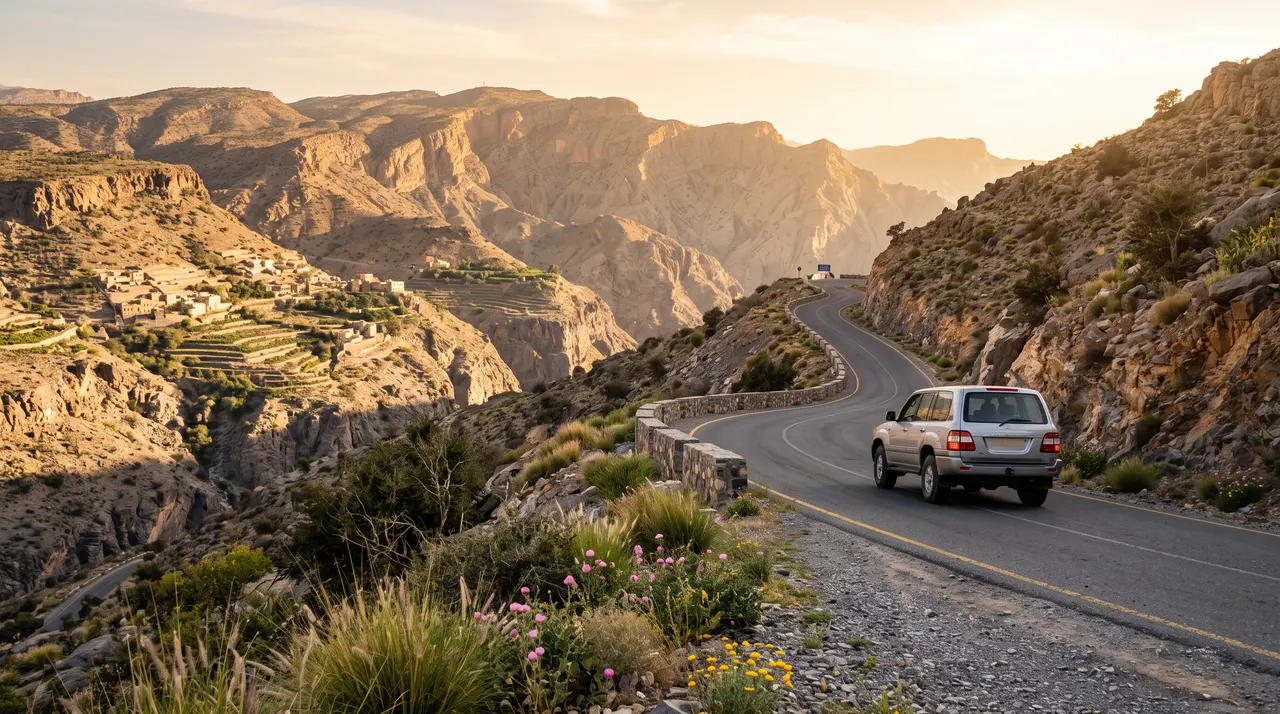
Crossing the border
Saudi Arabia and Oman share a land border you can cross by car. Keep your passport, national driving licence and International Driving Permit together, and check opening hours and any toll or vignette requirements before you travel.
Driving rules in Oman
- Drive on the right.
- Zero-tolerance alcohol law for driving.
- Speed cameras and radar widespread.
- 4x4 recommended for desert and wadi routes.
What to see when you arrive in Oman
- the Sultan Qaboos Grand Mosque in Muscat
- the fjords of Musandam
- the Wahiba Sands
- the Jebel Akhdar mountains
- the wadis of Nizwa
Once you're driving in Oman
Destination-specific detail sourced from national road authorities, motoring clubs and rental policies — the things that catch cross-border drivers out.
Driving on a foreign licence
Since late 2024 tourists and transit visitors may drive on a valid home-country licence for up to three months (90 days from entry); an IDP is mandatory if your licence is not in English or Arabic. In practice nearly all rental companies still ask for an IDP alongside the home licence for non-GCC drivers, so carry both.
Tolls & road charges
Oman has no highway toll roads or toll-tags; major routes including the Muscat Expressway and the Nizwa and Sur highways are free to use. The only motoring charges a tourist meets are fuel, parking and any fines.
Parking in the cities
Central Muscat (Ruwi, Muttrah, CBD) uses paid on-street parking via roadside machines and the mobile apps mwqf/Mawqif, roughly 100 baisa per 30 minutes during enforced hours, free on Fridays and evenings. Parking on yellow-hatched lines or blocking traffic risks fines and towing.
Fines & camera enforcement
Fines start around RO 10 and rise in RO 5 steps; speeding bands run from RO 10 up to RO 50 with black points, and there is a strict 0.00% drink-drive limit with jail risk. Camera fines accrue to the plate and are billed to the renter through the rental firm, often with an admin fee, before you leave the country.
If you have an accident
Dial 9999 for police, ambulance or fire; for injury or disputed-fault crashes do not move the vehicles and wait for the Royal Oman Police, as moving can imply admission of guilt. For minor vehicle-only crashes where both agree on fault, you must move off the road and complete the ROP Simple/Minor Road Traffic Accident form (kept in the car) for insurance.
Driving in the capital
Muscat is spread along a coastal corridor of fast multi-lane highways where fixed and mobile speed cameras trigger at just 9 km/h over the limit, catching many tourists. Watch the Qurum and Expressway interchanges, and note speed limits drop sharply entering built-up districts.
Sources: gulfnews.com · omanobserver.om · askexplorer.com · omanwanderlust.com