Syria Lebanon
 Syria
Syria  Lebanon
Last reviewed July 2026
Crossing the border
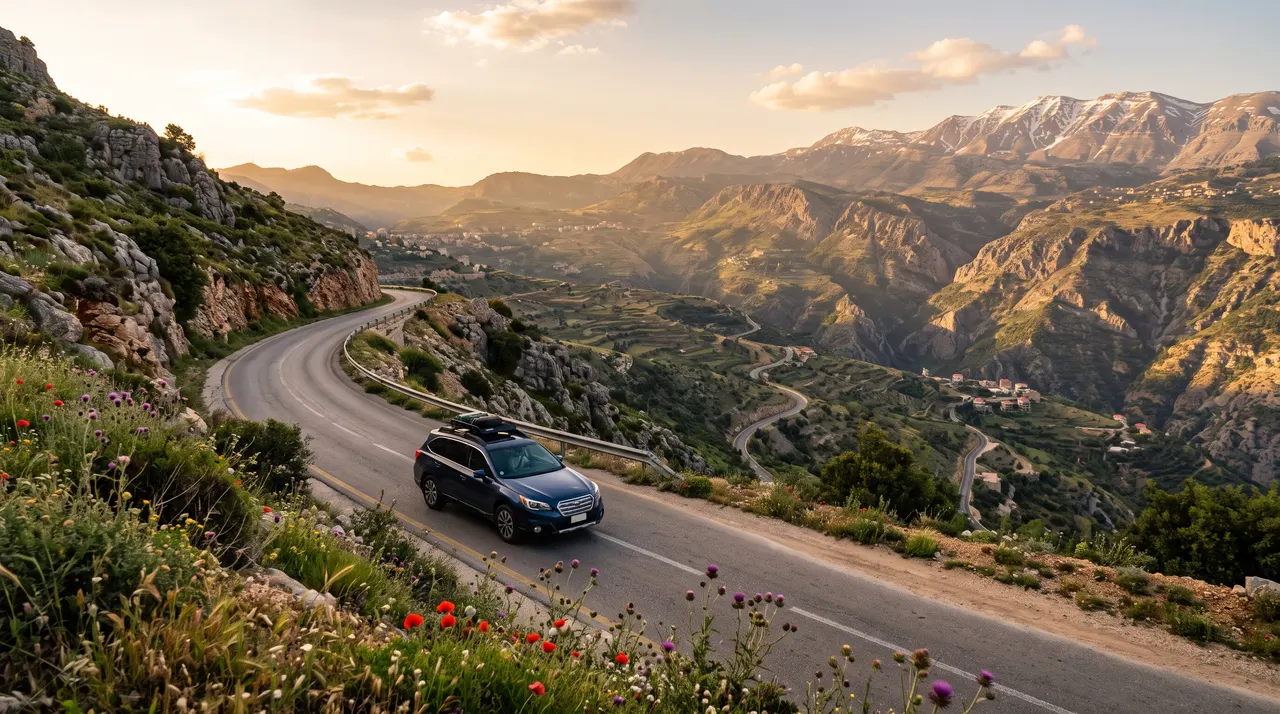
Syria and Lebanon share a land border you can cross by car. Keep your passport, national driving licence and International Driving Permit together, and check opening hours and any toll or vignette requirements before you travel.
Driving rules in Lebanon
- Drive on the right.
- Seatbelts mandatory.
- 0.05% alcohol limit.
- Drive defensively in dense city traffic.
What to see when you arrive in Lebanon
- the Roman temples of Baalbek
- the Jeita Grotto
- the Byblos ancient port
- the cedars of Bsharri
- Beirut's Corniche
Once you're driving in Lebanon
Destination-specific detail sourced from national road authorities, motoring clubs and rental policies — the things that catch cross-border drivers out.
Driving on a foreign licence
Lebanon follows the 1949 Geneva Convention and requires foreign visitors to carry an International Driving Permit alongside their national licence; without the IDP your rental insurance can be voided after a crash, leaving you personally liable, so it is effectively mandatory from day one.
Tolls & road charges
Lebanon has no functioning highway toll or vignette system, so tourists pay nothing for road use beyond fuel.
Parking in the cities
Beirut has paid metered and zoned street parking plus many attended private lots; illegal parking, even where locals do it, risks fines and towing, and valet parking is widespread at restaurants and hotels.
Fines & camera enforcement
Under the current traffic law, driving ~20 km/h over the limit costs around 200,000 LL and no seatbelt around 350,000 LL, with phone use and red-light running similarly fined; tickets may be handled on the spot, and rental firms pass camera/parking fines to the card on file.
If you have an accident
Dial 112 for police and 140 for the Lebanese Red Cross ambulance; stop at the scene, do not leave, and wait for the Internal Security Forces to file a report, which insurers and the rental company will require for any claim.
Driving in the capital
In Beirut expect heavy, aggressive traffic with weak signage, frequent ignoring of lanes and red lights, and chaotic informal roundabouts such as Dora and the Cola junction, where right-of-way is negotiated rather than signed.
Sources: internationaldriversassociation.com · stateofmind13.com · tyremap.com · lebanoninfocenter.eu.org