 Canada licence
  Argentina
Can you drive in Argentina with a Canada license?
Short answer: to drive in Argentina with a Canada license you need an International Driving Permit in the 1968 Vienna format, carried together with your Canada license.
Yes — to drive in Argentina on a Canada licence you should carry an International Driving Permit together with your Canada licence. Argentina expects foreign drivers to hold an IDP.
Canadian drivers should carry an International Driving Permit alongside their provincial licence when driving abroad. Your International Driving Permit is a certified multilingual translation of your existing licence, prepared in the 1968 Vienna format and carried alongside your national licence.


What driving in Argentina is like
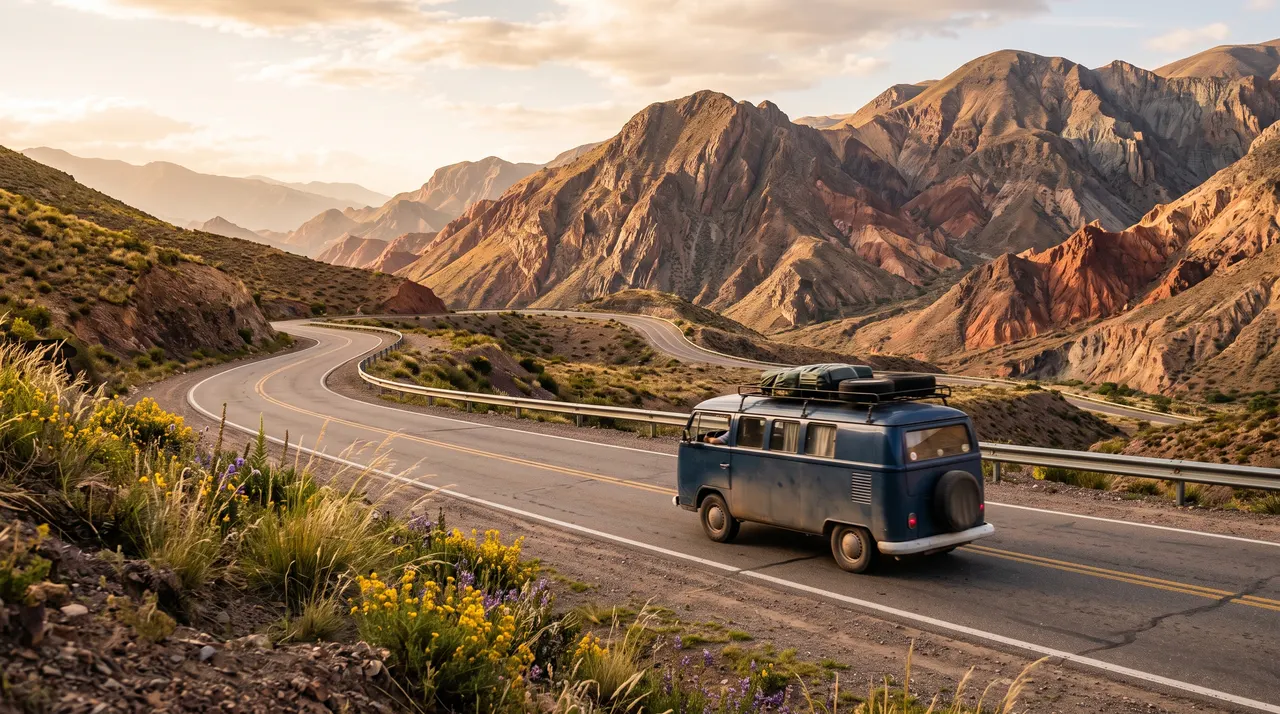
Ruta 40, the legendary 5,000 km route running the length of the Andes, including the Cuesta de Lipán and the Salta-Jujuy stretch. For most visitors the real draw is the freedom to reach places trains and tours don't, on your own schedule, with the open road generally capped around 130 km/h autopistas. Getting behind the wheel is the easy part: your International Driving Permit is a certified translation of your Canada licence, carried alongside it, so rental staff and officials in Argentina can read your credentials at a glance.
What applies to Canada licence holders in Argentina
| Canada licence in Argentina | |
|---|---|
| Do you need an IDP? | Yes — carry one alongside your licence |
| IDP format required | 1968 Vienna |
| Your Canada licence script | Roman (Latin) alphabet |
| Canada is party to | 1949 Geneva |
| Drives on the | Right-hand side |
| Minimum driving age | 18 |
| Emergency number | 911 |
| Top speed limit | 130 km/h autopistas |
| Currency | ARS |
Driving rules in Argentina you should know
- Headlights on at all times on highways.
- 0.05% alcohol limit (0% in some provinces).
- Carry licence, IDP and rental papers.
- City parking restrictions are strictly enforced.
Local driving facts in Argentina
Emergency number: 911 (112 also connects from most mobiles). Typical maximum for cars on the fastest road class: 130 km/h autopistas. Posted limits always take precedence.
Tolls & road charges in Argentina
Major highways and the Buenos Aires access autopistas use manned toll plazas (peajes) costing roughly ARS equivalent of USD 1-5 per booth; the electronic TelePASE tag is rarely fitted to rentals, so keep cash, as foreign cards are often not accepted in lanes.
Parking in Argentina
In central Buenos Aires use 'estacionamiento medido' paid zones (pay via meter or the BA Estacionamiento/SEMOV-type apps); yellow-painted curbs and signed clearways mean no stopping, and illegally parked cars are towed (acarreo) with recovery fees.
Penalties & enforcement in Argentina
Radar speed cameras are widespread; fines include phone-without-handsfree (~ARS 20,000-50,000) and no seatbelt (~ARS 10,000-30,000). There are officially no on-the-spot cash fines (an officer demanding cash is likely soliciting a bribe); camera fines are passed to the rental firm and charged to your card.
If you have an accident in Argentina
Call 911 for police and ambulance; do not move vehicles if there are injuries. Complete the insurance accident form (denuncia), exchange details, and get a police report (constancia) which insurers and rental firms require.
City driving in Argentina
Buenos Aires bans most through-traffic in the central microcentro and enforces bus-only carriles exclusivos during the day; the Avenida 9 de Julio and the access autopistas (25 de Mayo, Perito Moreno) are notoriously congested at rush hour.
Winter driving in Argentina
Winter tyres are not generally mandated, but for Andean/Patagonian routes (e.g. mountain passes to Chile) authorities can require snow chains in snowfall; carry chains in winter (June-September) on high routes.
Fuel in Argentina
Stations (YPF, Shell, Axion) are full-service with an attendant (playero); main grades are nafta súper/premium (petrol) and gasoil/diesel, around USD 1.10-1.30 per litre, with cards usually accepted in cities though cash is safer rurally.
Sources: gov.uk, rhinocarhire.com, tyremap.com, wander-argentina.com