 US licence
  Brazil
Can you drive in Brazil with a US license?
Short answer: to drive in Brazil with a US license you need an International Driving Permit in the 1968 Vienna format, carried together with your US license.
Yes — to drive in Brazil on a US licence you should carry an International Driving Permit together with your US licence. Brazil expects foreign drivers to hold an IDP.
U.S. drivers should carry an International Driving Permit alongside their state licence when driving or renting a car abroad. Your International Driving Permit is a certified multilingual translation of your existing licence, prepared in the 1968 Vienna Convention format that Brazil recognises and carried alongside your national licence.


What driving in Brazil is like
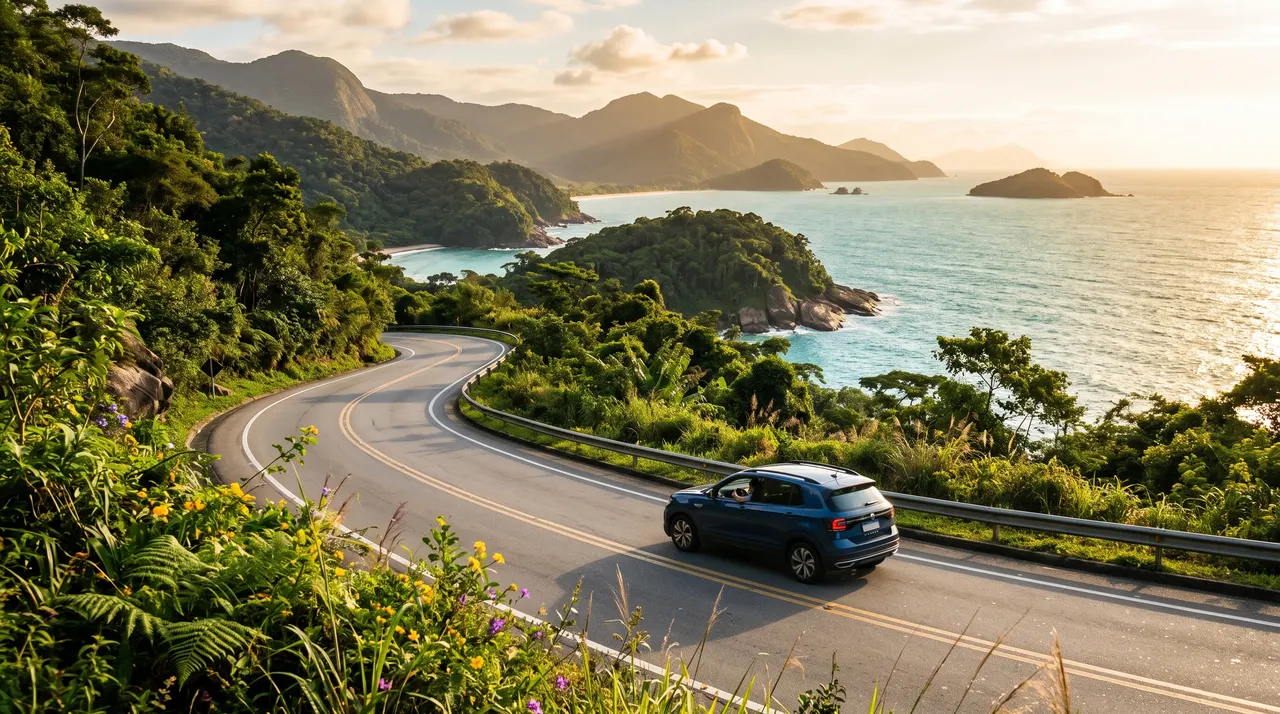
The coastal Rio-Santos highway (BR-101/SP-055) between Rio de Janeiro and Santos, winding past Paraty and Ubatuba, is a renowned Brazilian drive. For most visitors the real draw is the freedom to reach places trains and tours don't, on your own schedule, with the open road generally capped around 110–120 km/h rodovias. Getting behind the wheel is the easy part: your International Driving Permit is a certified translation of your US licence, carried alongside it, so rental staff and officials in Brazil can read your credentials at a glance.
What applies to US licence holders in Brazil
| US licence in Brazil | |
|---|---|
| Do you need an IDP? | Yes — carry one alongside your licence |
| IDP format required | 1968 Vienna |
| Your US licence script | Roman (Latin) alphabet |
| United States is party to | 1949 Geneva |
| Drives on the | Right-hand side |
| Minimum driving age | 18 |
| Emergency number | 190 (police), 192 (ambulance) |
| Top speed limit | 110–120 km/h rodovias |
| Currency | BRL |
Driving rules in Brazil you should know
- Headlights on during the day on highways.
- Zero-tolerance alcohol law (Lei Seca).
- Carry original licence + IDP — photocopies not accepted.
- Radar speed enforcement is widespread.
Local driving facts in Brazil
Emergency number: 190 (police), 192 (ambulance) (112 also connects from most mobiles). Typical maximum for cars on the fastest road class: 110–120 km/h rodovias. Posted limits always take precedence.
Tolls & road charges in Brazil
Intercity highways charge tolls ('pedagio') payable in cash (reais) or card at booths, or automatically via windshield tags such as Sem Parar, ConectCar and Veloe used in 1,000+ lanes; some corridors are now free-flow plate-read. Ask the rental firm whether the car includes a tag.
Parking in Brazil
Cities use paid 'Zona Azul' street parking bought via app or rotativo ticket displayed in the windscreen; informal 'flanelinhas' may ask to watch your car. Guarded lots ('estacionamento') are safest, and tow-away/clamping enforcement is active in central zones.
Penalties & enforcement in Brazil
Fines for speeding, no seatbelt or handheld phone are camera-enforced and tiered (a 'gravissima' offence is around R$293, with heavier multipliers for extreme speed), adding points to the licence. Rental companies identify the driver and pass camera fines plus an admin fee to your card.
If you have an accident in Brazil
Call 190 (Military Police) or 193 (fire/rescue) for injuries. Do not move the vehicles unless they block traffic or are unsafe, notify the rental company immediately, and obtain a police occurrence report (Boletim de Ocorrencia) for insurance.
City driving in Brazil
Sao Paulo's 'rodizio' bars cars by last plate digit during peaks (07:00-10:00 and 17:00-20:00, Mon-Fri) within the expanded centre - plates ending 1-2 on Monday through 9-0 on Friday - and the rule applies to foreign/rental cars too.
Winter driving in Brazil
No winter-tyre rules - tropical climate (occasional frost only in far-southern highlands, with no chain mandate).
Fuel in Brazil
Stations sell gasolina comum (already ~27% ethanol), gasolina aditivada, pure etanol (hydrous ethanol) and diesel; most rental cars are flex-fuel and run on either petrol or ethanol. Attendants pump the fuel; ethanol is cheaper but only worth it below ~70% of the petrol price.
Sources: tollguru.com, internationaldriversassociation.com, en.wikipedia.org, zestcarrental.com