 Philippines licence
  Colombia
Can you drive in Colombia with a Philippines license?
Short answer: to drive in Colombia with a Philippines license you need an International Driving Permit in the 1968 Vienna format, carried together with your Philippines license.
Yes — to drive in Colombia on a Philippines licence you should carry an International Driving Permit together with your Philippines licence. Colombia expects foreign drivers to hold an IDP.
Philippine drivers need an International Driving Permit to drive or rent a car in most countries abroad. Your International Driving Permit is a certified multilingual translation of your existing licence, prepared in the 1968 Vienna format and carried alongside your national licence.


What driving in Colombia is like
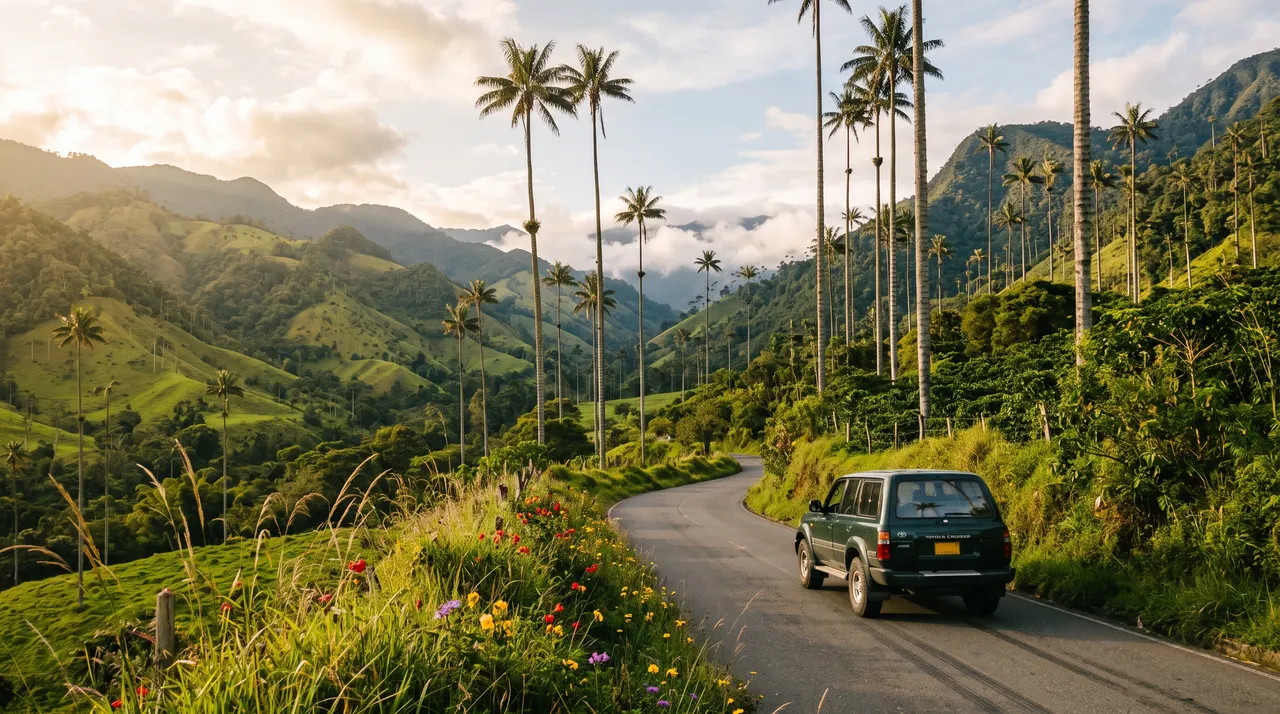
The coffee-region drive through the Cocora Valley near Salento, lined with the world's tallest wax palms. For most visitors the real draw is the freedom to reach places trains and tours don't, on your own schedule, with the open road generally capped around up to 120 km/h on signed highways. Getting behind the wheel is the easy part: your International Driving Permit is a certified translation of your Philippines licence, carried alongside it, so rental staff and officials in Colombia can read your credentials at a glance.
What applies to Philippines licence holders in Colombia
| Philippines licence in Colombia | |
|---|---|
| Do you need an IDP? | Yes — carry one alongside your licence |
| IDP format required | 1968 Vienna |
| Your Philippines licence script | Roman (Latin) alphabet |
| Philippines is party to | 1968 Vienna |
| Drives on the | Right-hand side |
| Minimum driving age | 18 |
| Emergency number | 123 |
| Top speed limit | Up to 120 km/h on signed highways |
| Currency | COP |
Driving rules in Colombia you should know
- Pico y placa restricts driving by plate number on set days.
- 0.02% alcohol limit, strictly enforced.
- Headlights on outside urban areas.
- Toll roads (peajes) are common.
Local driving facts in Colombia
Emergency number: 123 (112 also connects from most mobiles). Typical maximum for cars on the fastest road class: Up to 120 km/h on signed highways. Posted limits always take precedence.
Tolls & road charges in Colombia
Colombia has roughly 180+ toll booths (peajes), regulated by ANI/Invías, costing about COP 10,000-17,000 (~USD 2.70-4.60) per booth for a car; carry small-denomination cash as card acceptance is not universal.
Parking in Colombia
Use guarded paid lots (parqueaderos) rather than the street in Bogotá, Medellín and Cartagena; heed signed restrictions and 'no parquear' zones, as towing (grúa) and immobilization are enforced in central districts.
Penalties & enforcement in Colombia
Speed cameras (fotomultas) are widespread; speeding, no seatbelt and phone use draw fines set in daily minimum wages (often hundreds of thousands of pesos). Officers should not collect cash on the road; camera and towing fines are passed to the renter via the rental company.
If you have an accident in Colombia
Call 123 (national emergency line) for police and ambulance; do not move vehicles if there are injuries. SOAT covers bodily injury only; exchange details and get a police report for the rental insurer.
City driving in Colombia
Bogotá, Medellín and Cali enforce 'pico y placa', barring cars on set weekdays by the last plate digit during peak hours - it applies to rental cars too, so check the city's Secretaría de Movilidad schedule before driving.
Winter driving in Colombia
No winter-tyre rules - tropical climate; mountain roads bring fog, heavy rain and landslides, so the real hazards are wet/foggy Andean passes rather than snow.
Fuel in Colombia
Stations (Terpel, Biomax, Primax) are attended; petrol is 'corriente' (regular) and 'extra' (premium) plus diesel ('ACPM'), around USD 0.65-0.80 per litre, with cards generally accepted in cities.
Sources: expat.com, tyremap.com, en.wikipedia.org, internationaltravelpermits.com