 Canada licence
  Guinea-Bissau
Can you drive in Guinea-Bissau with a Canada license?
Short answer: you cannot drive in Guinea-Bissau on a Canada license or an International Driving Permit alone — Guinea-Bissau requires a local or temporary licence.
An International Driving Permit is not sufficient to drive in Guinea-Bissau. Guinea-Bissau does not accept the IDP for foreign visitors — a local or temporary licence is required. Always confirm the current rule before you travel.
Canadian drivers should carry an International Driving Permit alongside their provincial licence when driving abroad. Your International Driving Permit is a certified multilingual translation of your existing licence, prepared in the Local rules format and carried alongside your national licence.


What driving in Guinea-Bissau is like
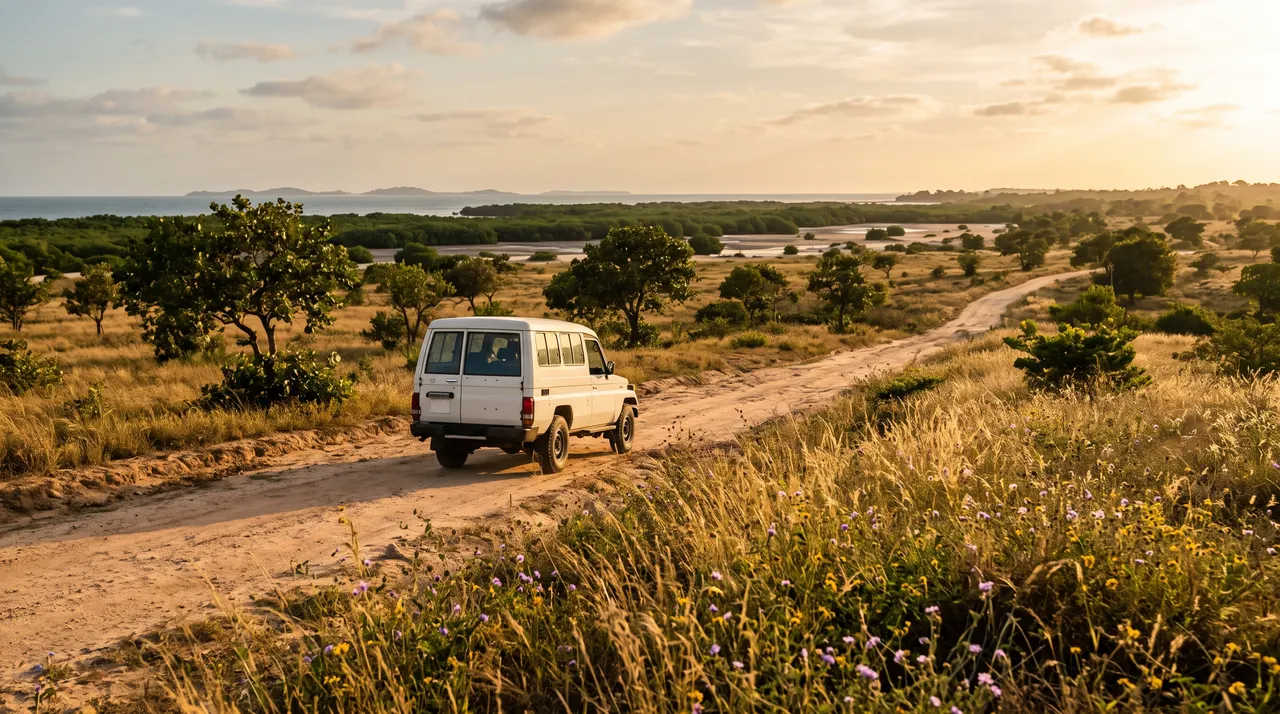
The drive out to the Bijagós archipelago jumping-off point and the coastal route toward Varela's beaches is the country's most sought-after road trip. For most visitors the real draw is the freedom to reach places trains and tours don't, on your own schedule, with the open road generally capped around 90 km/h highways. Getting behind the wheel is the easy part: your International Driving Permit is a certified translation of your Canada licence, carried alongside it, so rental staff and officials in Guinea-Bissau can read your credentials at a glance.
What applies to Canada licence holders in Guinea-Bissau
| Canada licence in Guinea-Bissau | |
|---|---|
| Do you need an IDP? | An IDP is not sufficient here |
| IDP format required | Local licensing rules apply |
| Your Canada licence script | Roman (Latin) alphabet |
| Canada is party to | 1949 Geneva |
| Drives on the | Right-hand side |
| Minimum driving age | 18 |
| Emergency number | 117 (police) |
| Top speed limit | 90 km/h highways |
| Currency | XOF |
Driving rules in Guinea-Bissau you should know
- Drive on the right.
- Few paved roads outside the capital.
- 0.05% alcohol limit.
- Carry passport, IDP and home licence.
Local driving facts in Guinea-Bissau
Emergency number: 117 (police) (112 also connects from most mobiles). Typical maximum for cars on the fastest road class: 90 km/h highways. Posted limits always take precedence.
Tolls & road charges in Guinea-Bissau
There is no functioning national motorway toll or vignette system; roads are funded publicly and you generally pay nothing to drive, though informal road barriers and checkpoints are common in the interior.
Parking in Guinea-Bissau
Parking in Bissau is largely informal and unmetered, with self-appointed attendants ('guardadores') expecting a small CFA-franc tip to watch the car; there are no painted paid-zone schemes or parking apps.
Penalties & enforcement in Guinea-Bissau
Enforcement is mostly by physical police/gendarme checkpoints rather than cameras; fines are usually negotiated and paid in cash on the spot, and the documented drink-drive limit is 0.15% BAC (15 mg/100 ml).
If you have an accident in Guinea-Bissau
There is no reliable nationwide emergency line; in a serious crash do not move the vehicles if there are injuries, summon the Polícia de Ordem Pública locally and obtain a written police report (auto), which insurers and rental firms require.
City driving in Guinea-Bissau
In Bissau the chronically unreliable public electricity means many junctions and traffic lights are dark after sunset, so night driving through unlit intersections is genuinely hazardous and best avoided.
Winter driving in Guinea-Bissau
No winter-tyre rules - tropical climate.
Fuel in Guinea-Bissau
Petrol (gasolina) and diesel (gasóleo) are sold in CFA francs, typically by attendants; stations cluster in Bissau and are sparse upcountry, so refuel before long trips and carry cash as card acceptance is rare.
Sources: internationaldrivingpermit.org, idpservices.org, gov.uk