 UK licence
  Japan
JapanCan you drive in Japan with a UK license?
Short answer: to drive in Japan with a UK license you need an International Driving Permit in the 1949 Geneva format, carried together with your UK license. Japan accepts only an official government-issued IDP for that purpose — see below.
Yes — to drive in Japan on a UK licence you should carry an International Driving Permit together with your UK licence. Japan expects foreign drivers to hold an IDP. Note: Japan accepts only an official government-issued IDP for that specific purpose — our private translation is not a substitute for it there.
UK drivers should carry an International Driving Permit with their licence; some countries recognise the 1949 version and others the 1968 version. Your International Driving Permit is a certified multilingual translation of your existing licence, prepared in the 1949 Geneva Convention format — though Japan accepts only an official government-issued IDP for the specific purpose that legally requires one, and ours is not a substitute for that and carried alongside your national licence.


What driving in Japan is like
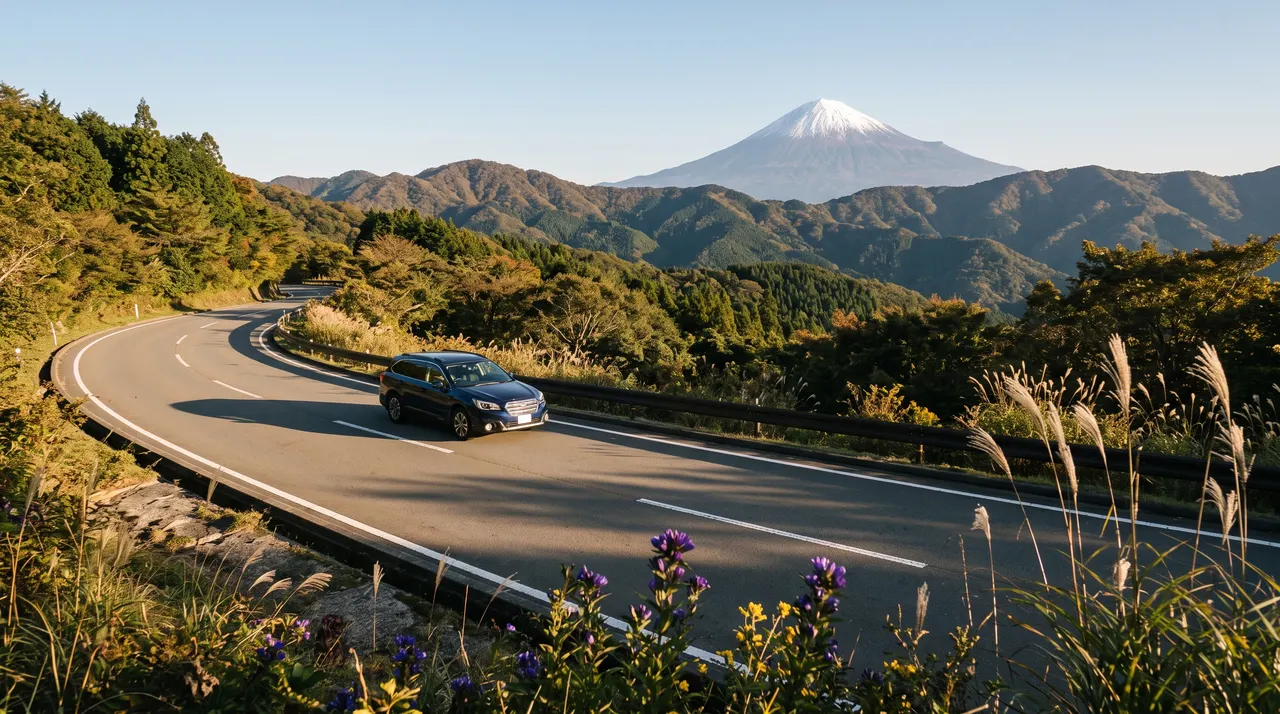
The Hakone area and the toll Hakone Turnpike/Ashinoko Skyline offer Japan's classic Mt. Fuji-view mountain driving route. For most visitors the real draw is the freedom to reach places trains and tours don't, on your own schedule, with the open road generally capped around 100–120 km/h expressways. Getting behind the wheel is the easy part: your International Driving Permit is a certified translation of your UK licence, carried alongside it, so rental staff and officials in Japan can read your credentials at a glance — though it doesn't substitute for the official government-issued IDP Japan requires for that specific purpose.
What applies to UK licence holders in Japan
| UK licence in Japan | |
|---|---|
| Do you need an IDP? | Yes — carry one alongside your licence |
| IDP format required | 1949 Geneva |
| Your UK licence script | Roman (Latin) alphabet |
| United Kingdom is party to | 1949 Geneva and 1968 Vienna |
| Drives on the | Left-hand side |
| Minimum driving age | 18 |
| Emergency number | 110 (police), 119 (ambulance) |
| Top speed limit | 100–120 km/h expressways |
| Currency | JPY |
Driving rules in Japan you should know
- Drive on the left.
- Zero-tolerance alcohol law — severe penalties.
- Stop fully at all railway crossings.
- Expressway tolls via ETC or cash.
Local driving facts in Japan
Emergency number: 110 (police), 119 (ambulance) (112 also connects from most mobiles). Typical maximum for cars on the fastest road class: 100–120 km/h expressways. Posted limits always take precedence.
Tolls & road charges in Japan
Expressways (NEXCO) are extensively tolled and expensive (Tokyo-Osaka is well over 10,000 JPY); pay cash at booths or rent an ETC card from the rental firm (about 300-550 JPY) for the pre-installed ETC reader to use automatic green-lit gates and discounts.
Parking in Japan
On-street parking is largely banned; use coin/'times' lots that lock the tyre until you pay at the machine, with rates from a few hundred yen per 30-60 minutes. Residents need a proof-of-parking 'shako shomei' certificate, but tourists simply use paid garages and must never leave a car at the kerb.
Penalties & enforcement in Japan
Speeding fines run from about 9,000-15,000+ JPY (and criminal charges for large excesses), mobile-phone use and no-seatbelt are fined, and the drink-drive limit is a very strict 0.03% with severe penalties for driver and even passengers. Camera/parking fines are billed to the renter; minor on-the-spot fines are paid at a bank, not in cash to police.
If you have an accident in Japan
Call 110 for police and 119 for ambulance/fire; reporting every accident to police is legally mandatory and you cannot get an insurance certificate without it. Do not leave the scene and do not privately settle injuries - move the car off the carriageway only if safe, then wait for police.
City driving in Japan
In central Tokyo the Shuto Expressway is a narrow, sharply curving elevated loop with very short merge lanes and confusing numbered junctions; surface streets are dense, left-hand-drive, and many have no shoulder, so a navigation unit set to English is essential.
Winter driving in Japan
Winter tyres or chains are required in snowy regions such as Hokkaido and northern Honshu, roughly December-March; rental companies in those areas fit studless 'snow tyres' automatically, often at no extra charge.
Fuel in Japan
Pumps are colour-coded: red = regular petrol ('regular'), yellow = high-octane ('hi-oku'), green = diesel ('keiyu'/light oil). Both full-service and self-service ('serufu') stations exist, cards are accepted, and regular runs roughly 170-185 JPY per litre.
Sources: japan-guide.com, japanlivinglife.com, ready2drivejapan.com, driveinjapan.com