 Canada licence
  Maldives
Can you drive in Maldives with a Canada license?
Short answer: you can drive in Maldives with a Canada license; an International Driving Permit is recommended and is carried alongside your Canada license.
An International Driving Permit is recommended (not strictly required) for Canada licence holders driving in Maldives. Your Canada licence is in the Roman alphabet, but an IDP removes any doubt at rental desks and roadside checks. Carry both.
Canadian drivers should carry an International Driving Permit alongside their provincial licence when driving abroad. Your International Driving Permit is a certified multilingual translation of your existing licence, prepared in the 1949 Geneva format and carried alongside your national licence.


What driving in Maldives is like
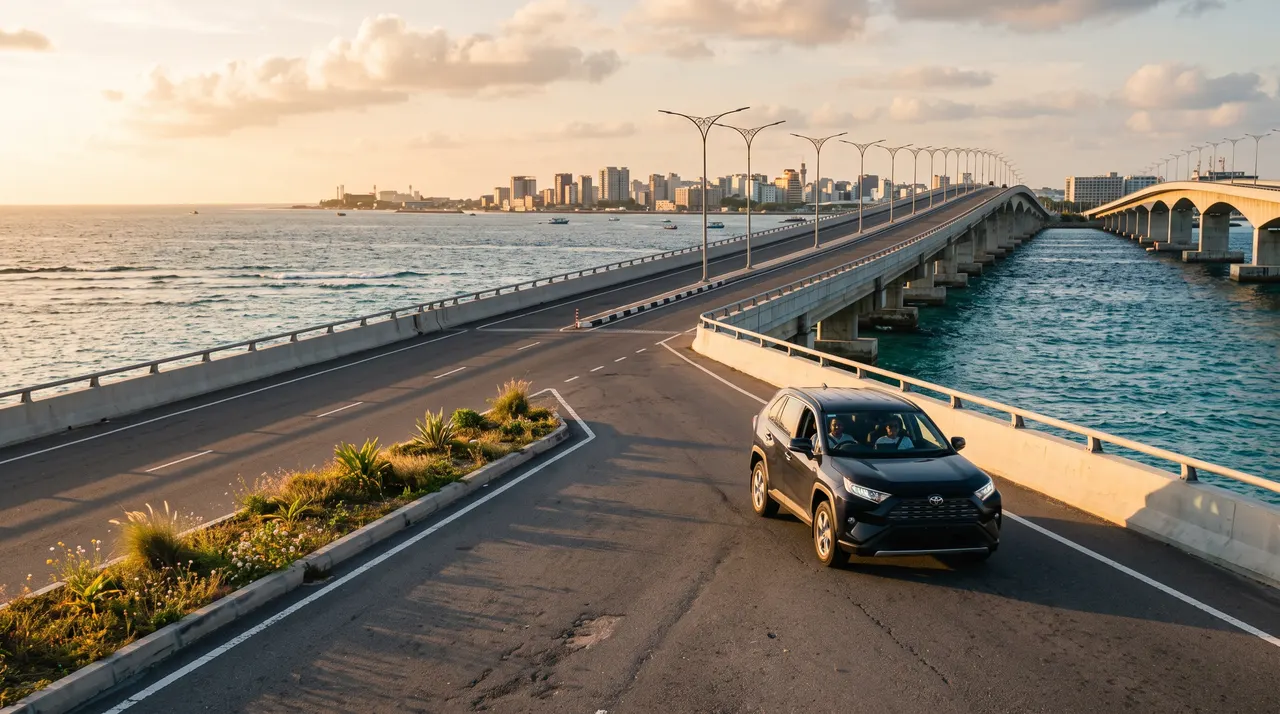
The drive across the Sinamale Bridge between Male and Hulhumale, with open ocean on both sides, is the country's signature road. For most visitors the real draw is the freedom to reach places trains and tours don't, on your own schedule, with the open road generally capped around 30 km/h Malé; Sinamalé Bridge 50 km/h. Getting behind the wheel is the easy part: your International Driving Permit is a certified translation of your Canada licence, carried alongside it, so rental staff and officials in Maldives can read your credentials at a glance.
What applies to Canada licence holders in Maldives
| Canada licence in Maldives | |
|---|---|
| Do you need an IDP? | Recommended, not legally mandatory |
| IDP format required | 1949 Geneva |
| Your Canada licence script | Roman (Latin) alphabet |
| Canada is party to | 1949 Geneva |
| Drives on the | Left-hand side |
| Minimum driving age | 18 |
| Emergency number | 119 (police), 102 (ambulance) |
| Top speed limit | 30 km/h Malé; Sinamalé Bridge 50 km/h |
| Currency | MVR |
Driving rules in Maldives you should know
- Drive on the left in Malé.
- Motorbikes dominate the capital.
- 0.0% alcohol tolerance.
- Most islands have no roads to drive.
Local driving facts in Maldives
Emergency number: 119 (police), 102 (ambulance) (112 also connects from most mobiles). Typical maximum for cars on the fastest road class: 30 km/h Malé; Sinamalé Bridge 50 km/h. Posted limits always take precedence.
Tolls & road charges in Maldives
There are no toll roads or toll systems; the road network is limited to individual islands. The only substantial roads for visitors are on Hulhumale, the Male-Hulhumale Sinamale Bridge, and a handful of larger resort and inhabited islands.
Parking in Maldives
Parking in Male and Hulhumale is tightly congested and regulated, with designated bays and frequent clamping or fines for illegal parking; most visitors rely on taxis rather than self-drive. Motorbikes dominate and parking space is scarce.
Penalties & enforcement in Maldives
Police enforce speeding (limits are very low, around 30-40 km/h in built-up areas), seatbelt and phone rules with on-the-spot fines payable in rufiyaa. Penalties are modest in cash terms but strictly applied on Male and Hulhumale.
If you have an accident in Maldives
Dial 119 for police and 102 for ambulance. Report any accident to the Maldives Police Service and do not move vehicles in a serious or injury collision until police attend.
City driving in Maldives
Male is one of the world's most densely packed cities with narrow one-way streets choked by motorbikes; the Sinamale (China-Maldives Friendship) Bridge links it to the airport island and Hulhumale and is the main place a tourist might actually drive.
Winter driving in Maldives
No winter-tyre rules - tropical climate. Watch instead for heavy monsoon rain and salt-water flooding on low-lying island roads.
Fuel in Maldives
Petrol and diesel are sold at a small number of stations (mainly Male, Hulhumale and Addu/Gan); fuel is imported and relatively expensive. Stations are typically attended; carry rufiyaa cash as card acceptance can be limited.
Sources: internationaldriversassociation.com, tyremap.com, internationaltravelpermits.com