 Philippines licence
  Russia
Can you drive in Russia with a Philippines license?
Short answer: to drive in Russia with a Philippines license you need an International Driving Permit in the 1968 Vienna format, carried together with your Philippines license.
Yes — to drive in Russia on a Philippines licence you should carry an International Driving Permit together with your Philippines licence. Russia expects foreign drivers to hold an IDP.
Philippine drivers need an International Driving Permit to drive or rent a car in most countries abroad. Your International Driving Permit is a certified multilingual translation of your existing licence, prepared in the 1968 Vienna format and carried alongside your national licence.


What driving in Russia is like
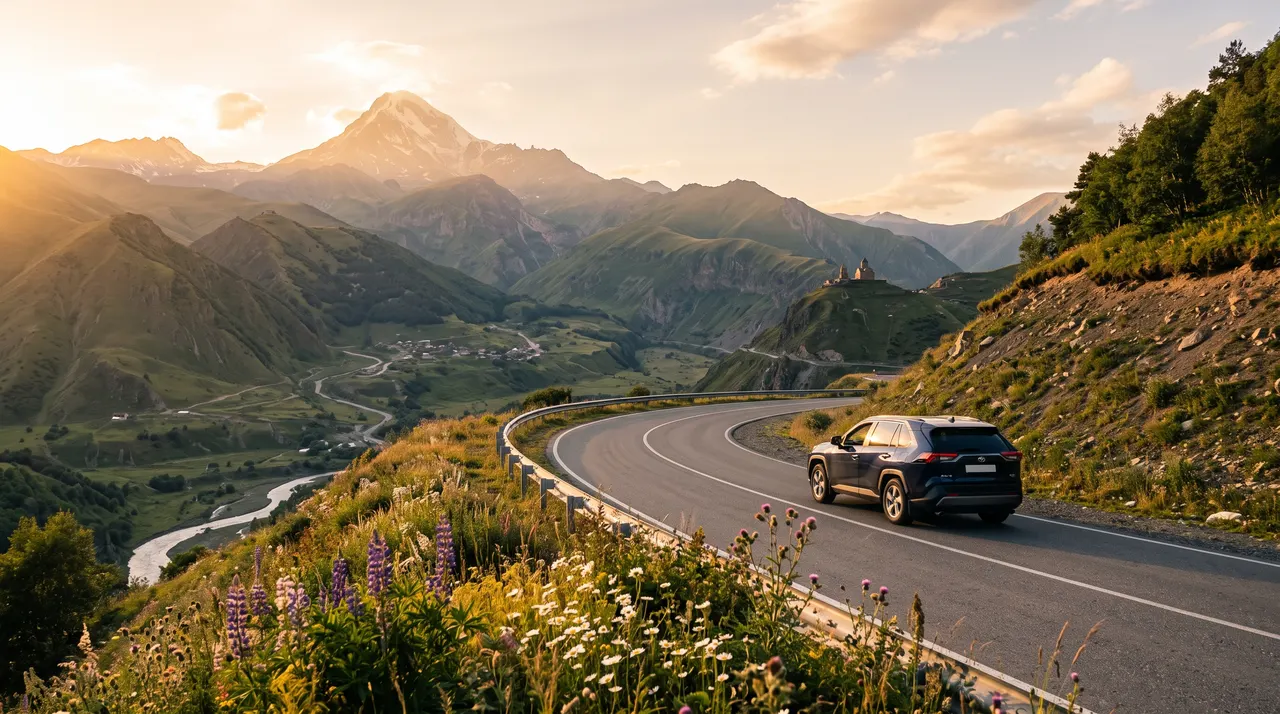
The Georgian Military Road and the Black Sea coastal route around Sochi are the classic scenic drives travellers seek out. For most visitors the real draw is the freedom to reach places trains and tours don't, on your own schedule, with the open road generally capped around 110 km/h motorways (130 where signed). Getting behind the wheel is the easy part: your International Driving Permit is a certified translation of your Philippines licence, carried alongside it, so rental staff and officials in Russia can read your credentials at a glance.
What applies to Philippines licence holders in Russia
| Philippines licence in Russia | |
|---|---|
| Do you need an IDP? | Yes — carry one alongside your licence |
| IDP format required | 1968 Vienna |
| Your Philippines licence script | Roman (Latin) alphabet |
| Philippines is party to | 1968 Vienna |
| Drives on the | Right-hand side |
| Minimum driving age | 18 |
| Emergency number | 112 |
| Top speed limit | 110 km/h motorways (130 where signed) |
| Currency | RUB |
Driving rules in Russia you should know
- Drive on the right.
- Zero-tolerance alcohol limit (0.0%).
- Headlights on at all times.
- Carry passport, IDP and home licence.
Local driving facts in Russia
Emergency number: 112 (112 also connects from most mobiles). Typical maximum for cars on the fastest road class: 110 km/h motorways (130 where signed). Posted limits always take precedence.
Tolls & road charges in Russia
Most roads are free, but several modern highways (e.g. the M11 Neva Moscow-St Petersburg and M4 Don sections) are tolled; pay cash or card at toll plazas, or use a T-pass/Transponder transponder for the barrier lanes.
Parking in Russia
Central Moscow and St Petersburg have paid zones marked by blue signs, paid via the Moscow Parking app, parkomat machines or SMS; unpaid or wrongly parked cars are ticketed by camera and frequently towed to an impound lot.
Penalties & enforcement in Russia
Foreign drivers face common fines such as roughly 500 RUB for no seatbelt, 1,500 RUB for handheld phone use and 500-5,000 RUB for speeding bands; many are camera-issued, and rental firms deduct camera penalties plus an admin fee from your card.
If you have an accident in Russia
Dial 112 (general emergency) or 102 for police; you must call the traffic police (GIBDD, formerly GAI) and obtain their report, and you must not move the vehicles until they document the scene unless a minor crash qualifies for the Europrotokol self-report form.
City driving in Russia
Moscow's MKAD ring road is a fast, heavily trafficked beltway, and the historic centre inside the Garden Ring (Sadovoye Koltso) is congested with strict camera-enforced paid parking.
Winter driving in Russia
Winter tyres marked M+S or 3PMSF are legally mandatory in December, January and February; studded or winter tyres are widely fitted from roughly October to April given severe ice and snow.
Fuel in Russia
Petrol is sold as AI-92, AI-95 and AI-98, with diesel (DT/ДТ) common; most stations are full self-serve where you prepay the cashier first, and cards are accepted, with petrol cheap by Western standards.
Sources: en.wikivoyage.org, en.wikipedia.org, remitly.com