Brazil Suriname
 Brazil
  Suriname
Last reviewed July 2026
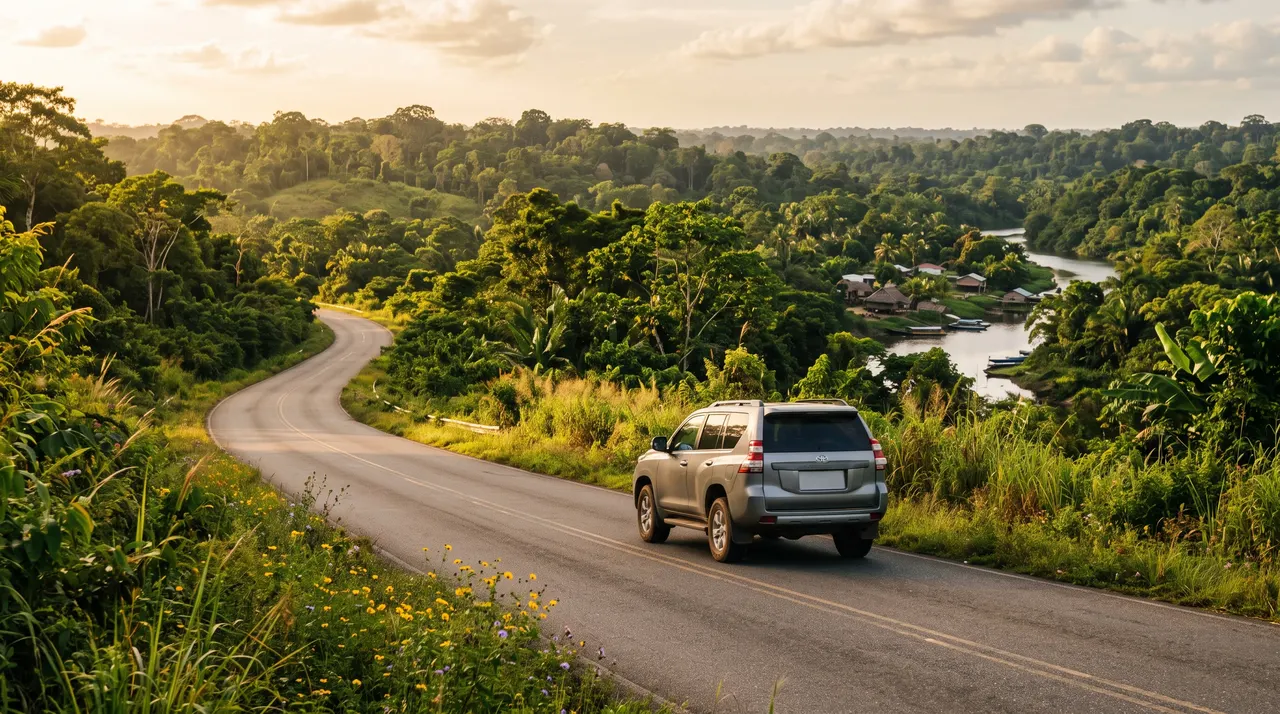
Crossing the border
Brazil and Suriname share a land border you can cross by car. Keep your passport, national driving licence and International Driving Permit together, and check opening hours and any toll or vignette requirements before you travel.
Driving rules in Suriname
- Drive on the left.
- Unpaved roads in the interior.
- 0.05% alcohol limit.
- Carry passport, IDP and home licence.
Once you're driving in Suriname
Destination-specific detail sourced from national road authorities, motoring clubs and rental policies — the things that catch cross-border drivers out.
Driving on a foreign licence
Tourists may drive on a valid home licence for short stays, but Suriname is an IDP country and car-rental firms require an International Driving Permit alongside the home licence, especially if it is not in Dutch/English. Carry the IDP plus your national licence at all times.
Tolls & road charges
Suriname has no toll-road network; roads are funded publicly and there are no toll booths or vignettes for tourists to deal with.
Parking in the cities
Paramaribo has informal kerbside and lot parking with low or no fees; central spots fill early and pavements/potholes make spaces tight, so use guarded lots where available rather than risk a blocked or sunken kerb.
Fines & camera enforcement
Police issue on-the-spot tickets specifying the offence and where to pay; seatbelt and hand-held-phone violations are enforced, and rental firms pass any unpaid tickets to your card. Roads are unlit and poorly policed at night, so drive defensively rather than relying on enforcement.
If you have an accident
Stop, do not move the vehicles if anyone is hurt, and call the police; the standard emergency line is 115 for police. Wait for officers and obtain their report for your insurer and the rental company.
Driving in the capital
In Paramaribo expect left-hand traffic, undisciplined merging and large potholes on city streets; the busy roundabouts and the bridge approaches over the Suriname River are the main congestion chokepoints.
Sources: countryreports.org · tyremap.com · globalpetrolprices.com · autoeurope.co.uk