 Canada licence
  Chile
ChileCan you drive in Chile with a Canada license?
Short answer: to drive in Chile with a Canada license you need an International Driving Permit in the 1968 Vienna format, carried together with your Canada license.
Yes — to drive in Chile on a Canada licence you should carry an International Driving Permit together with your Canada licence. Chile expects foreign drivers to hold an IDP.
Canadian drivers should carry an International Driving Permit alongside their provincial licence when driving abroad. Your International Driving Permit is a certified multilingual translation of your existing licence, prepared in the 1968 Vienna format and carried alongside your national licence.


What driving in Chile is like
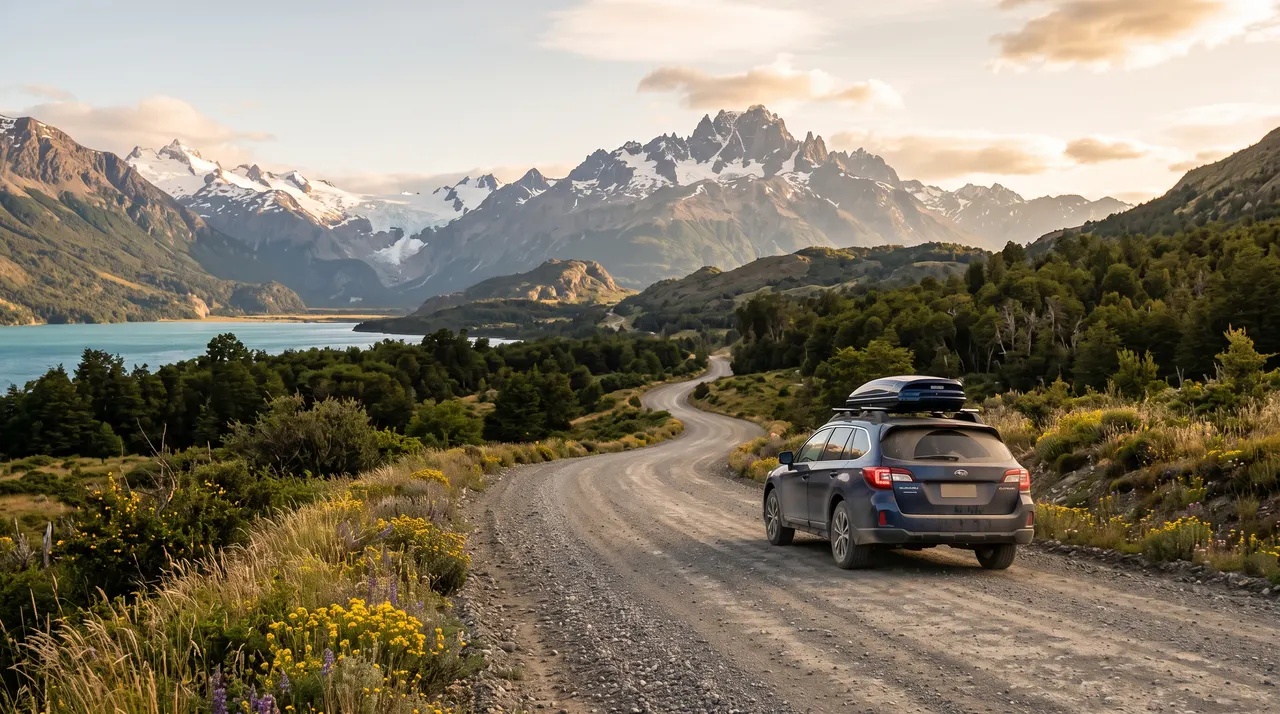
The Carretera Austral (Ruta 7) through Patagonia from Puerto Montt toward Villa O'Higgins. For most visitors the real draw is the freedom to reach places trains and tours don't, on your own schedule, with the open road generally capped around 120 km/h autopistas. Getting behind the wheel is the easy part: your International Driving Permit is a certified translation of your Canada licence, carried alongside it, so rental staff and officials in Chile can read your credentials at a glance.
What applies to Canada licence holders in Chile
| Canada licence in Chile | |
|---|---|
| Do you need an IDP? | Yes — carry one alongside your licence |
| IDP format required | 1968 Vienna |
| Your Canada licence script | Roman (Latin) alphabet |
| Canada is party to | 1949 Geneva |
| Drives on the | Right-hand side |
| Minimum driving age | 18 |
| Emergency number | 133 (police), 131 (ambulance) |
| Top speed limit | 120 km/h autopistas |
| Currency | CLP |
Driving rules in Chile you should know
- Seatbelts mandatory for all occupants.
- 0.03% alcohol limit; criminal above 0.08%.
- Headlights on in tunnels.
- Andean mountain passes may require chains in winter.
Local driving facts in Chile
Emergency number: 133 (police), 131 (ambulance) (112 also connects from most mobiles). Typical maximum for cars on the fastest road class: 120 km/h autopistas. Posted limits always take precedence.
Tolls & road charges in Chile
Santiago's urban autopistas (Costanera Norte, Vespucio, etc.) are free-flow and require a TAG transponder, which by law all Santiago rental cars now carry; intercity highways (Ruta 5) use manned plazas where many lanes take only Chilean peso cash.
Parking in Chile
In cities use signed paid street zones (parquímetro, often via attendants/apps) or guarded lots; informal 'cuidadores' watch parked cars for a tip. Heed no-parking signs as towing and clamping occur in central Santiago.
Penalties & enforcement in Chile
Speed and red-light cameras are common; serious speeding and drink-driving are court matters with heavy fines. Carabineros do roadside checks; fines are not paid in cash to officers, and camera/photo infractions are billed to the renter via the rental agency.
If you have an accident in Chile
Call Carabineros on 133 (ambulance 131); do not move vehicles if anyone is injured. Report the crash, give names, plate numbers and time/place, and obtain the constancia for insurance and the rental company.
City driving in Chile
Santiago runs 'restricción vehicular' May 1-Aug 31, weekdays 07:30-21:00 inside the Américo Vespucio ring, enforced by plate-reading cameras; vehicles without a green seal (sello verde) are restricted by last plate digit, though most modern rentals are exempt.
Winter driving in Chile
Snow chains are mandatory when Carabineros require them on snow-affected Andean routes (e.g. Portillo, the pass to Mendoza, and southern Lake District/Patagonia roads) in winter (roughly May-September); rentals to ski areas should carry chains.
Fuel in Chile
Stations (Copec, Shell, Petrobras/Aramco) are full-service; petrol is sold as 93/95/97 octane and diesel as 'petróleo diésel', roughly USD 1.20-1.40 per litre, with cards widely accepted. Rentals usually run full-to-full.
Sources: internationaltravelpermits.com, mtt.gob.cl, en.wikivoyage.org, sixt.com